
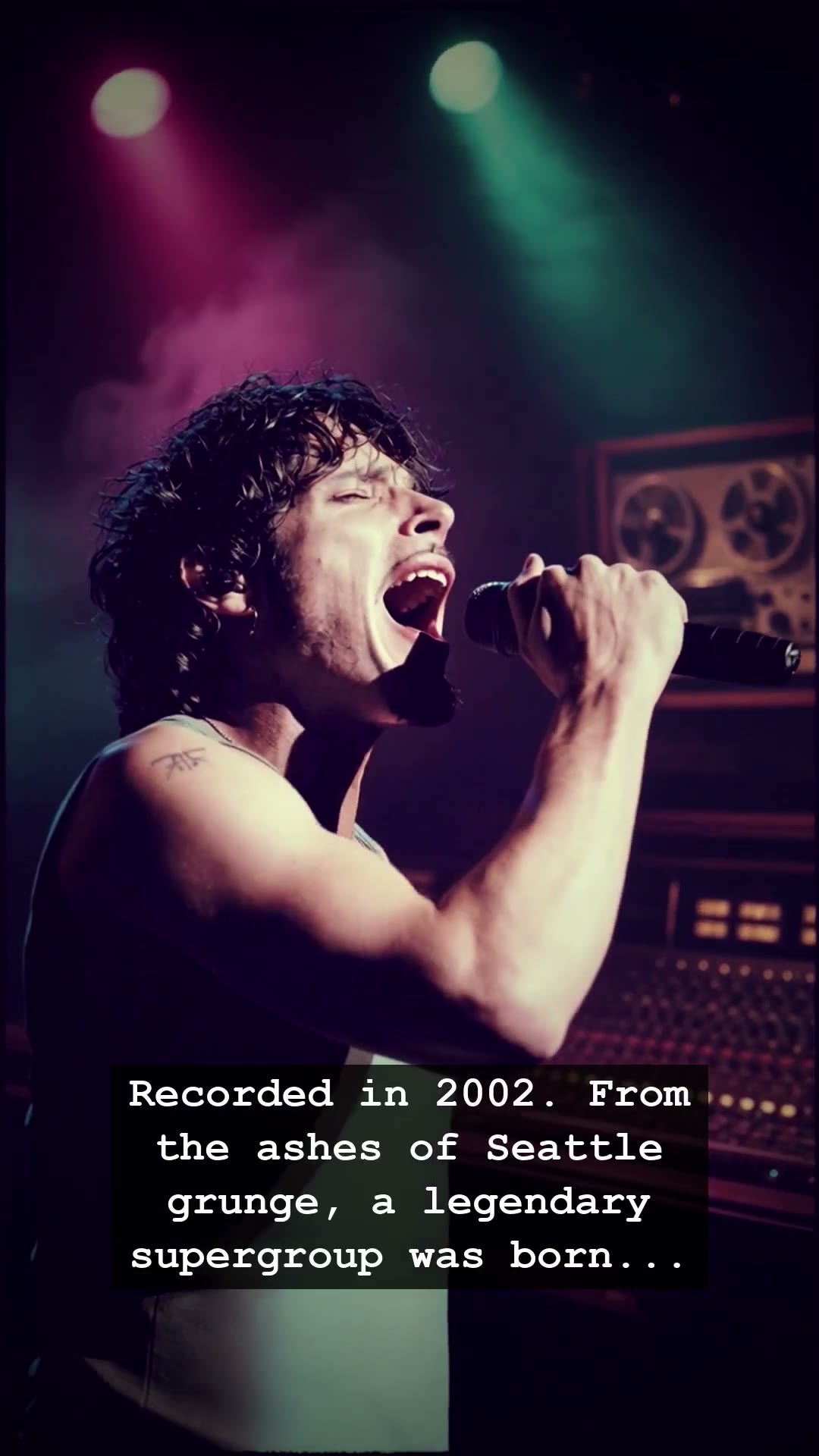
It was 2002, a time when the dust of the grunge explosion had finally begun to settle, leaving behind a scarred but hungry musical landscape. From the ashes of Seattle grunge, a sonic collision was brewing that would shake the industry to its core. Chris Cornell, the haunting voice of Soundgarden, found himself standing in a studio with the instrumental titans of Rage Against the Machine. They were an unlikely pairing, a supergroup born from the wreckage of their former bands, carrying the heavy expectations of a generation raised on the raw, distorted sounds of the nineties. Nobody knew it then, but this union would redefine rock music forever.
To understand the magnitude of this moment, one must remember the tension hanging in the air. Chris Cornell was transitioning from the dark, introspective isolation of his solo work, while the Rage musicians were reeling from the departure of their iconic frontman. The studio became a pressure cooker of clashing ideologies and creative breakthroughs. As the hum of the amplifiers filled the room, the distinct aggression of funk-metal rhythms merged with the blues-drenched, soulful wails of Chris Cornell. It wasn’t just a collaboration; it was a collision of two separate universes trying to survive in a post-MTV world where the industry was rapidly changing.
Behind the scenes, the story was far more complex than a simple jamming session. There were whispers of internal conflicts, the heavy shadow of substance abuse, and the immense psychological toll of living up to the massive success of their past lives. Chris Cornell often spoke of the struggle to find his footing within a band that was already so rhythmically defined, yet his voice became the glue that held the fire together. Their self-titled debut album didn’t just top the charts; it provided a bridge between the political fury of late-nineties alt-rock and the polished, anthemic stadium sounds of the new millennium.
Think back to the feeling of playing those tracks on a portable CD player or hearing them blast through the speakers of a dimly lit club. The raw energy of Audioslave was a visceral reaction to the sanitized pop music that was beginning to dominate the airwaves. Every chord struck by Tom Morello and every soaring, agonizingly beautiful note from Chris Cornell served as a reminder that rock music could still be dangerous, essential, and deeply personal. It was the sound of masters reclaiming their craft while staring into the abyss of their own legacies.
Today, the legacy of this short-lived but explosive group remains a testament to what happens when legends choose to risk their reputations for the sake of something new. Chris Cornell, with his four-octave range and unparalleled emotional depth, proved that he could adapt to any storm. When we look back at the era of Audioslave, we aren’t just remembering a supergroup; we are remembering a brief, blinding flash of creative alchemy. The music still resonates because it captures that specific, restless human spirit—the need to evolve even when the world expects you to stay exactly the same. As the final notes of their records fade out, the ghost of that 2002 collaboration still haunts the history books of rock, reminding us that true genius never settles for the comfortable path.