
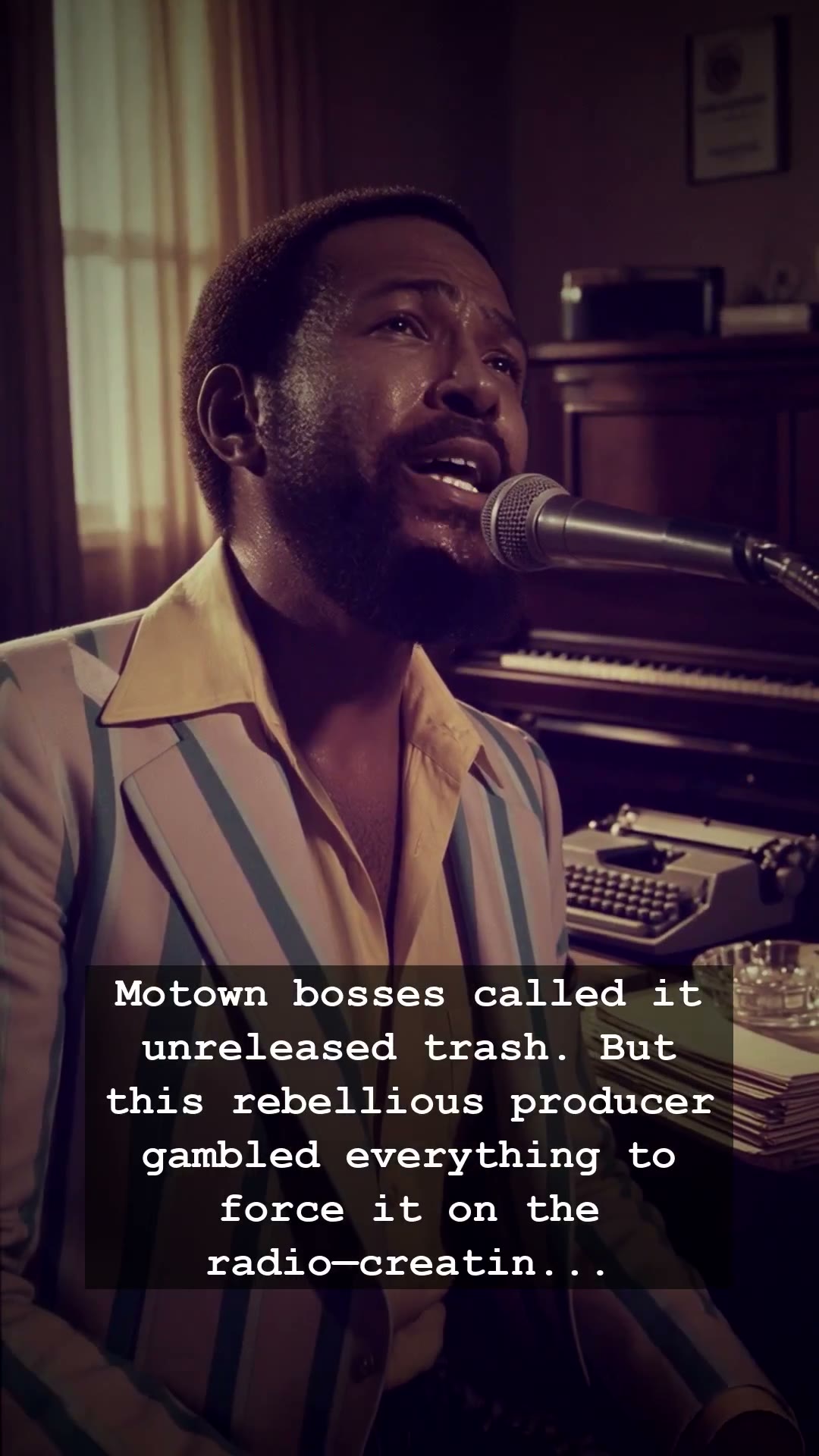
The year was 1971, and the air in Detroit was thick with the scent of motor oil and the sound of a changing America. Inside the pristine, high-stakes hallways of Motown Records, the mood was far from harmonious. Marvin Gaye, the velvet-voiced prince of soul, had just emerged from the studio with a revolutionary sound that strayed far from the polished, radio-friendly pop that had defined the label for a decade. He brought them What’s Going On, a haunting, socially conscious masterpiece. But to the suits in the boardroom, it was professional suicide. They didn’t just dislike it; they called it the worst thing they had ever heard, a rambling, uncommercial failure that would surely tarnish the brand’s golden image.
At the center of this battle was a clash between artistic evolution and corporate safety. Marvin Gaye stood at a crossroads. He was exhausted by the formulaic pressures of the industry and deeply troubled by the turbulent state of the world—the Vietnam War, urban poverty, and deep-seated inequality. He wasn’t looking for a hit; he was looking for a voice. When he presented the tracks to Motown founder Berry Gordy, the rejection was brutal. Gordy famously declared the song a disaster, refusing to release it as a single. The tension in the studio was palpable, a suffocating silence that threatened to end one of the most brilliant partnerships in musical history.
But Marvin Gaye was not a man to be silenced. A rebellious producer, Harry Balk, sensed the seismic shift occurring within the grooves of those tapes. Believing fervently in the record, he took a gamble that could have destroyed his own career. He bypassed the hierarchy, slipping the record to radio DJs who were hungry for something real. The reaction was instantaneous and electric. Listeners didn’t hear ‘trash’; they heard the raw, beating heart of a generation. The song began to climb the charts with a momentum that the executives could no longer suppress, eventually forcing them to cave and release the album. It was a victory for the artist, and a devastating blow to the creative control of the corporate machine.
What’s Going On remains a cultural artifact that defines the early 70s. It wasn’t just a collection of songs; it was a cinematic tapestry of soul, jazz, and social commentary. Listening to it today on a vintage turntable or through the grainy static of an old car radio, one can still feel the weight of Marvin Gaye’s conviction. The lush, layered orchestration contrasts with the sparse, intimate delivery of his lyrics, creating an atmosphere that is both urgent and timeless. It is the sound of an artist stripped bare, refusing to conform to the expectations of an industry that preferred him as a puppet rather than a poet.
Looking back, this moment stands as a poignant reminder of the fragility of genius. The history of American music is littered with such stories, where the collision between art and industry creates a spark that changes the world. Marvin Gaye taught us that sometimes the greatest risks lead to the most enduring legacies. Decades later, the track still echoes through the streets of Detroit and beyond, serving as a beacon for those who choose to listen. We are still uncovering the secrets of his brilliance, one soulful note at a time, reminding us all that the most powerful music is often the kind that everyone was too afraid to play.