
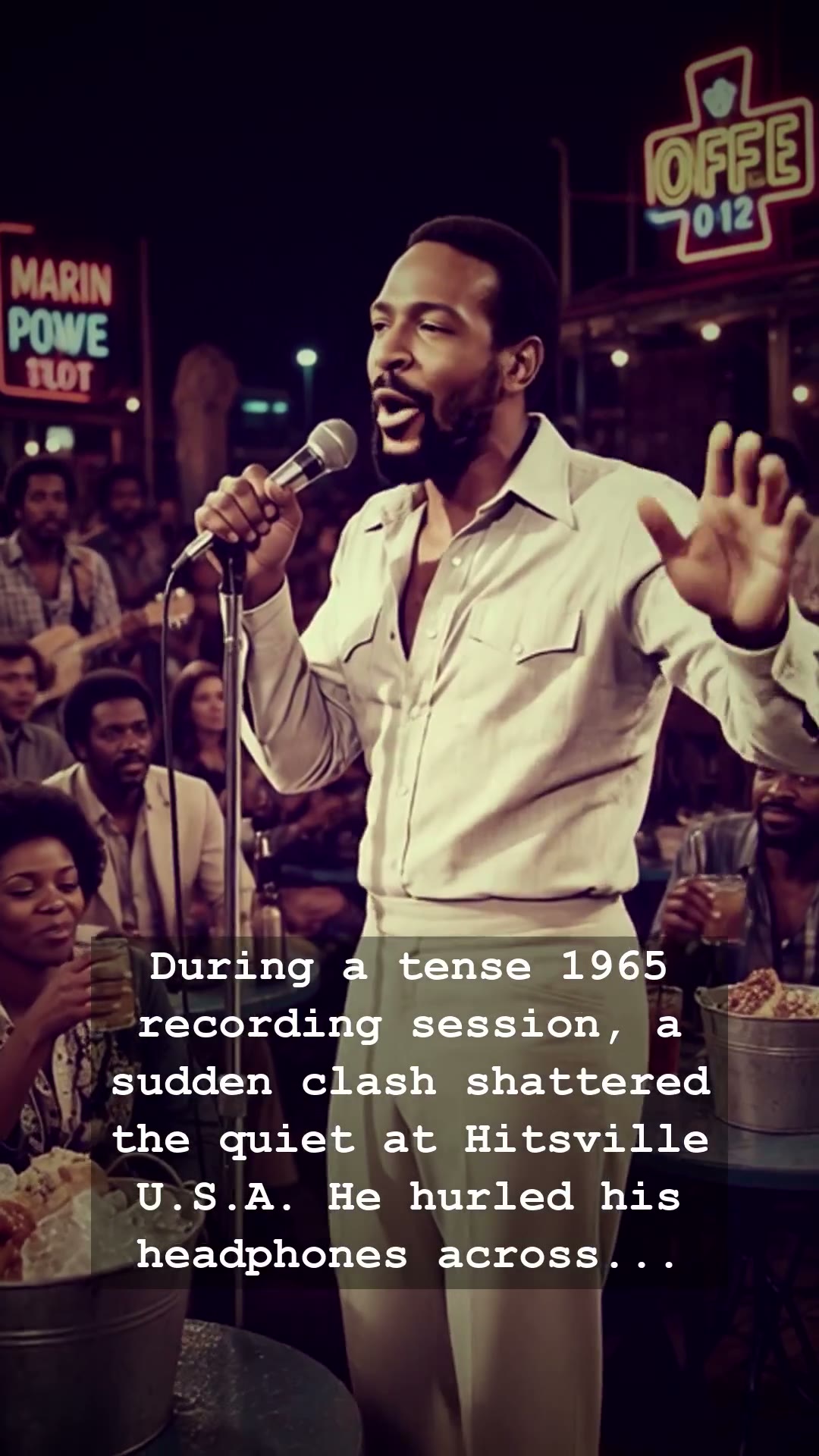
The year was 1965, and the polished veneer of Motown’s Hitsville U.S.A. was starting to crack. Inside the cramped, smoke-filled studio, the air was thick with tension. A young, fiercely perfectionist Marvin Gaye stood before the microphone, his brow furrowed in concentration. Then, in a moment that would remain whispered about in industry circles for decades, the fragile peace of the recording session shattered. Frustrated by the rigid vocal arrangements and the pressures of the hit-making machine, Marvin Gaye hurled his heavy studio headphones across the room, the plastic casing cracking against the wall. It was a fleeting, violent outburst that revealed the internal fire of a man who felt trapped by his own brilliance.
To the public listening on their AM radios or jukeboxes, Marvin Gaye was the smooth-voiced crooner, a pillar of the Motown sound that defined the American sixties. But behind the scenes, the man was a complex web of contradictions. The 1965 incident was more than just a temper tantrum; it was the raw manifestation of an artist wrestling with the stifling demands of commercial fame. As Motown grew into a cultural juggernaut, the artists were often treated like assembly-line products, pressured to deliver perfection in every take. For an innovator like Marvin Gaye, this constant creative friction was a volatile mix that pushed his sanity to the edge.
Those headphones flying across the studio floor serve as a poignant metaphor for the broader tragedy of the era. Many legendary figures of the mid-century music scene, from the psychedelic rockers of the West Coast to the soul icons of Detroit, lived their lives on a knife’s edge. The era of the vinyl record and the intimate studio session was a time of immense artistic reward, yet it demanded a heavy psychological toll. The pressure to remain relevant while dealing with the pervasive influence of substance abuse and the loneliness of the road created a dark undercurrent to the music that we still cherish today.
What makes the story of Marvin Gaye so enduring is not just the hit records, but the profound humanity in his struggle. Long before he delivered the socially conscious masterpieces that would define his later career, he was already fighting against the limitations placed upon him. He was a visionary who demanded soul over simplicity, and that day in 1965 was the beginning of his quest for total artistic control. He refused to just be another cog in the Motown machine, even if it meant risking everything he had built.
Today, we look back at these iconic moments with a mix of awe and melancholy. Marvin Gaye remains a haunting figure in American music history, a man whose voice could soothe the soul but whose life was marked by turbulent waves. When you listen to his early tracks now, consider the weight of the man behind the melody. The echoes of those headphones hitting the wall still resonate, reminding us that true genius often comes at the price of immense internal conflict. We continue to listen, not just for the harmony, but for the truth.