
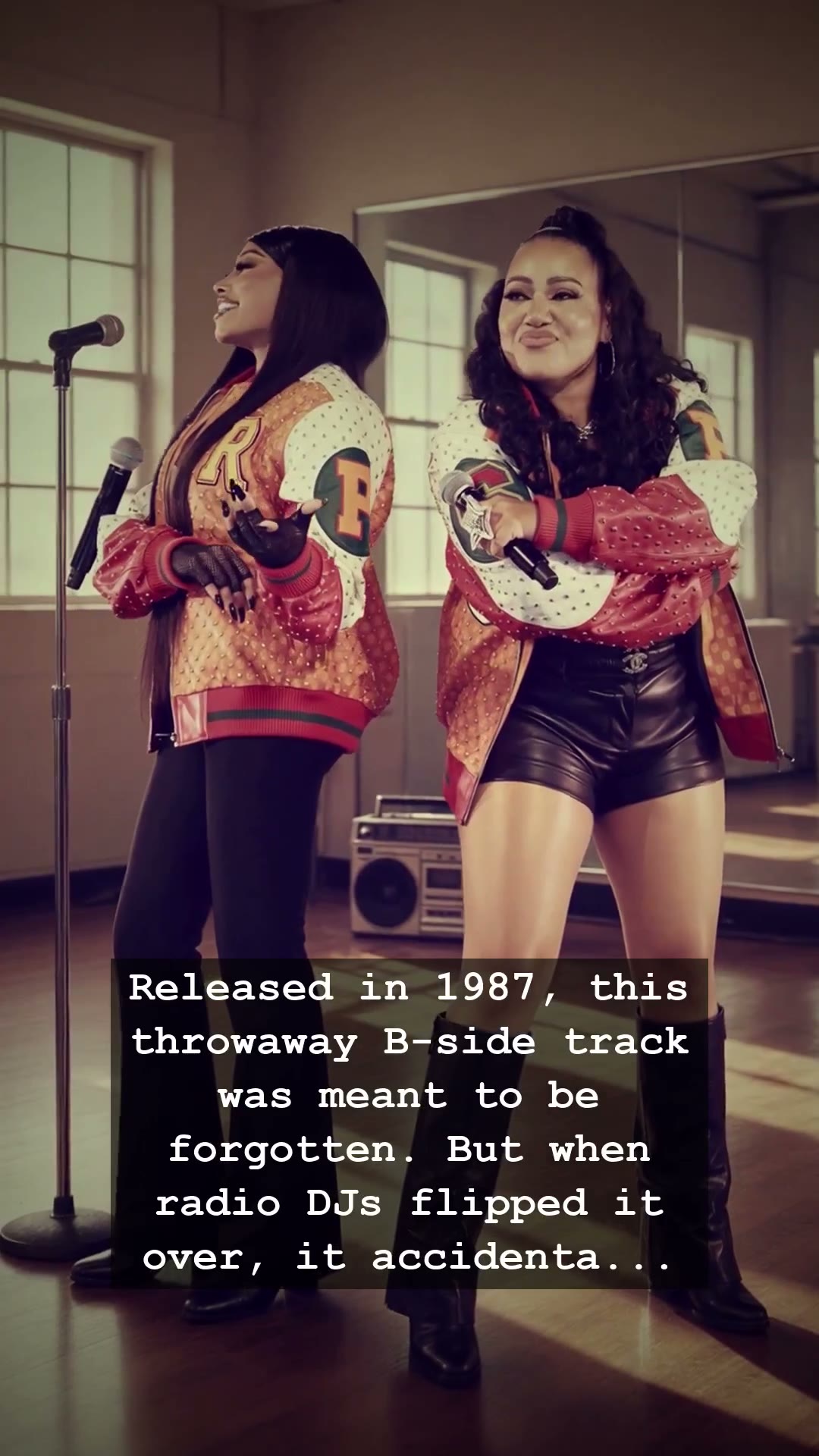
It was 1987, an era defined by the crackle of vinyl, the rise of the Walkman, and the burgeoning sound of a new musical frontier. In the male-dominated landscape of hip-hop, three women from Queens were fighting for their place in the spotlight. Salt-N-Pepa, the dynamic trio of Cheryl James, Sandra Denton, and Deidra Roper, were grinding out tracks that would soon change the cultural fabric of America forever. Yet, one of their biggest hits was never intended to be a hit at all. It was buried on the back of a record, a throwaway B-side meant to fill space, destined to be ignored by history and left to collect dust in the corners of record stores.
But destiny had other plans for the track Push It. As radio DJs across the country spun the A-side, a few curious hands flipped the vinyl over, discovering the infectious, synth-heavy pulse hidden on the flip side. That simple, spontaneous movement by a handful of DJs sparked a global revolution. Suddenly, the song wasn’t just a filler; it was a rhythmic anthem that leaked out of every boombox, echoed in the neon-lit clubs of the late eighties, and demanded to be heard. It was a raw, unfiltered moment where talent finally eclipsed the rigid expectations of music labels and industry gatekeepers.
Back then, the hip-hop scene was a gritty, competitive battlefield. Salt-N-Pepa had to navigate a world that often didn’t want to hear what women had to say. They brought a bold, unapologetic femininity that defied the era’s stereotypes. Their rise wasn’t just about the music; it was about the power of their presence. The success of Push It propelled them into the stratosphere, turning them into icons of the golden age of hip-hop. It proved that a song with enough spirit could defy the marketing strategies of suits in boardrooms and reach the hearts of listeners directly.
Walking into a record shop in the late eighties, you could feel the energy changing. The influence of Salt-N-Pepa stretched far beyond their lyrics; they became symbols of confidence for a generation navigating the transition toward the nineties. Their story reminds us that some of the greatest art is born from the shadows, overlooked by the establishment until the masses decide otherwise. It is a testament to the fact that greatness doesn’t always arrive with a press release; sometimes, it arrives on the flip side of a record.
Even today, the legacy of that accidental revolution resonates in every bassline and rhythmic beat we hear. Salt-N-Pepa didn’t just climb the charts; they shattered the glass ceiling of hip-hop with a B-side that refused to stay buried. When you listen to those classic synths today, you aren’t just hearing a song from 1987—you are listening to the exact moment that history turned on its head. It remains a timeless reminder that sometimes, the best tracks are the ones we almost missed.