
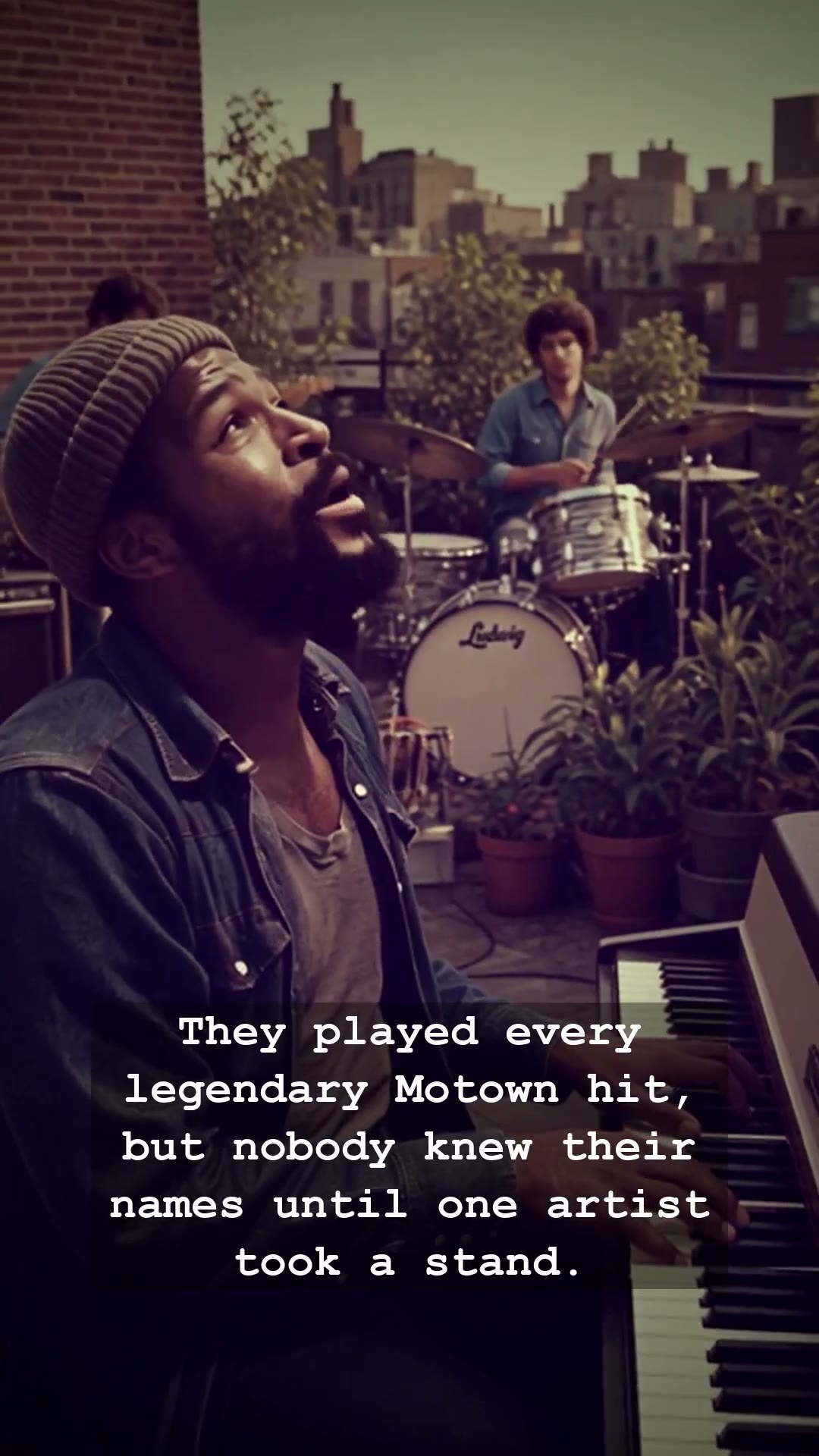
Imagine a humid Detroit studio, the air thick with cigarette smoke and the golden hum of vacuum tubes. You have heard the tracks a thousand times on your vintage jukebox, the rhythmic pulse of Motown that defined an entire generation. But while the world was busy swooning over the polished faces of stars, the true architects of that sound remained in the shadows. They were The Funk Brothers, a collective of virtuoso musicians who provided the bedrock for nearly every chart-topping hit that echoed out of Hitsville U.S.A. For years, they were the ghosts in the machine, nameless laborers of soul whose names were stripped from the vinyl sleeves.
Everything changed in 1971 when a turbulent genius decided he had seen enough of the industry’s cold anonymity. Marvin Gaye was at a career crossroads, grappling with his own demons and the sociopolitical firestorm of the Vietnam era. As he prepared to record his magnum opus, What’s Going On, he made a demand that sent shockwaves through the Motown executive offices: the studio musicians had to be credited. Marvin Gaye refused to let his masterpiece stand without acknowledging the hands that crafted its sonic landscape. It was a radical act of defiance that challenged the iron-fisted control of Berry Gordy and finally brought The Funk Brothers into the light.
This wasn’t just about a name on an album cover; it was about dignity in an industry designed to commodify brilliance. The Funk Brothers brought a jazz-infused, gritty sophistication to the smooth Motown pop machine. They were the ones who navigated the complex chord changes and syncopated grooves that made songs like I Heard It Through the Grapevine crawl under your skin and stay there. By demanding they be named, Marvin Gaye didn’t just give them their due; he validated the labor of love that fueled the entire Motown legacy. It was a rare moment where a superstar used his leverage to pull his peers out of the darkness and into the history books.
Even today, listening to the intricate bass lines and orchestral swells of that era feels like opening a time capsule from a world where analog warmth reigned supreme. We remember the names on the posters, but the music itself is a conversation between artists who were often fighting just to be seen. The story of Marvin Gaye and The Funk Brothers reminds us that the most legendary art is rarely a solitary endeavor. It is the result of unsung masters weaving their souls into the tape.
Next time you spin a classic Motown record, listen closer. Behind the lead vocals, you can hear the heartbeat of the men who stood in the background of history. Marvin Gaye saw them, the world eventually learned their names, and now their legacy remains etched in every groove of the vinyl we still cherish. Who were the silent heroes behind your favorite childhood songs?