
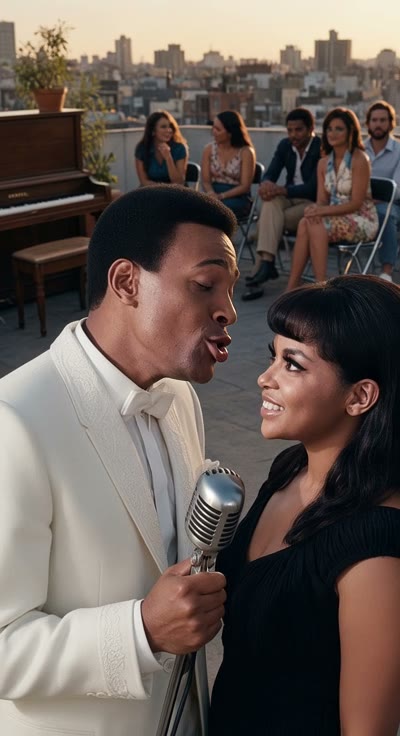
In 1968, the polished halls of Motown Records were echoing with the sounds of a revolution that nobody saw coming. Among the hitmakers and the orchestrated charm of the Detroit label, one man was wrestling with a sound that felt darker, grittier, and infinitely more profound than anything that had come before. Marvin Gaye was not just recording a song; he was capturing a psychological breakdown set to a steady, haunting rhythm. While the world was dancing to the upbeat pop anthems of the era, the masterpiece that would become I Heard It Through the Grapevine was nearly locked away in a vault, deemed too somber for the radio airwaves of the late sixties.
The genius behind this tension was producer Norman Whitfield, a man who demanded absolute perfection to the point of obsession. He believed that the track needed more than just a melody; it needed a cinematic soul that could pierce through the crackle of a jukebox. Marvin Gaye, already feeling the mounting pressures of fame and the suffocating expectations of the Motown machine, poured his visceral angst into every take. It was a painstaking, grueling process. Whitfield forced Marvin Gaye to record endless takes, pushing him to shed the suave persona he had cultivated and tap into a raw, desperate vulnerability that was almost painful to witness.
When you listen to the final cut today, you are hearing the sound of an artist stripped bare. The ominous, echoing guitar riff that opens the song serves as a portal into a world of paranoia and heartbreak. It was a radical departure from the lighthearted love songs that dominated the airwaves before the psychedelic era took hold. This was the dark underbelly of the American dream, a sonic representation of the distrust that was beginning to permeate the culture during a time of immense social and political upheaval. Marvin Gaye understood the assignment better than anyone; his voice trembling with a mixture of betrayal and cold realization remains one of the most powerful vocal performances in the history of soul music.
Why does this track still resonate so deeply more than half a century later? It is because it refuses to be background noise. It demands your full attention, much like the changing cultural landscape of the time, from the grit of the inner cities to the shifting power dynamics of the music industry itself. The song became a testament to the fact that sometimes, the most enduring art is born from the most difficult circumstances. It captures a fleeting moment where a visionary artist and a perfectionist producer collided, resulting in something that transcended the standard pop formula of the mid-sixties.
Today, I Heard It Through the Grapevine stands as a monument to Marvin Gaye and his relentless pursuit of emotional truth. It is a reminder of an era where records were crafted with human sweat and late-night studio persistence, long before the digital polish of the modern age. As we look back at the legacy of Marvin Gaye, we don’t just remember the hits; we remember the ghosts he left behind in the grooves of his greatest records. Do you remember where you were the first time that iconic bassline pulled you into its dark, hypnotic embrace?