
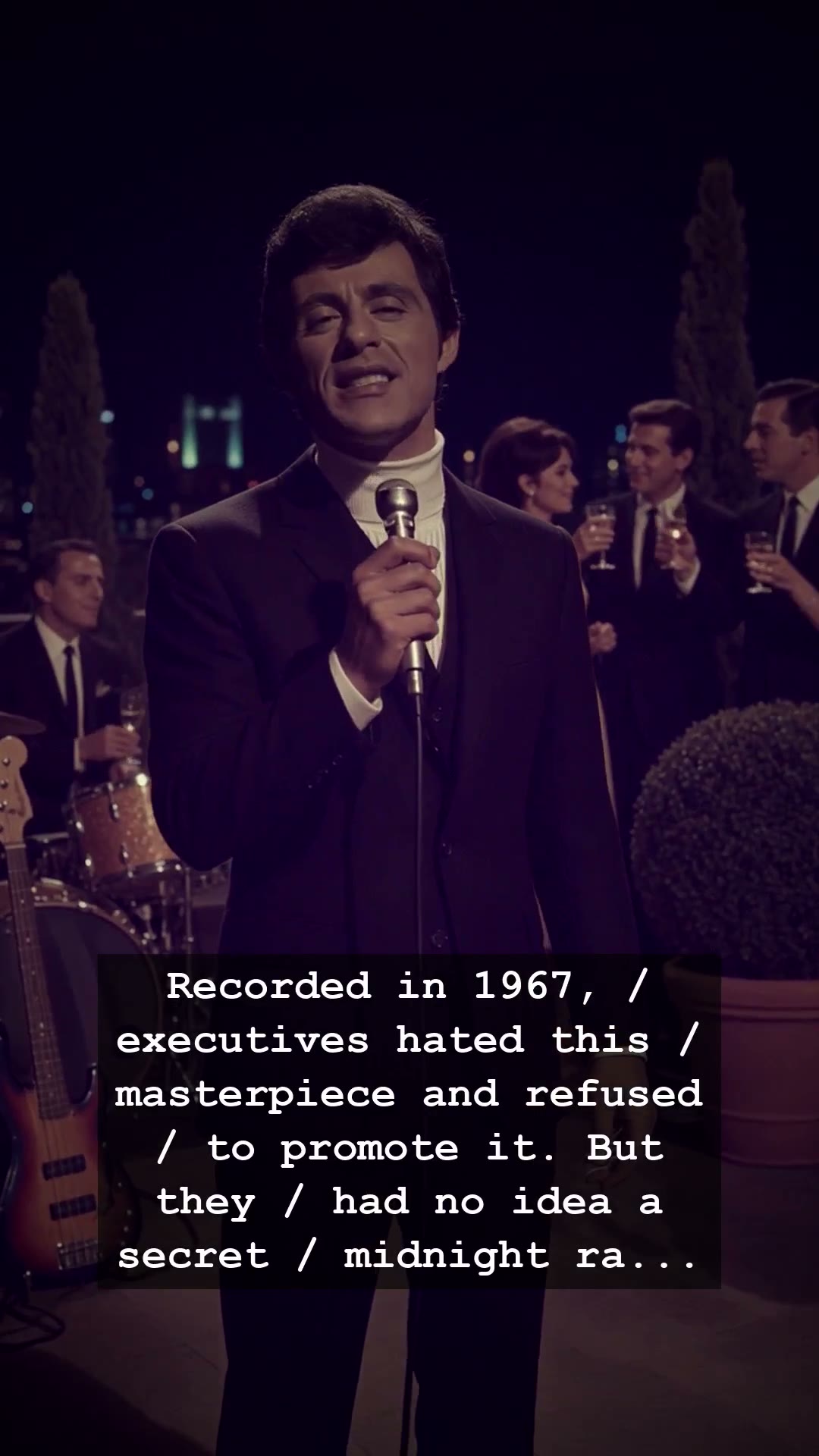
The year was 1967, and the music industry was a kingdom of rigid gatekeepers. Frankie Valli, the golden-voiced frontman of The Four Seasons, had just walked out of the studio with a track that was unlike anything the executives had ever heard. It was brass-heavy, soaring, and defiant—a sonic departure from the sweet pop harmonies that had defined his career. But the suits in the ivory towers hated it. They claimed the brass section was too aggressive and the arrangement too unorthodox for radio. They effectively buried the master tape, refusing to promote what would eventually become one of the most iconic songs in American music history.
Frankie Valli was no stranger to the grind of the industry. Having risen from the gritty streets of New Jersey to the polished lights of national television, he understood that success wasn’t always handed out on a silver platter. When the label heads turned their backs on the record, they essentially signed its death warrant. Or so they thought. They severely underestimated the hunger of the American listener and the raw charisma that Frankie Valli poured into every single note he sang. The industry had the money and the distribution, but they lacked the secret ingredient that Frankie Valli possessed: an unshakable connection to the common man.
What happened next remains one of the most legendary “underground” victories of the era. Defying the corporate blockade, the song found its way into the hands of daring midnight disc jockeys. Legend has it that a discreet, midnight radio bribe triggered a late-night broadcast that changed everything. As the song hit the airwaves under the cover of darkness, phones at stations across the country began to light up like a switchboard at a busy downtown precinct. By the time the sun rose, the listener frenzy was absolute. It was an overnight phenomenon that left the label executives stunned, scrambling to reverse their decision and put the track into mass circulation.
This story is a window into the turbulent world of the late sixties, a time when the Jukebox was the heartbeat of every corner diner and the Walkman was still a distant dream for the future. Frankie Valli stood at the center of this cultural shift, balancing the traditional sounds of his roots with a willingness to push boundaries that terrified his handlers. It was the perfect storm of artistic rebellion and genuine talent that forced the hand of the establishment. The song didn’t just survive the corporate sabotage; it thrived because it felt authentic, visceral, and impossible to ignore.
Looking back, the tale of this forgotten masterpiece serves as a reminder of the power of music to overcome even the most cynical bureaucratic obstacles. Frankie Valli didn’t just record a song; he fought for a piece of his soul. His voice remains a defining element of our collective nostalgia, reminding us that sometimes the best art is the kind that has to fight its way into the light. As you listen to the brass swells and that unmistakable falsetto, think of the midnight radio waves that carried this anthem to the masses, proving that a true hit can never be silenced by a desk job.