
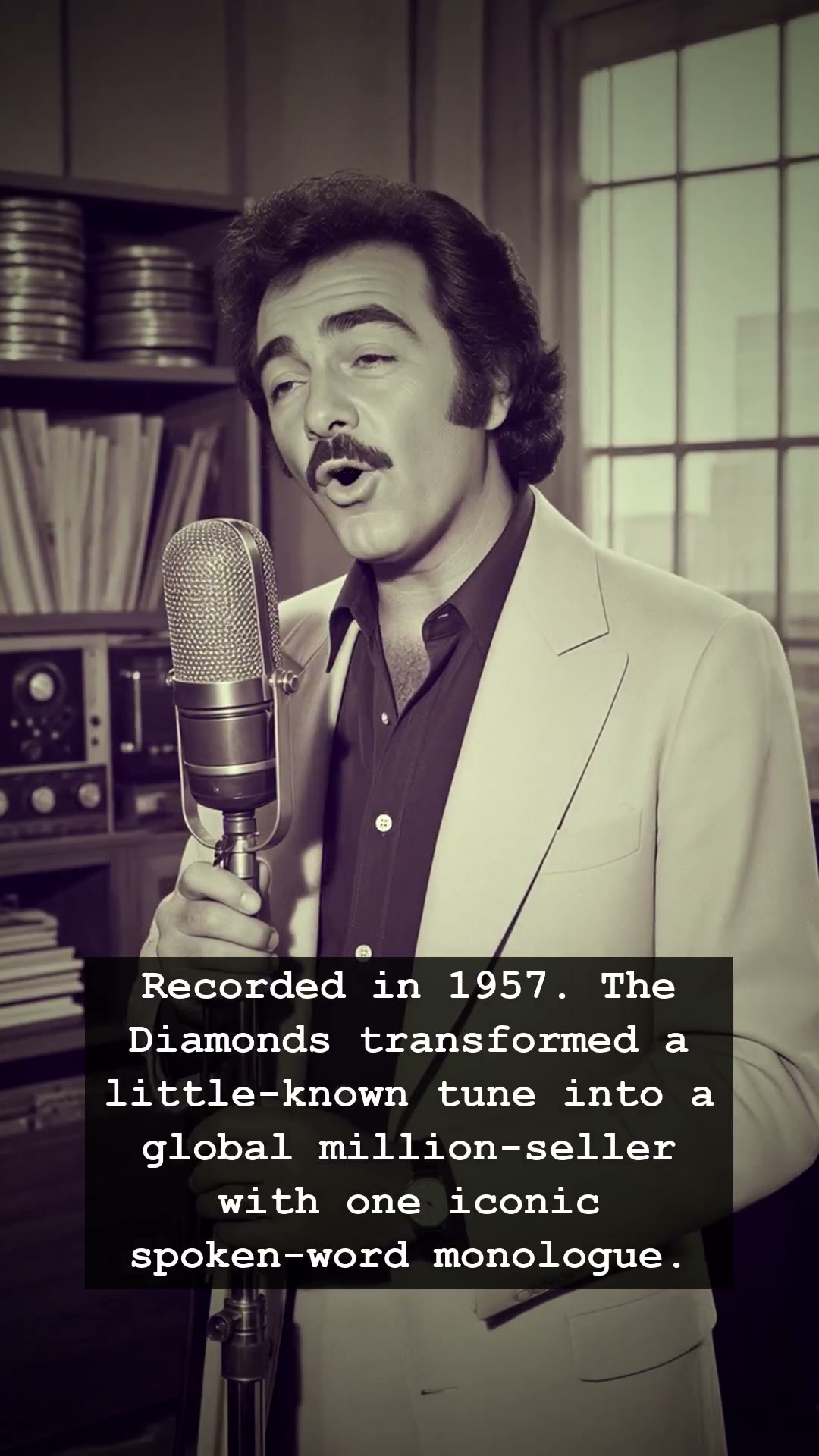
In the golden age of the jukebox, where high-energy rock ‘n’ roll was just beginning to stir the souls of the youth, one vocal group stood at a dangerous crossroads. It was 1957, a year defined by slicked-back hair and the raw ambition of radio-bound performers. The Diamonds, a group struggling to carve their name into the competitive charts of the era, took a desperate, cinematic gamble that would forever alter the trajectory of their careers. They chose a song that had been largely forgotten by the public, infusing it with a dramatic flair that felt more like a Broadway monologue than a standard radio pop track.
The song in question was Little Darlin’, a track that The Diamonds transformed from a mere melody into a million-selling cultural phenomenon. Most vocal groups of the late fifties were satisfied with tight harmonies and rhythmic snapping, but The Diamonds dared to be different. They introduced a bizarrely iconic, low-voiced spoken monologue that caught the entire industry off guard. It was audacious, slightly campy, and utterly magnetic. When that deep, resonant voice cut through the upbeat tempo, listeners across America were frozen in place by their radios. It was a moment of pure, calculated musical theater that proved risk-taking was the key to unlocking true stardom.
Looking back, the success of The Diamonds feels like a perfect artifact of 1957. This was a time when the world was changing; the innocence of the post-war era was rubbing against the burgeoning rebellion of rock. The Diamonds captured that tension beautifully. The rhythmic click of castanets providing the backdrop for their vocal acrobatics created a soundscape that felt both vintage and revolutionary. It wasn’t just a hit record; it was a testament to the grit required to make it in the high-stakes world of the recording studio, where producers often pressured artists to conform to predictable patterns to ensure a hit.
Yet, The Diamonds refused to be pigeonholed. By embedding that strange, sudden halt in the music—followed by that unforgettable, spoken plea—they proved that a hit record needed a personality, not just a catchy hook. The song became a fixture in teenage dance halls, a soundtrack for first dates and heartbreak alike. It remains a shining example of how a group, armed with nothing but their voices and a bit of nerve, could capture the collective consciousness of a generation. The success of Little Darlin’ wasn’t just about the chart numbers; it was about the way it forced listeners to sit up and pay attention to the silence between the notes.
Today, when we hear that classic track, we are transported back to a world of malt shops and late-night radio broadcasts. The Diamonds did more than record a song; they crafted a piece of audio theater that has stood the test of time. Their legacy serves as a reminder that the most enduring music is often born from the boldest, most unexpected choices. As you listen to the rhythmic pulse of their classic hit, remember that behind every great melody of the fifties lies a story of ambition, struggle, and the electric magic of a group that dared to do something truly different.