
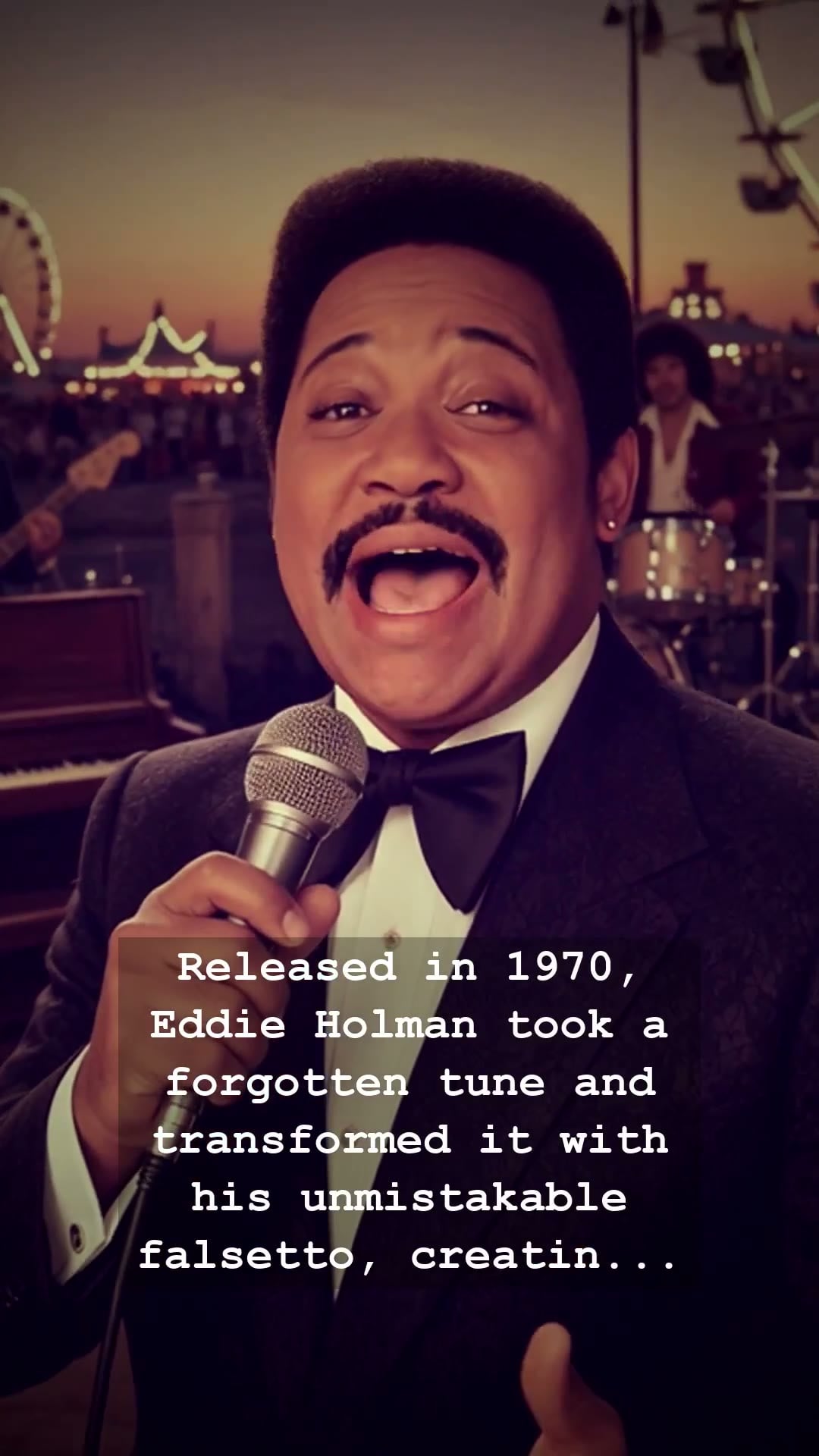
The year was 1970, and the airwaves were thick with the shifting sound of a new decade. As the world moved away from the psychedelic haze of the late sixties, a singular, piercing voice cut through the noise of the radio dial. It was Eddie Holman, a man whose range seemed to defy the limits of human vocal cords. While many artists of the era were caught in the frantic race to define the next big trend, Eddie Holman found something far more enduring: a forgotten melody that he would imprint with his own haunting, crystalline falsetto. This transformation did not just create a hit; it carved out a permanent space in the history of American soul.
The song, Hey There Lonely Girl, was not a new invention, yet when Eddie Holman stepped into the studio, he stripped away the dust of its previous incarnations. He brought a sense of vulnerability that felt dangerously raw. In an era where the Jukebox was the heartbeat of every roadside diner and the burgeoning influence of televised performances was beginning to reshape fame, Eddie Holman stood apart. He didn’t need the glitz of Studio 54 or the heavy production of arena rock to capture an audience. He relied on the quiet, devastating power of a broken heart set to music. His performance was a masterclass in emotional restraint, proving that the softest notes often carry the heaviest weight.
Yet, behind the silky smooth delivery of Eddie Holman lay the reality of an industry that often chewed up talent before it could truly bloom. The seventies were a time of intense pressure for soul singers, forced to navigate the transition between the polished Motown era and the disco explosion. Many of his peers faltered under the weight of substance abuse or label politics, but Eddie Holman remained anchored by his commitment to his craft. There is a specific, melancholy beauty in the way he phrased his lyrics, a technique that echoed the pain of lost love that so many listeners felt but couldn’t quite articulate. It was a soundtrack for the lonely hours spent staring at a flickering neon sign or waiting for a call that never came.
Today, the legacy of Eddie Holman remains a testament to the longevity of pure, unfiltered soul music. It is a rare artist who can take a composition and claim it so completely that any subsequent version feels like a ghost of the original. When you listen to his work, you are transported back to a time before digital perfection, back to when the hiss of the vinyl and the warmth of the tube amplifier were the only filters between the soul and the sound. He didn’t just sing a song; he gave a voice to the universal experience of longing.
Even as trends shifted toward the synthesizers of the eighties and beyond, the influence of Eddie Holman endured. His ability to evoke such profound empathy is the reason his music still finds its way into modern playlists, continuing to break hearts decades after it first charted. It serves as a haunting reminder that in the grand history of American music, the most powerful stories are often told in a whisper. As we look back at the giants of the past, we find that the true legends are those who dared to be vulnerable. If you haven’t sat with this record lately, take a moment to listen; the ache in his voice is as timeless as ever.