
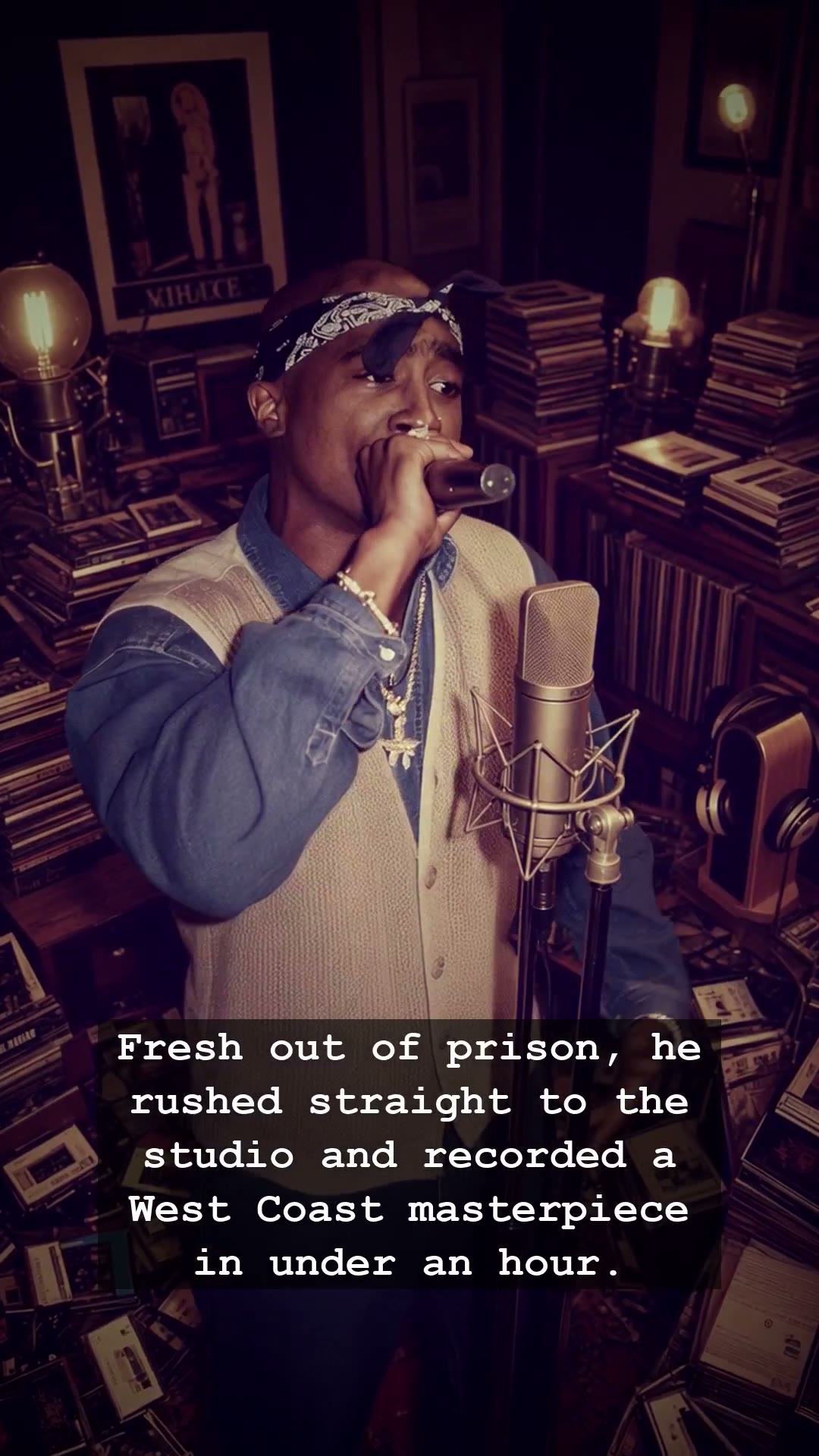
The concrete walls of Clinton Correctional Facility had barely faded into the rearview mirror when the air turned electric. It was October 1995, and Tupac Shakur, arguably the most volatile and gifted poet of his generation, had just been released on a massive 1.4 million dollar bail posted by Death Row Records. Most men would have sought rest or the safety of silence after months behind bars, but Tupac was a man possessed by a rhythm only he could hear. With the ink on his release papers still damp, he did not head home. He headed straight to the studio. He had a point to prove, a West Coast legacy to solidify, and an entire generation waiting for his return to the microphone.
In the dimly lit sanctuary of the recording booth, the tension was palpable. The air was thick with the scent of cheap cigarettes and the frantic energy of a crew that knew they were witnessing history. Tupac Shakur walked in, grabbed a pen, and channeled his newfound freedom into raw, unfiltered kinetic energy. In under an hour, he had laid down the foundations for what would become his quintessential anthem, California Love. It was more than just a hit record; it was a defiant declaration that he was back, he was untouchable, and he was the undisputed king of the West Coast.
The mid-nineties were a volatile era for Hip-Hop, a time defined by the escalating, dangerous rivalry between the East and West Coasts. The streets were buzzing with tension, and the media was fueling a fire that would eventually consume its brightest stars. Yet, in that studio session, Tupac Shakur transformed the atmosphere into pure, unadulterated sunshine. He turned the hostility of his incarceration into a triumphant celebration of the Golden State. The track pulsed with a G-funk infectiousness that made the world forget the darkness of the rap wars for just a few precious minutes.
Looking back at that moment from the digital age, it feels like a fever dream from a lost era. Before the ubiquity of streaming services, before the polish of modern digital production, there was the tangible, grit-filled magic of a studio session where an artist was racing against his own demons. Tupac Shakur understood the weight of the moment; he lived life at a breakneck speed because he knew, deep down, that his time was a flickering candle. That frantic hour in the booth captured the essence of his existence: brilliant, hurried, and profoundly influential.
Today, California Love stands as a monument to that specific point in American cultural history. It reminds us of a time when the stakes in music felt like matters of life and death. We listen to his voice now and hear not just a rapper, but a cultural phenomenon who defined the landscape of the nineties. Tupac Shakur may have left us far too soon, but that masterclass in studio spontaneity ensures that as long as the bass drops and the beat rolls, he will never truly be gone.