
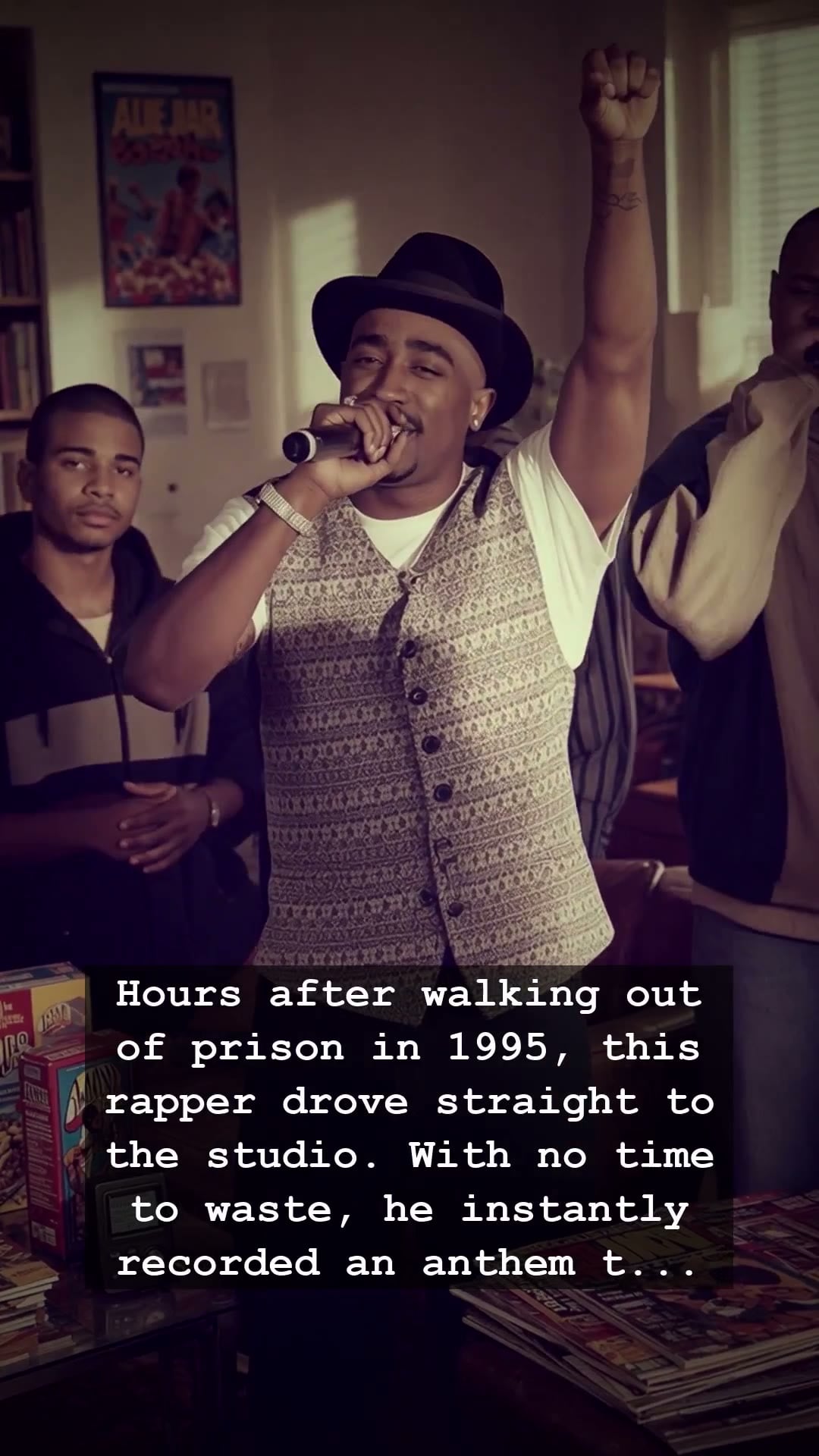
The heavy steel gates of Clinton Correctional Facility had barely creaked shut behind him when the world shifted on its axis. It was October 1995, and Tupac Shakur was a free man—or at least as free as a man living under a death sentence of fame and paranoia could ever be. Most people would have sought the comfort of a quiet home or the warmth of a family embrace after months behind bars. But Tupac was not most people. With the scent of freedom still fresh and the weight of the East Coast-West Coast rivalry simmering like a dormant volcano, he did the unthinkable. He drove straight from the prison to the studio, driven by a kinetic, restless energy that defined his entire existence.
Inside the sanctuary of the recording booth, the atmosphere was thick with tension and unfiltered adrenaline. Tupac Shakur didn’t have time to process the trauma of his incarceration or the vultures waiting to tear down his reputation. He heard a beat—a dark, hypnotic soundscape that seemed to reflect the bruised ego of the West Coast—and he didn’t just record a track; he birthed a movement. In those immediate, raw hours, he laid down the foundation for California Love. It was more than a song; it was a defiant roar, a proclamation that the king had returned to claim a throne that many had tried to snatch during his absence.
The industry at the time was a battlefield. MTV was the ultimate arbiter of cool, and the streets were gripped by the escalating hostility between the coastal powerhouses of hip-hop. By choosing to head directly into the studio, Tupac Shakur solidified his status as a man who viewed music not as a career, but as his only true weapon against a hostile world. The track captured the quintessential 90s spirit—a blend of G-funk synthesizers and lyrical ferocity that became the anthem of an era. It remains a chilling reminder of the intensity of the golden age of hip-hop, where artists lived their lyrics with dangerous conviction.
Years later, when we look back through the lens of history, we see the cracks in the facade. The pressure of the spotlight, the shadow of substance use, and the crushing weight of artistic expectation pushed Tupac to the brink. Yet, there is something undeniably cinematic about those first hours post-prison. It serves as a stark metaphor for the life of a legend: constant motion, constant friction, and a relentless need to communicate before the clock ran out. It was a moment of pure creative desperation, and it changed the trajectory of rap music forever.
Today, we look back at that day in 1995 not just as a piece of music history, but as a window into the psyche of a man who felt he was running out of time. Whether he was a prophet, a poet, or a prisoner of his own myth, Tupac Shakur left us with a soundtrack that still echoes in every corner of the culture. As we listen to those iconic opening bars, we are transported back to a time of Walkmans, street wars, and the raw, unpolished grit of the West Coast. Let us remember the music that defined a generation, and the man who, even in his darkest hour, could turn chaos into gold.