
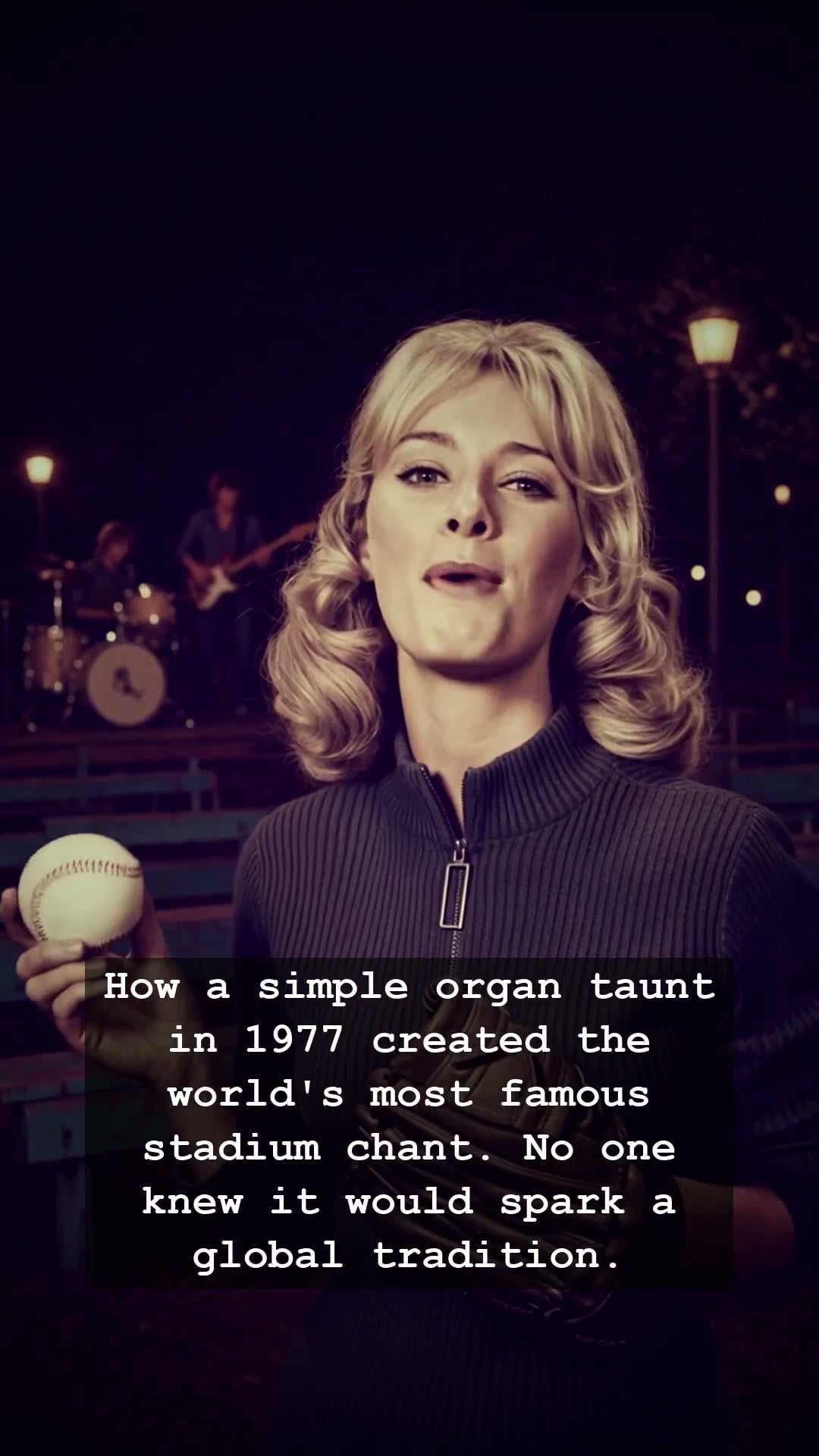
In the golden era of the 1970s, long before the sanitized, button-down corporate atmosphere took over modern professional sports, the stadium experience was a gritty, visceral affair defined by the smell of hot dogs, the crack of wood meeting leather, and the analog soul of the Hammond organ. At the heart of Chicago’s Comiskey Park sat one woman who held the power to manipulate the mood of thirty thousand people with nothing more than a melody. Her name was Nancy Faust, and she was the secret architect behind one of the most recognizable cultural exports in sports history. While the era was dominated by the rise of disco and the looming shadow of the punk explosion, Nancy Faust was quietly crafting a legacy that would outlive the fads of the decade.
It was 1977, a year of cultural turbulence and shifting tides. On a humid summer afternoon, Nancy Faust sat at her organ, watching the opposing team’s pitcher struggle on the mound. In a flash of spontaneous mischief, she decided to taunt him. She began playing a bouncy, simplistic, and repetitive tune—a musical jab meant to rattle his nerves. She didn’t know it then, but those few notes would ignite a global phenomenon. That playful, synthesized mockery became the ubiquitous ‘Na-Na-Na-Na, Hey-Hey-Hey, Goodbye’ chant. What started as an improvised moment of arena banter quickly spiraled, catching fire with the crowd and echoing through the stadium’s rafters, eventually cementing itself as the universal anthem for sending an opponent packing.
To understand the gravity of Nancy Faust’s influence, one must recall the technological limitations and the raw charm of that period. This was a time before massive Jumbotrons and pre-recorded hype tracks dictated the fan experience. The stadium was a living organism, and Nancy Faust was its heartbeat. She didn’t just play songs; she conducted the emotion of the room, using her instrument to provoke, celebrate, and console. Her interaction with the crowd at Comiskey Park wasn’t just a performance; it was a conversation, a tug-of-war between the artist and the audience that defined the spirit of the late twentieth-century sports landscape.
The genius of Nancy Faust lay in her ability to bridge the gap between high-stakes competition and vaudevillian humor. In an age where professional athletes were beginning to command massive salaries and the stakes of every game felt astronomical, her organ music reminded everyone that baseball was, at its core, a game meant to be enjoyed. The chant she inadvertently launched has since been shouted in football stadiums across Europe, basketball arenas in Asia, and everywhere in between, yet its origin remains rooted in that specific, sun-drenched Chicago afternoon where an organist dared to be cheeky.
Decades have passed since the 1970s, but the legacy of Nancy Faust remains a testament to the power of human connection in the analog age. Today, when we hear that melody roar from the stands, we aren’t just hearing a cheer; we are hearing a piece of living history. It reminds us of a time when the world felt a little smaller and a little more spontaneous, fueled by the talent of those who knew how to turn a simple moment into a global tradition. Nancy Faust remains a legend of the craft, proving that sometimes, the most enduring monuments aren’t built of stone, but of sound.