
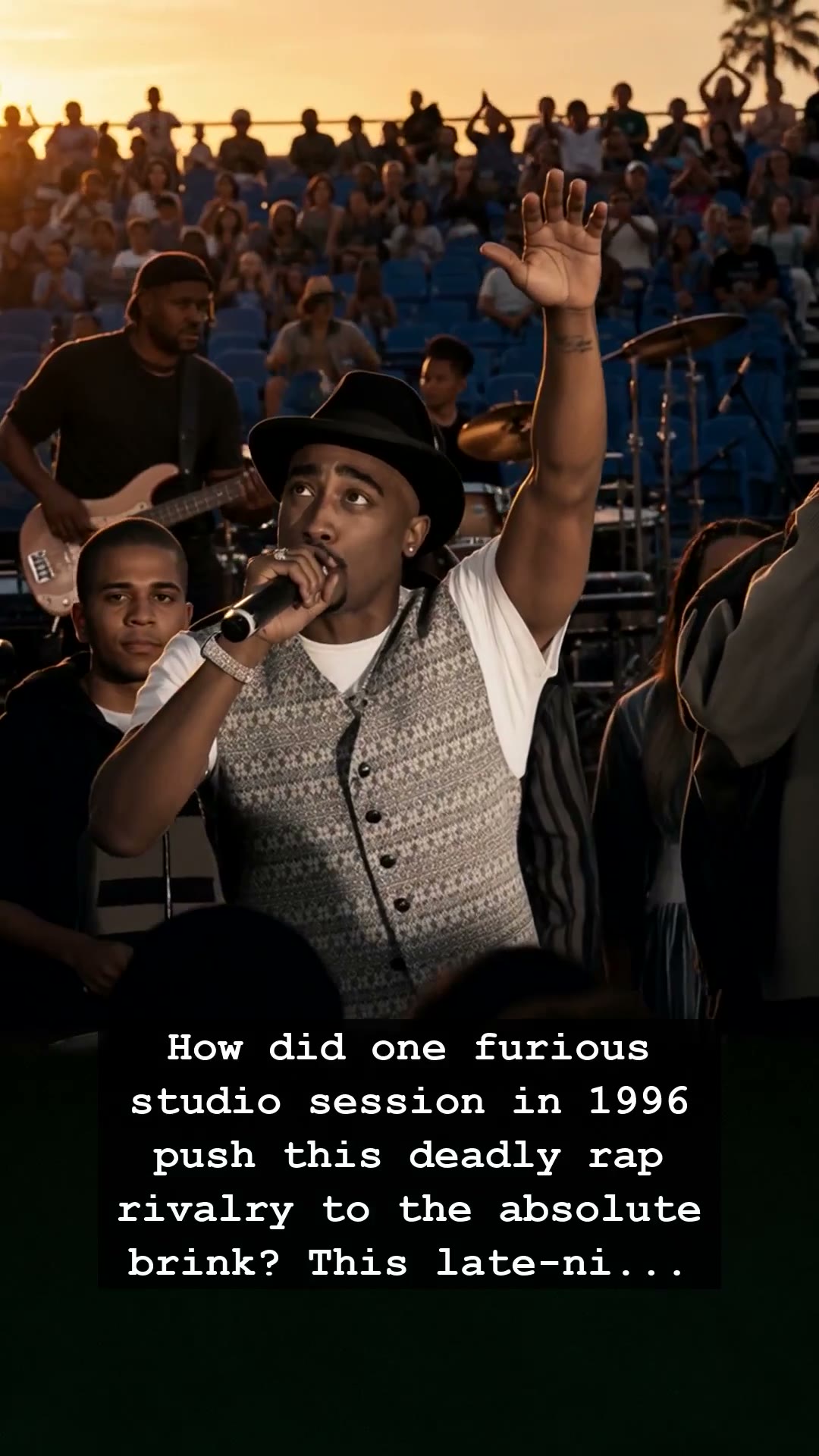
The air in the California studio was thick with smoke, tension, and the unmistakable scent of impending disaster. It was 1996, a year where the golden age of hip-hop was rapidly curdling into something far more dangerous. Inside the recording booth, Tupac Shakur was not just laying down vocals; he was sharpening a blade. The track that emerged that night would become the most explosive diss record in music history, a sonic assault so visceral it sent shockwaves far beyond the walls of the studio. While the world was busy dancing to the infectious beats of the radio, the internal gears of the East Coast-West Coast rivalry were grinding toward a point of no return.
To understand the gravity of that late-night session, one must look back at the cultural landscape of the mid-nineties. The music industry was a high-stakes arena where allegiances were worn like armor, and words could prove just as lethal as bullets. Tupac Shakur stood at the epicenter of this hurricane, a figure as magnetic as he was volatile. As the rivalry escalated, the studio became more than a place of creation; it was a bunker. The pressure of the era, the constant glare of the public eye, and the deep-seated betrayal between industry titans created an environment where the music stopped being an art form and started acting as a declaration of war.
That night, the intensity Tupac Shakur brought to the microphone was unprecedented. There was a desperate, raw energy in his delivery that felt less like a performance and more like a final manifesto. Those present recall the silence that fell over the room once the playback began—the realization that the industry had changed forever. It was a moment of profound artistic power, yet it carried the chilling weight of a countdown. This was the era of the Walkman and the communal discovery of music, but for Tupac, the personal stakes had eclipsed the commercial ones.
Looking back from the vantage point of modern music history, the tragedy feels even more unavoidable. The rivalry between the coastal factions was not just about bragging rights or lyrical dominance; it was a collision of egos and wounded pride that mirrored the volatility of the decade itself. Tupac Shakur remains a permanent icon of this era, not just because of his undeniable talent, but because his life captured the exact moment when the optimism of the late twentieth century began to fracture under the weight of its own fame.
Even today, the reverberations of those sessions continue to haunt the legacy of hip-hop. When we listen to those tracks now, we are hearing a man wrestling with his destiny in real-time. The story of Tupac Shakur is a reminder that the music we hold dear is often stained with the ghosts of the people who created it. As we look back at the archives of the nineties, let us remember not just the hit songs, but the raw, human cost of the legends we still celebrate today.