
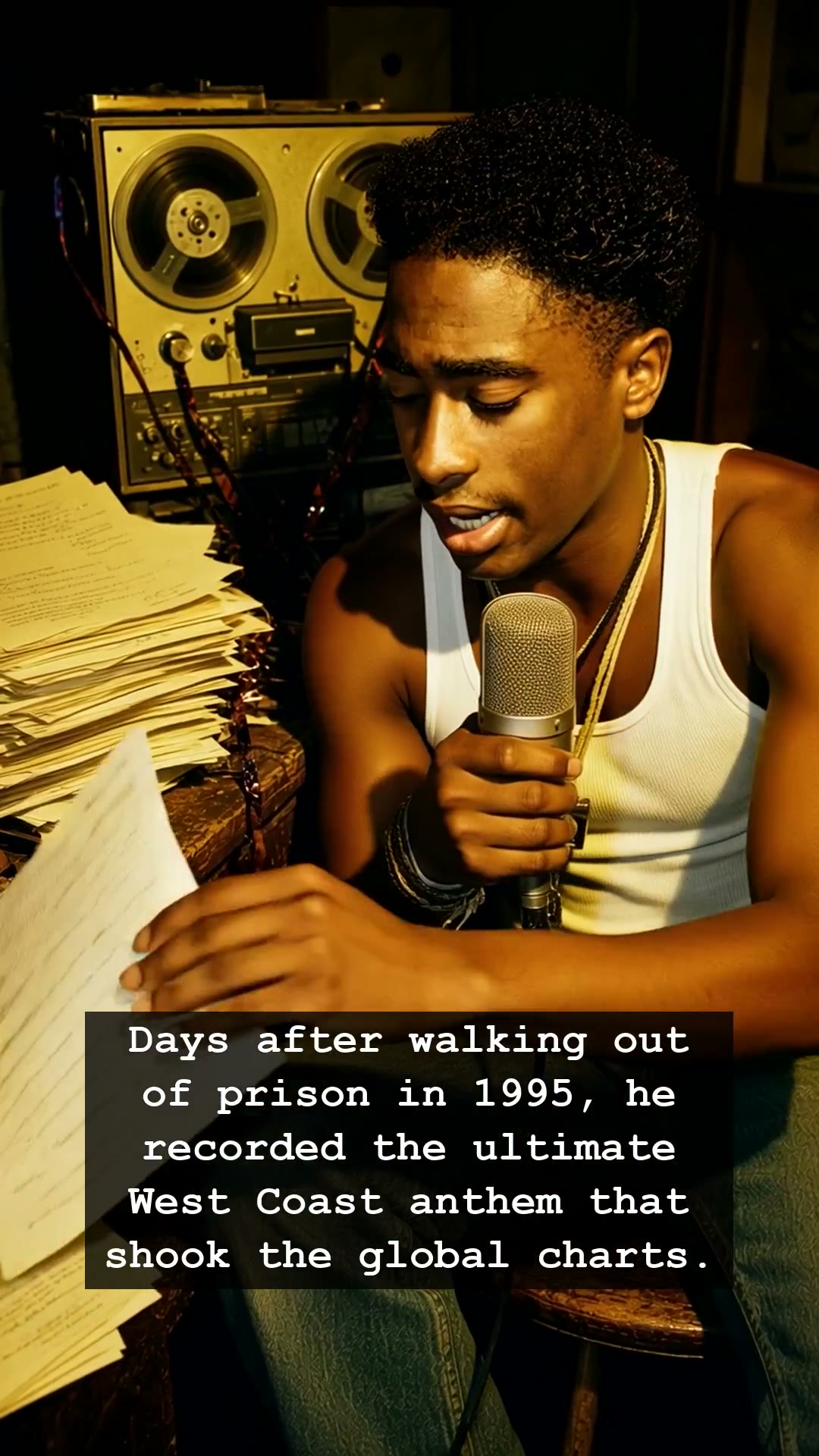
The year was 1995. The air in California felt electric, thick with the tension of an ongoing coastal war that was about to redefine the cultural landscape of America. Just days after walking out of the prison gates, a man who had become the voice of a generation didn’t seek rest or solitude. Instead, Tupac Shakur walked straight into the studio, his mind a whirlwind of lyrical vengeance and profound artistic necessity. With the smell of stale cigarette smoke clinging to the walls and the hum of analog equipment filling the room, he prepared to unleash an anthem that would permanently shake the global charts. This wasn’t just a recording session; it was the birth of a legend reclaiming his narrative.
For those who remember the era of the oversized Walkman and the grainy glow of MTV, the release of California Love felt like an seismic shift. Tupac Shakur had been through the fire. He was battle-hardened, feeling betrayed by the industry and the legal system, yet his energy remained unmatched. As he stepped up to the microphone, he wasn’t just performing; he was channeling the raw, unfiltered spirit of the West Coast. The world was divided into East and West, a rivalry that burned brighter than any neon sign on the Sunset Strip, and Tupac was the undisputed champion of the Pacific movement.
The production was cinematic, blending the funk-heavy grooves that had defined previous decades with a futuristic, aggressive edge that was entirely new. When the track finally hit the airwaves, it didn’t just play on the radio; it commanded the room. You could hear it blasting from passing cars and echoing through the alleys of urban America. For a brief moment, the personal drama surrounding his legal battles faded into the background, replaced by the sheer, undeniable power of the music. Tupac Shakur managed to take the pain of his imprisonment and transmute it into a celebratory, anthemic explosion of pride that still resonates in the hearts of listeners today.
Looking back, it is impossible to ignore the duality of his existence. While the music soared to the top of the charts, the life of Tupac Shakur remained shadowed by the dark undercurrents of fame, paranoia, and the relentless pressure of being a cultural icon. He was a poet living in a war zone, a man who knew the cost of his lyrics but refused to compromise his vision. The studio became his sanctuary and his battlefield, the only place where he could exert control over a world that seemed determined to tear him apart. It was a time of excess, danger, and immense creative brilliance.
Even now, decades removed from that historic prison release, the impact of his work remains solidified in music history. He wasn’t just a rapper; he was a mirror reflecting the realities of an era marked by deep social divides and explosive musical innovation. When you listen to those tracks today, you aren’t just hearing a song; you are catching a glimpse of a man who lived with his back against the wall, finding his freedom in the rhythm. Do you remember where you were when the world finally heard California Love?