
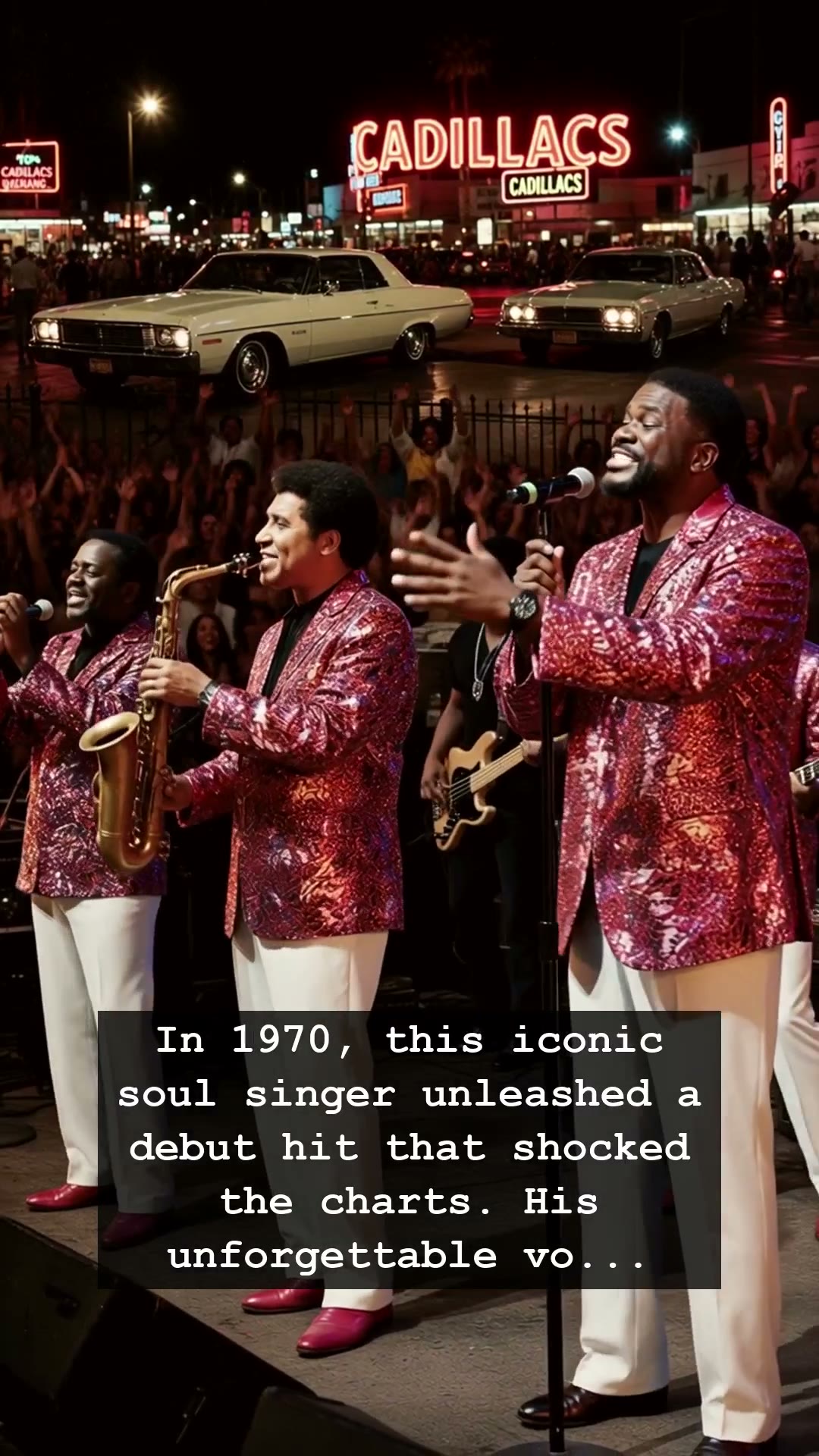
It was 1970, and the airwaves were undergoing a seismic shift. While the world was reeling from the turbulence of the late sixties, a voice emerged from the heat of the American South that felt like a warm, velvet embrace. General Johnson, the legendary frontman of Chairmen of the Board, didn’t just sing a song; he unleashed a soulful masterpiece that would forever define the sound of the era. The hit, Give Me Just a Little More Time, hit the airwaves like a lightning bolt, climbing the charts and cementing the group’s place in music history. But behind the infectious groove and the polished production of the Invictus label sat a man whose journey was far more complex than the radio play suggested.
General Johnson was not a newcomer when he found stardom with Chairmen of the Board. He was a veteran of the industry, a master songwriter who had already penned hits for other icons before stepping into the spotlight himself. There was a specific, raw electricity when General Johnson grabbed the microphone. You could hear the grit of the rhythm and blues circuit in his delivery, a testament to years spent grinding in clubs, long before the glitz of the television spotlights or the massive success of their debut album. He possessed a rare ability to translate heartache into a catchy hook, a skill that turned their signature sound into an essential part of the American soundtrack.
To understand the appeal of Chairmen of the Board is to step back into a world of analog warmth, where music was discovered through the crackle of a jukebox in a dimly lit diner or the crisp sound of a fresh 45-rpm record. General Johnson lived in that world. While his peers were chasing the psychedelic sounds of the West Coast or the rising tide of arena rock, Johnson stayed true to the soulful storytelling that defined his roots. Yet, the industry was often cruel to even the most gifted artists. Behind the scenes, the business of soul was a cutthroat environment, filled with broken contracts, shifting label loyalties, and the constant, crushing pressure to replicate a fluke hit.
General Johnson faced these pressures with a quiet dignity, continuing to lead Chairmen of the Board through decades of change. His legacy isn’t just in the gold records; it is found in the way he influenced a generation of Southern soul singers who looked up to his showmanship and his songwriting prowess. He carried the weight of a changing industry, transitioning from the era of Motown and soul to the disco-soaked dance floors of the late seventies, never losing that signature, raspy warmth that made his voice so immediately recognizable to anyone listening.
Even today, when that unmistakable piano opening starts, the years seem to melt away. We are transported back to a time of simpler pleasures, where a three-minute song could tell an entire story of longing and hope. General Johnson left behind a catalog that serves as a beautiful time capsule of American music. His voice remains a haunting, beautiful ghost of an era that valued musical craftsmanship above all else. Whenever you hear those chords today, take a moment to remember the man behind the melody, the general who led his board into the halls of soul immortality.