
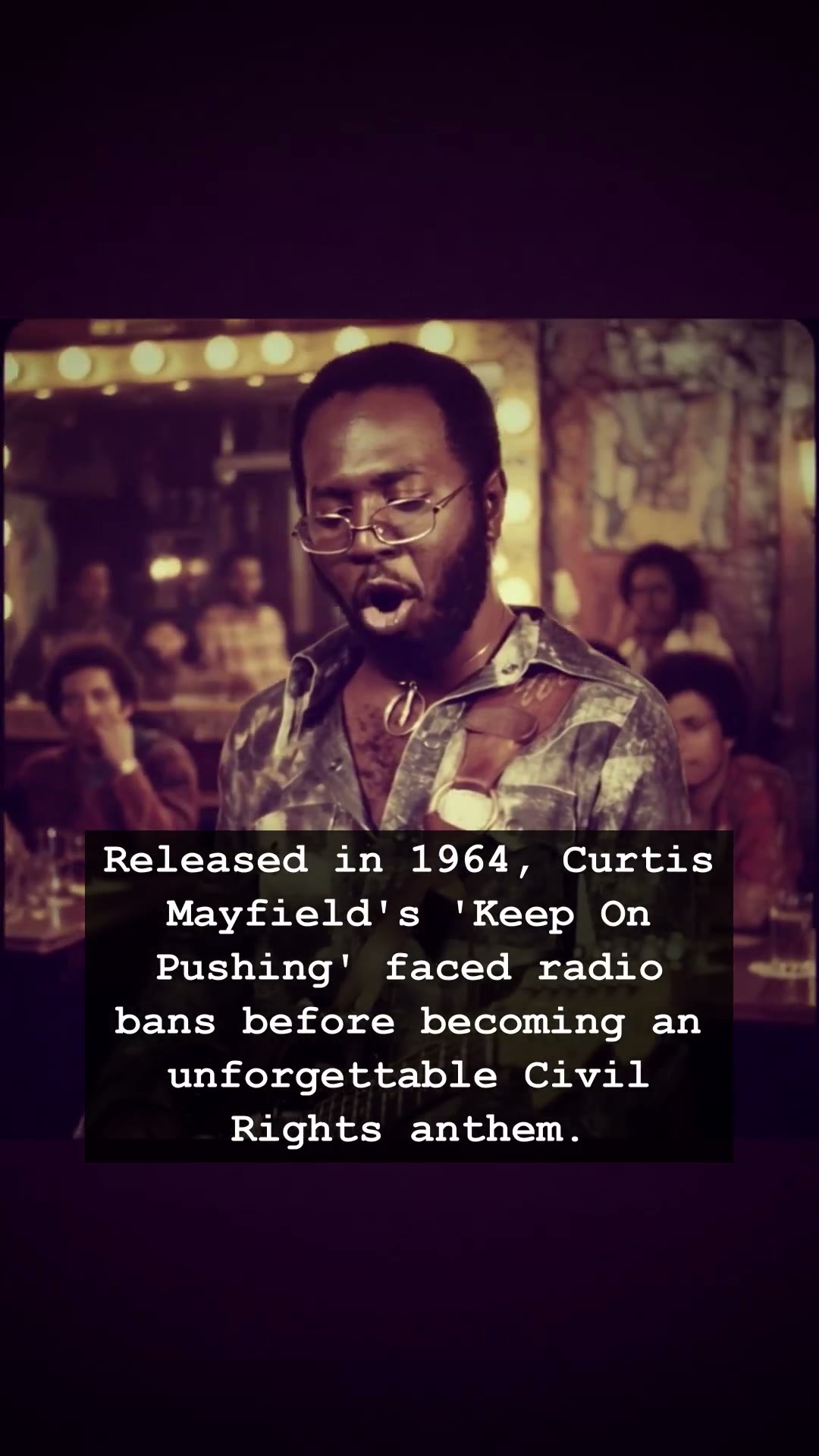
In 1964, the airwaves were carefully curated to keep the status quo, and Curtis Mayfield was a man standing in the way of that silence. As the soul-stirring notes of Keep On Pushing drifted from radios, many station managers were quick to pull the plug, fearing the song was far too radical for the ears of the American public. At a time when segregation was tearing the social fabric apart, the message of resilience carried by Curtis Mayfield was seen not just as art, but as a dangerous call to action that threatened the comfort of the establishment. Yet, no amount of censorship could stop a message whose time had finally arrived.
To understand the magnitude of this moment, one must step back into the mid-sixties, an era defined by the crackle of Jukeboxes in dusty diners and the rising tension of the Civil Rights Movement. Curtis Mayfield, already a luminary of the soul genre with The Impressions, channeled the collective weariness and hope of a generation into his music. Keep On Pushing was more than just a catchy melody; it was a defiant mantra. While the world outside was filled with protests, fire hoses, and the uncertainty of a shifting political landscape, Curtis Mayfield provided a soundtrack that offered both solace and a demand for dignity.
Behind the scenes, the recording process was steeped in the raw reality of the era. Curtis Mayfield was known for his gentle demeanor, yet he possessed a steel-like resolve. He understood that music was a vehicle for truth, even if that truth cost him airplay. The song’s instrumentation was deceptively simple, letting his smooth, haunting vocals lead the way through the emotional landscape of the struggle. For many listeners at the time, hearing the song felt like a shared secret—a moment of profound solidarity that pulsed through the streets and inside the living rooms of those watching the news in disbelief.
It is fascinating to look back at how the industry tried to categorize him as just another pop act while his lyrics were actively dismantling the barriers of the time. The ban was a futile attempt to mute the inevitable. Instead, the rejection by radio stations only fueled the song’s status as an authentic piece of history. Curtis Mayfield proved that when art is rooted in genuine human experience, it transcends the medium of the radio. It becomes a permanent fixture in the cultural memory, surviving long after the vinyl records have stopped spinning and the original stations have gone silent.
Today, the legacy of Curtis Mayfield remains a cornerstone of American music history. His ability to fuse social commentary with soul music set a blueprint for generations of artists to follow. When we listen to Keep On Pushing now, we are transported back to a pivotal moment where one man decided that silence was not an option. It remains a hauntingly beautiful reminder that courage is often found in the most melodic of places. As we look back on the echoes of the sixties, it is clear that Curtis Mayfield didn’t just write a song; he helped write the heartbeat of a movement that refuses to be forgotten.