
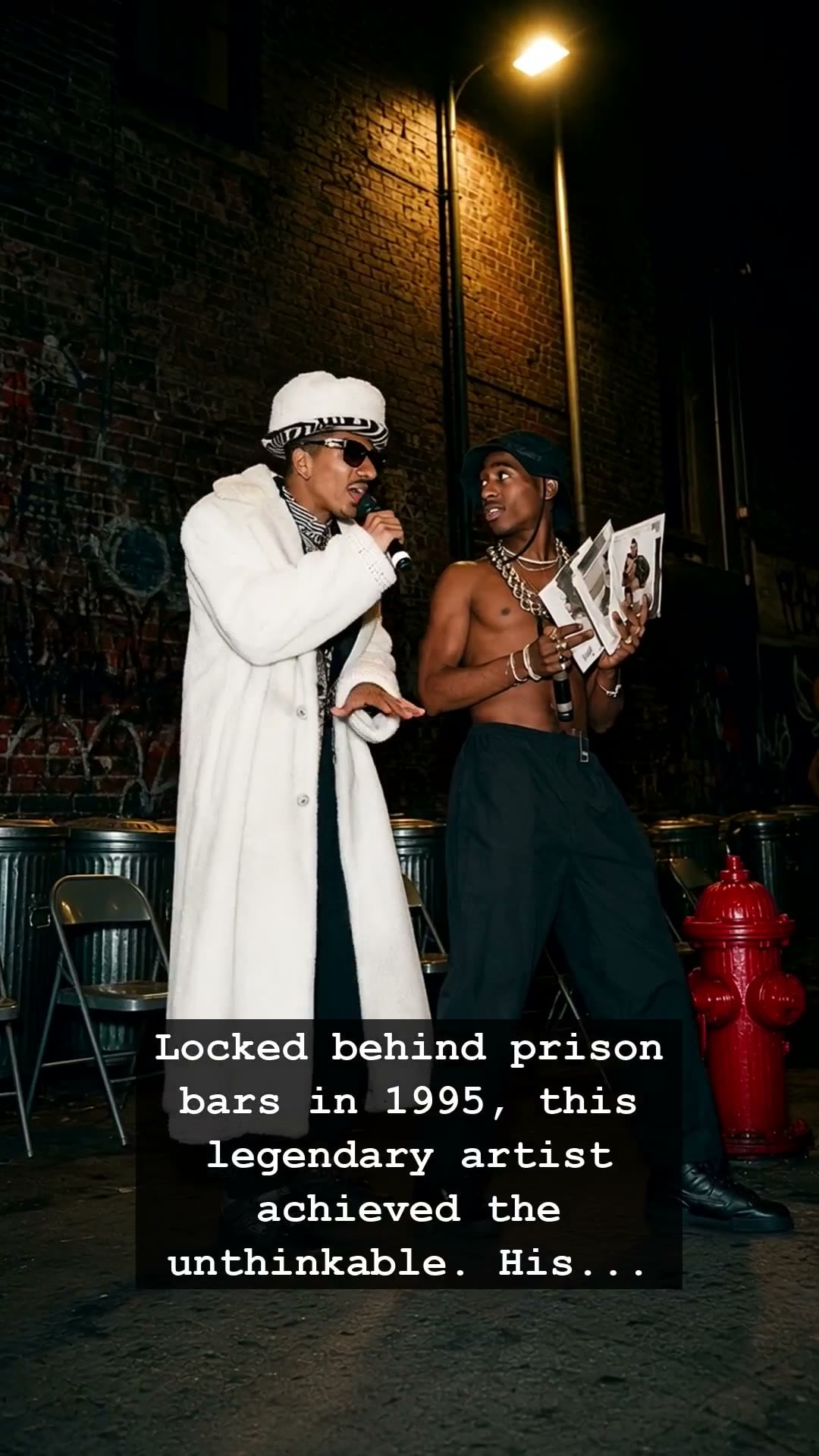
In the cold, sterile confines of the Clinton Correctional Facility in 1995, the world felt like it was closing in on Tupac Shakur. He was a man defined by contradictions: a poet with a street edge, a visionary with a target on his back, and a superstar trapped in a cage of concrete and steel. While the music industry outside was busy chasing the polished sheen of the evolving hip-hop scene, Tupac Shakur was orchestrating a cultural earthquake from behind iron bars. It was a time when the Walkman was the essential companion for every teenager, and the radio was the primary pulse of the nation. Yet, despite the isolation, the voice of a generation remained impossible to silence.
Most artists crumble under the weight of legal battles and public scrutiny, but Tupac Shakur possessed a relentless creative fire that burned brighter when confined. His masterpiece, Me Against the World, was released while he was serving his sentence, marking the first time an artist had achieved a number-one album while physically incarcerated. It was not just a record; it was a visceral diary. Songs like Dear Mama and So Many Tears cut through the noise of the mid-90s, offering a raw, introspective look at a life scarred by systemic poverty and the haunting ghosts of the streets. The album resonated with a generation feeling disillusioned, bridging the gap between the raw soul of the past and the uncertainty of the future.
This era was defined by a shift in the cultural landscape, where the drama of the East Coast versus West Coast rivalry was beginning to reach a fever pitch. Tupac Shakur stood at the epicenter of this tectonic shift. His ability to articulate the pain and ambition of millions made him more than just a rapper; he was a contemporary folk hero. The irony was palpable: the prison walls intended to break his spirit actually amplified his message, turning his incarceration into a symbol of the struggle against a system he so often challenged in his lyrics. Every track on that album felt like a secret whisper from the darkest corners of a man’s soul, delivered through the crackling static of prison telephones and makeshift studio sessions.
Looking back, the impact of that 1995 moment feels even more significant. Tupac Shakur taught us that authentic art does not require the luxury of a golden-age recording studio or the freedom of the streets. It requires nothing but a pen, a piece of paper, and the courage to speak a truth that others fear to acknowledge. Even decades later, his words continue to haunt and inspire, reminding us that true genius is not defined by external circumstances, but by an unwavering resolve to express the human condition.
As we navigate today’s hyper-digital world, the grit and gravity of Tupac Shakur’s work remain a poignant reminder of a time when music felt like a matter of life and death. His story remains a cornerstone of American music history, a legend forged not in the comfort of success, but in the harsh reality of endurance. When you listen to those classic tracks today, you aren’t just hearing a song; you are hearing the echo of a man who refused to be forgotten. Do you remember the first time those lyrics hit your soul?