
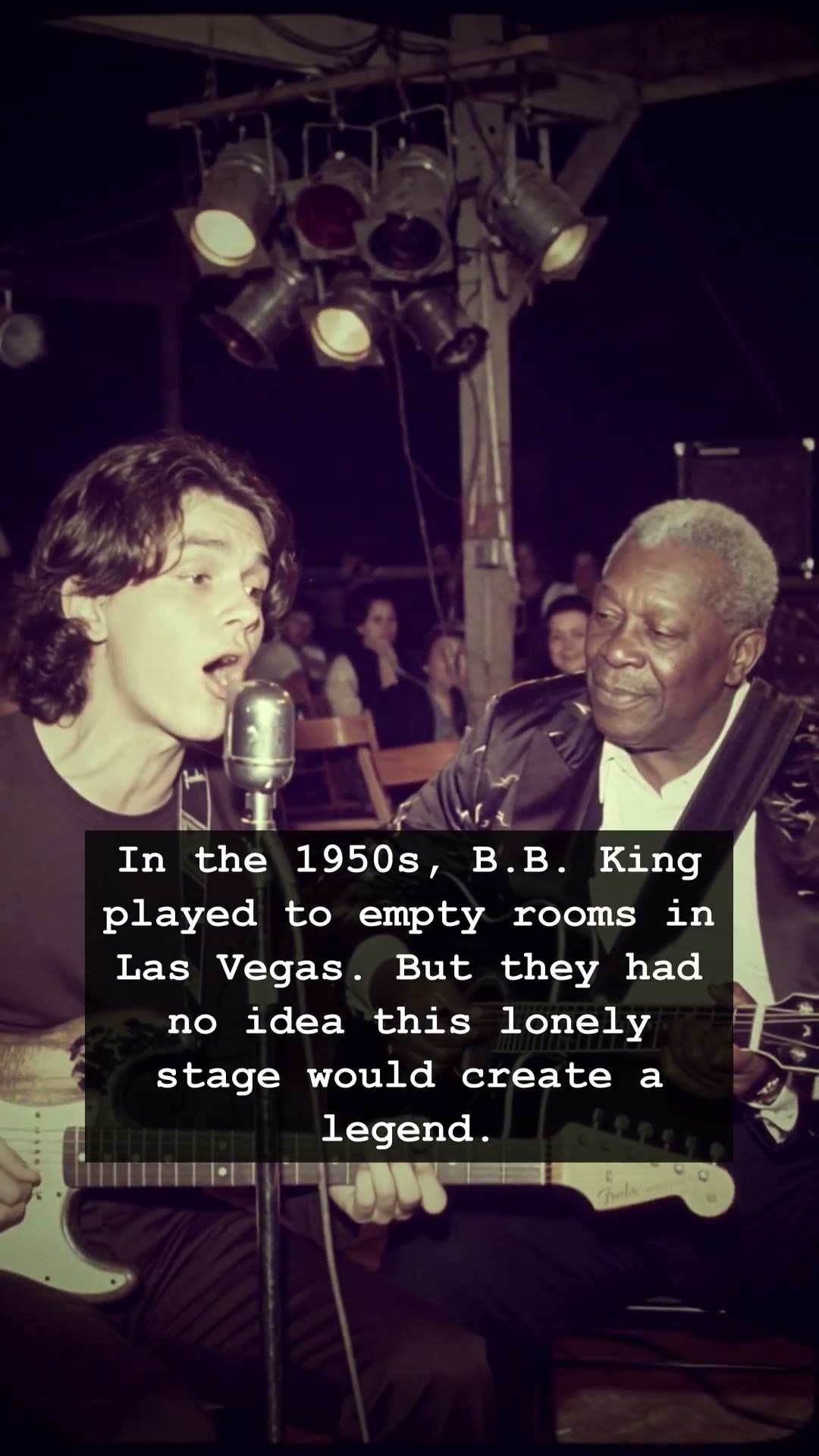
In the glitzy, neon-soaked haze of the 1950s Las Vegas strip, where high rollers and cabaret performers vied for the spotlight, one man stood alone on a stage that nobody wanted to visit. B.B. King, the man who would eventually be crowned the King of the Blues, spent his nights pouring his soul into a guitar named Lucille while performing to rows of empty velvet chairs. While the city outside was alive with the sound of slot machines and the roar of a burgeoning tourism empire, the silence in that small lounge was deafening. Most artists would have crumbled under the weight of such indifference, but B.B. King treated those hollow nights like a sacred ritual, playing with the same intensity as if he were performing for a sold-out stadium.
It is difficult to imagine a world where the voice of B.B. King did not demand absolute silence and reverence, yet his early career was defined by this crushing isolation. The music scene of the mid-1950s was a volatile landscape where radio airplay and jukebox placements meant everything. For a blues artist, the struggle was compounded by a social climate that often confined his talent to the shadows. Yet, B.B. King possessed a singular focus that transcended the vacant tables of Las Vegas. He was not just playing for the patrons who weren’t there; he was playing for the ghost of the Mississippi Delta and the future of American soul. Each note bent on his guitar strings was a testament to his resilience.
This era of obscurity was the crucible that forged a master. While other musicians chased the fleeting trends of the day, B.B. King remained tethered to the raw, visceral truth of the blues. He understood that true mastery is not found in the roar of the crowd, but in the discipline of the practice. Every night spent staring at an empty room taught him how to squeeze emotion from a single string, creating a signature vibrato that would eventually become the gold standard of blues guitar playing. Those lonely, quiet hours were arguably more instrumental to his legendary status than any Grammy award he would win decades later.
Today, we look back at the career of B.B. King as an inevitable triumph, a roadmap from poverty to global stardom. But the true story lies in those moments when the spotlight was dim and the audience was nonexistent. His journey reminds us that greatness is often cultivated in the quiet corners of history, far away from the glamour of fame. The irony is that the patrons who skipped his shows were missing the birth of a legend, a man who would go on to influence everyone from Eric Clapton to Jimi Hendrix.
When we listen to his recordings now, we are hearing the echo of those empty Las Vegas nights. We hear the patience of a man who refused to quit, a man who transformed his loneliness into a universal language of longing and liberation. B.B. King didn’t just play music; he translated the human experience into something we could all feel. His legacy remains an eternal flame, reminding us that even in our darkest moments of isolation, we might just be setting the stage for our own greatest act.