
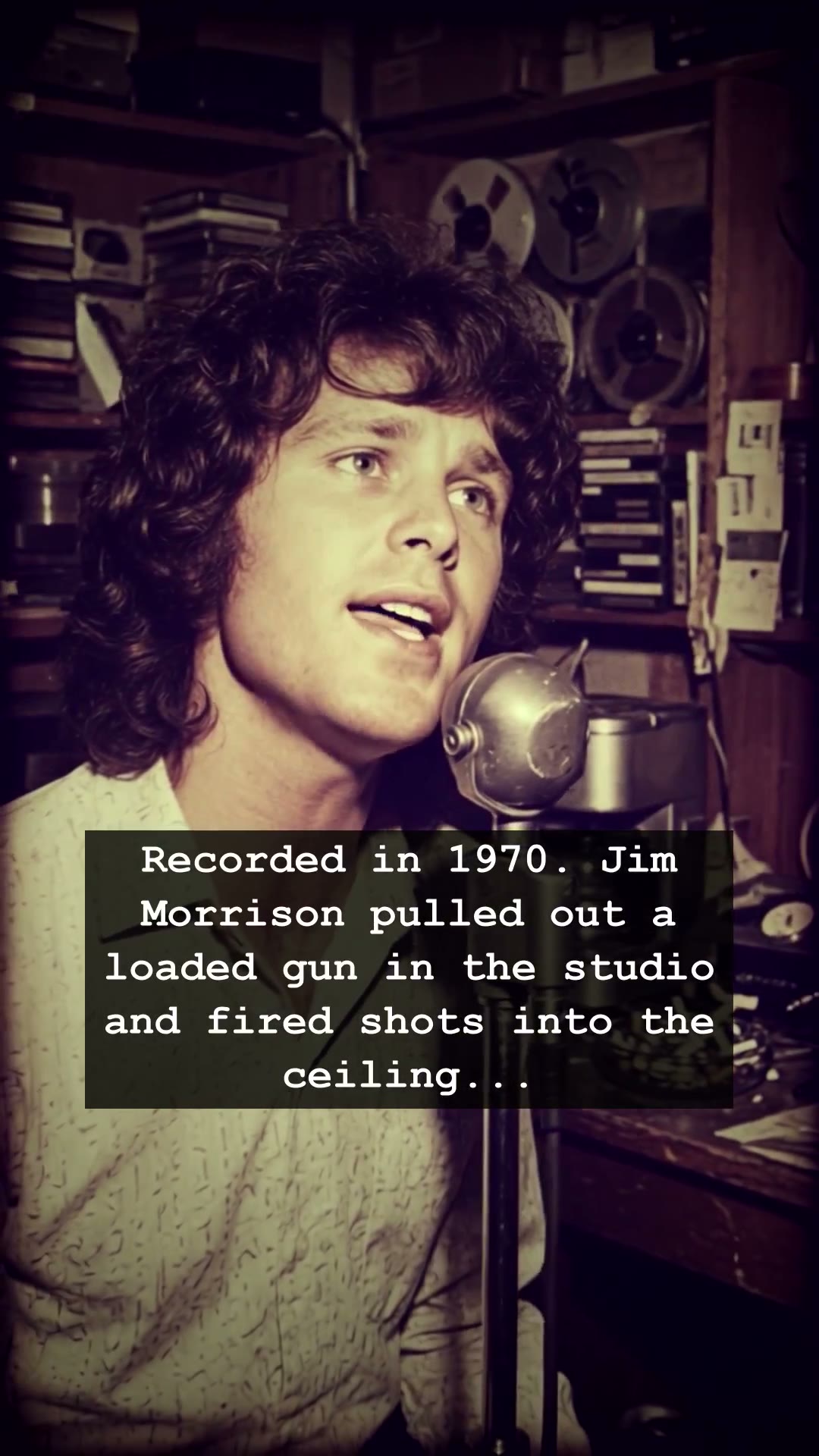
It was 1970, and the air inside the studio was thick with the scent of stale tobacco and the suffocating pressure of a band reaching its breaking point. The Doors, once the darlings of the Sunset Strip, were no longer the unified front that had captivated audiences at the Whisky a Go Go. Instead, they were four men trapped in a cycle of mounting resentment and the crumbling psyche of their legendary frontman. Without warning, the silence of a recording session was shattered by a deafening blast. Jim Morrison had pulled out a loaded gun and fired shots directly into the studio ceiling. His bandmates stood frozen, staring at the man who had traded his poetic charisma for a dangerous, unpredictable volatility.
To understand the madness, one must look at the landscape of the late sixties and early seventies. The idealism of the Summer of Love had withered into something darker. The music industry was no longer just about art; it was a high-stakes arena where icons like Jim Morrison were being ground into dust by the machinery of fame. The Doors had defined a generation, but by the time they were crafting what would eventually become the L.A. Woman album, the magic was being replaced by the mundane reality of addiction and creative exhaustion. The studio, once a sanctuary for their psychedelic experiments, had become a pressure cooker where every chord struck felt like an argument.
Jim Morrison was a man perpetually walking the tightrope between visionary brilliance and complete self-destruction. The shooting incident was not merely a moment of drunken bravado; it was a desperate cry for release from the persona of the Lizard King. While the rest of the band—Ray Manzarek, Robby Krieger, and John Densmore—struggled to maintain the technical integrity of their sound, Morrison was spiraling. The sound of that gunshot echoing through the rafters served as a grim punctuation mark to an era that was rapidly losing its innocence. It remains one of the most chilling anecdotes in rock history, illustrating how quickly the dream of a counterculture revolution could devolve into private chaos.
Looking back from our modern vantage point, the story of The Doors resonates because it feels dangerously authentic. We live in an age of polished pop stars and curated digital images, yet we remain obsessed with the jagged edges of the past. The image of Jim Morrison, clutching a pistol while his bandmates stood in absolute shock, haunts us because it exposes the human cost of being a legend. The studio was supposed to be a place of creation, but for those few seconds, it became a theater of terror, proving that no amount of talent could shield a soul from the darker impulses of the human heart.
Even decades later, we still find ourselves returning to their records, listening for the ghosts in the mix. The legacy of The Doors is built on this precarious balance of light and shadow, poetry and violence. As we spin our worn vinyl LPs or stream their greatest hits, we are still trying to understand the man who wanted to break on through to the other side, even when the door he pushed on was his own life. Perhaps the true tragedy isn’t that Jim Morrison destroyed himself, but that he left us forever wondering what might have been if he had simply put the gun down.