
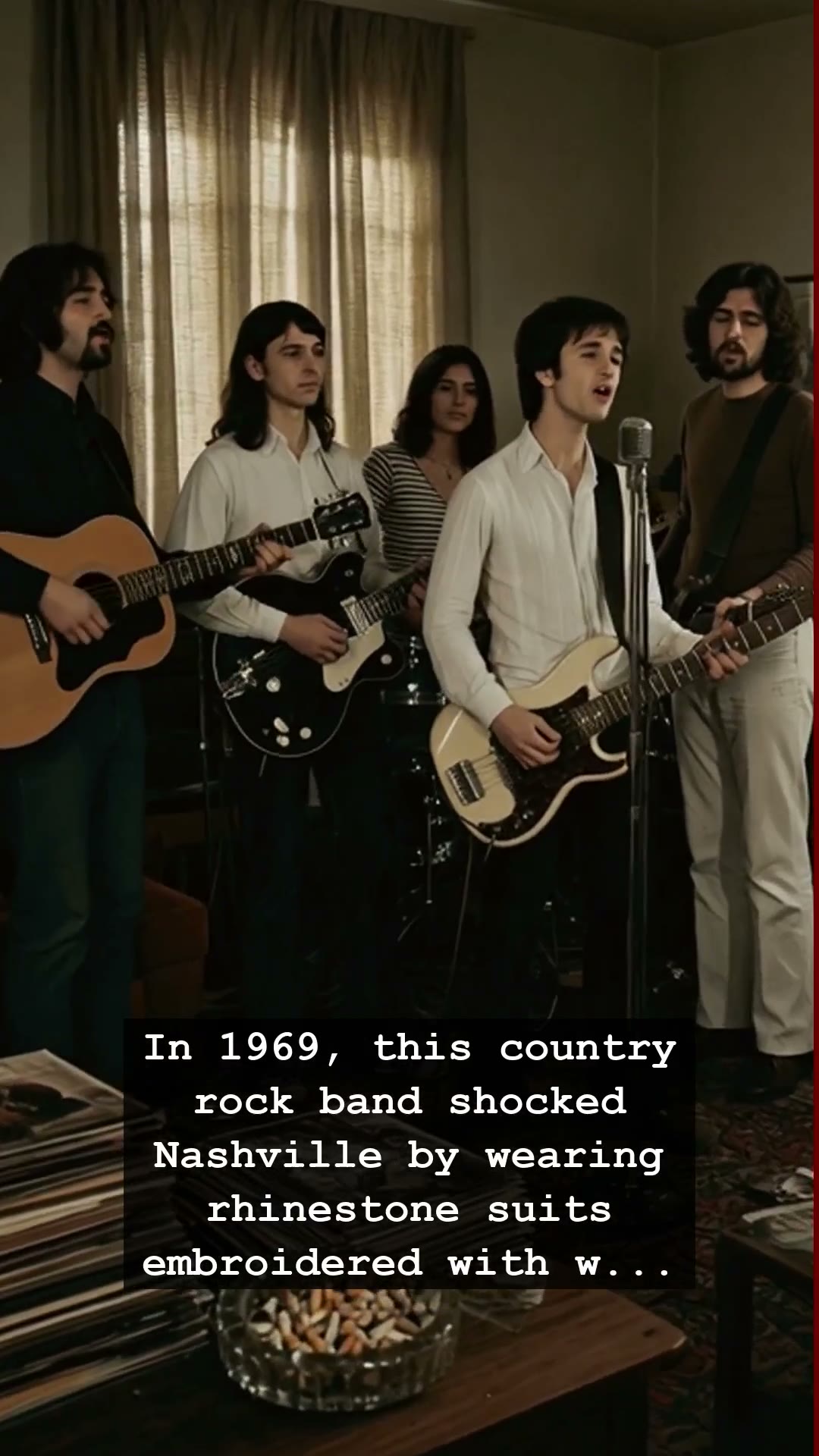
In 1969, the air in Nashville was thick with tradition, stiff collars, and the unspoken rules of the Grand Ole Opry. It was a time when country music was a polished, conservative institution. But then came The Flying Burrito Brothers, a group of cosmic cowboys led by the brilliant, tragic Gram Parsons. They didn’t just walk onto the stage; they arrived like an alien invasion. During their 1969 tour, they debuted suits that would become the stuff of legend, but for all the wrong reasons. These weren’t the standard Nudie Cohn outfits adorned with simple roses or horses; they were custom-stitched masterpieces embroidered with giant marijuana leaves, brightly colored pills, and naked women. It was a defiant, psychedelic middle finger to the industry establishment that had long kept the genre on a short, clean-cut leash.
The Flying Burrito Brothers were at the vanguard of the country rock movement, blending the twang of Bakersfield with the countercultural grit of Laurel Canyon. While the world was reeling from the aftershocks of Woodstock and the youth were embracing a new, rebellious consciousness, Nashville remained trapped in a time capsule. By donning these rhinestone-encrusted symbols of illicit rebellion, the band turned the stage into a canvas for their own brand of madness. To the conservative traditionalists, it was an act of profound disrespect; to the disillusioned youth, it was a declaration of freedom. It wasn’t just about the fabric or the beads; it was a visual manifesto against the sanitized image of stardom.
This stunt was quintessential for Gram Parsons, a man who lived with one foot in the high-society world of the Rolling Stones and another in the dusty, honky-tonk bars of the deep South. His obsession with ‘Cosmic American Music’ fueled the band’s creative fire, but his volatile lifestyle often threatened to extinguish it. The embroidery on their suits served as a grim foreshadowing of the darkness that often follows the spotlight. The pressure of the era, fueled by the relentless demands of constant touring and the seduction of substances, eventually fractured the band’s foundation, mirroring the internal conflicts that defined so many legendary acts of the late sixties.
Today, the legacy of The Flying Burrito Brothers is remembered not just for the music they pioneered, but for their unapologetic audacity. They understood that music was theater, and they chose to cast themselves as the outlaws. Their story resonates because it captures a moment in time when the boundaries of genre were being violently redrawn. They risked their careers to prove that authenticity—no matter how messy—was worth more than a polished veneer. Looking back, those rhinestone suits remain an iconic relic of a time when rock and country were in a state of beautiful, turbulent collision.
As we browse through the dust-covered records of that era, the memory of The Flying Burrito Brothers serves as a reminder that the greatest art often comes from those who refuse to play by the rules. Their rebellious spirit continues to echo through every artist who decides that being true to themselves is far more important than being accepted by the mainstream. Next time you drop the needle on a vintage record, think of those suits, the pills, and the leaves, and remember the brothers who dared to change the game one stitch at a time.