
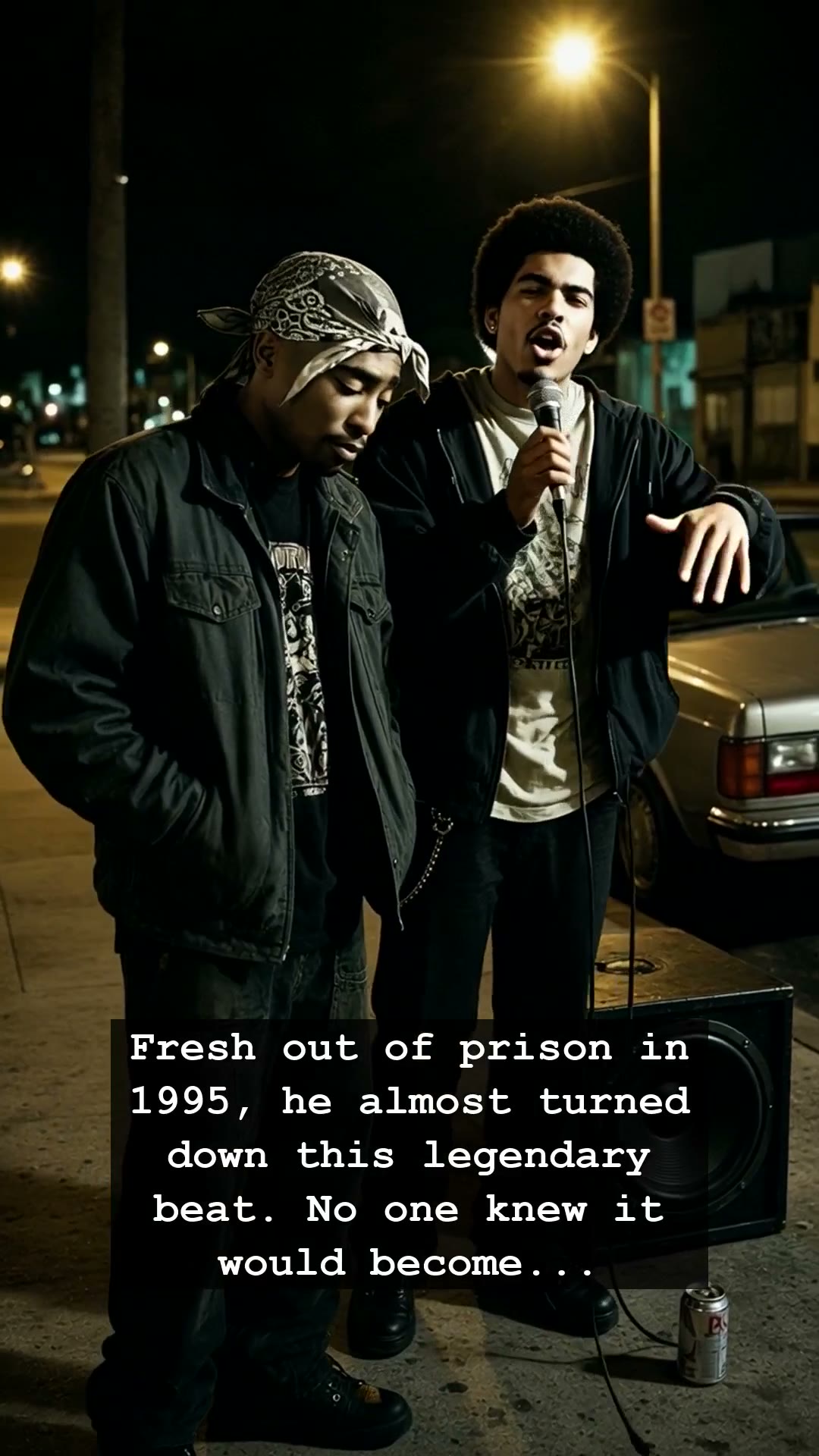
The year was 1995. The air in California was thick with the suffocating tension of the East-West coast rivalry, a battleground that was moving from street corners to the airwaves. Tupac Shakur, arguably the most volatile and gifted poet of his generation, had just stepped out of the confines of Clinton Correctional Facility. He was a man reborn, but one whose heart was etched with the scars of incarceration and a burning need to redefine his legacy. He walked into the studio, eyes sharp and guard high, facing a landscape that had shifted in his absence. It was in this electric, high-stakes environment that he was presented with a beat that would eventually define the West Coast anthem of the decade: California Love.
Yet, the mythic status of that record almost never came to be. History tells us that Tupac Shakur was initially skeptical of the production, perhaps sensing that the track was too mainstream or polished for the raw, unfiltered rage he wanted to broadcast to the world. He nearly walked away from the session, ready to discard what would become his most recognizable masterpiece. Behind the mixing boards, the tension was palpable; this wasn’t just music, it was a cultural pivot point. The sound of the beat, heavy with the influence of the G-funk era that dominated the streets of Los Angeles, demanded a specific kind of charisma that only he could provide. After a brief period of intense hesitation, the legend finally stepped to the microphone, and the trajectory of hip-hop changed in a single afternoon.
When you listen to the track today, you can still feel the heat of that studio session. It captures the essence of a California that was both a playground for the wealthy and a war zone for those caught in the crossfire of systemic violence. Tupac Shakur brought a frantic energy to the song that transcended the standard club anthems of the time. It was a defiant roar, a celebration of life amidst a backdrop of escalating paranoia. For those who remember the mid-nineties, the track is a time capsule, evocative of the era of bulky pagers, the rising dominance of MTV, and the lingering smoke of the studio sessions that fueled the drama between Death Row and Bad Boy Records.
Beyond the catchy synthesizers and the iconic music video, California Love serves as a haunting reminder of what we lost. It was the peak of his power before the shadows truly began to close in. Tupac Shakur was navigating a world where his talent was both his greatest asset and his primary target. The track remains a pillar of American music history, not just for its infectious hook, but because it stands as a testament to the creative lightning that occurs when raw genius meets the pressure of a ticking clock.
Today, we look back at Tupac Shakur not just as a rapper, but as a complex icon whose life was a series of volatile highs and devastating lows. Every time that beat drops, we are transported back to 1995, back to the golden age of West Coast rap, and back to a man who lived as if every breath might be his last. It is a piece of history that refuses to stay buried in the past. Do you remember where you were the first time you heard the roar of the desert king?