
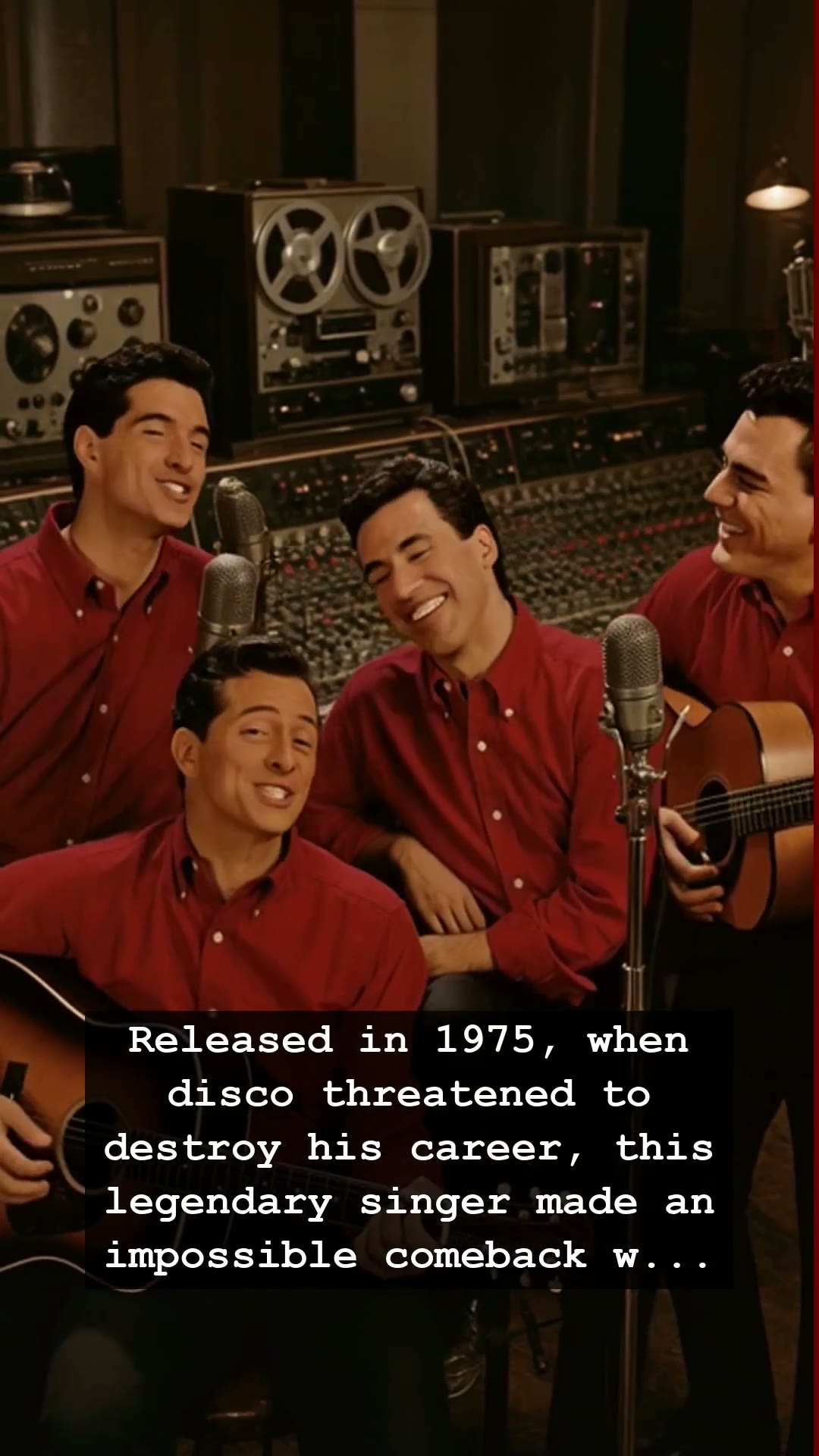
In the mid-1970s, the musical landscape of America was shifting beneath everyone’s feet. The gritty, soul-stirring melodies that had dominated the airwaves for a decade were suddenly being drowned out by the relentless, thumping pulse of the disco beat. For legends who had defined the sound of the 1960s, it felt as though the industry was trying to push them into a dusty corner of history. Frankie Valli, the golden-voiced frontman of The Four Seasons, found himself staring into this professional abyss. His career, once anchored by chart-topping hits and the adoration of millions, suddenly faced an existential threat that seemed impossible to survive.
Yet, in 1975, amidst the glitz of Studio 54 and the rising dominance of dance-floor anthems, Frankie Valli did something no one expected. He didn’t chase the trend; he leaned into his own timeless, haunting emotionality. When he released the track My Eyes Adored You, it was a moment of pure, cinematic magic. It was a song that felt like a bridge between eras—a delicate, sophisticated ballad that reminded listeners why they had fallen in love with his unique falsetto in the first place. It wasn’t just a comeback; it was a defiant statement of artistic survival.
The backstory of this recording is one of resilience. Frankie Valli had been navigating not just a changing industry, but personal health struggles and the internal pressure of maintaining a legacy. He was an artist who had lived through the golden age of the Jukebox, the rise of the counterculture, and the shifting tides of American pop. To hear that song drift out of a Walkman or play softly on the radio in 1975 was to be transported away from the frenetic energy of the disco boom and back into a space of genuine, tender human connection.
The magic of Frankie Valli during this period lay in his ability to remain authentic while the world around him became increasingly synthetic. While other artists scrambled to remix their identity to fit the neon-lit demands of the decade, he remained steadfast. He carried the spirit of the Motown and Doo-wop roots he loved, blending them into a polished 70s production that felt both fresh and hauntingly familiar. This era proved that while musical genres might go in and out of fashion, true vocal mastery—the kind that taps into the very core of human emotion—never truly dies.
Today, listening to that 1975 masterpiece evokes a specific kind of nostalgia, a yearning for a time when music felt like a deeply personal confession rather than a calculated club beat. Frankie Valli reminds us that even when the cultural tide is against you, staying true to your own voice is the only way to remain immortal. It is a story of grit, talent, and that rare kind of luck that favors the bold. Do you remember the first time those opening notes stopped you in your tracks? It is a melody that continues to warm the heart, proving that great music truly is timeless.