
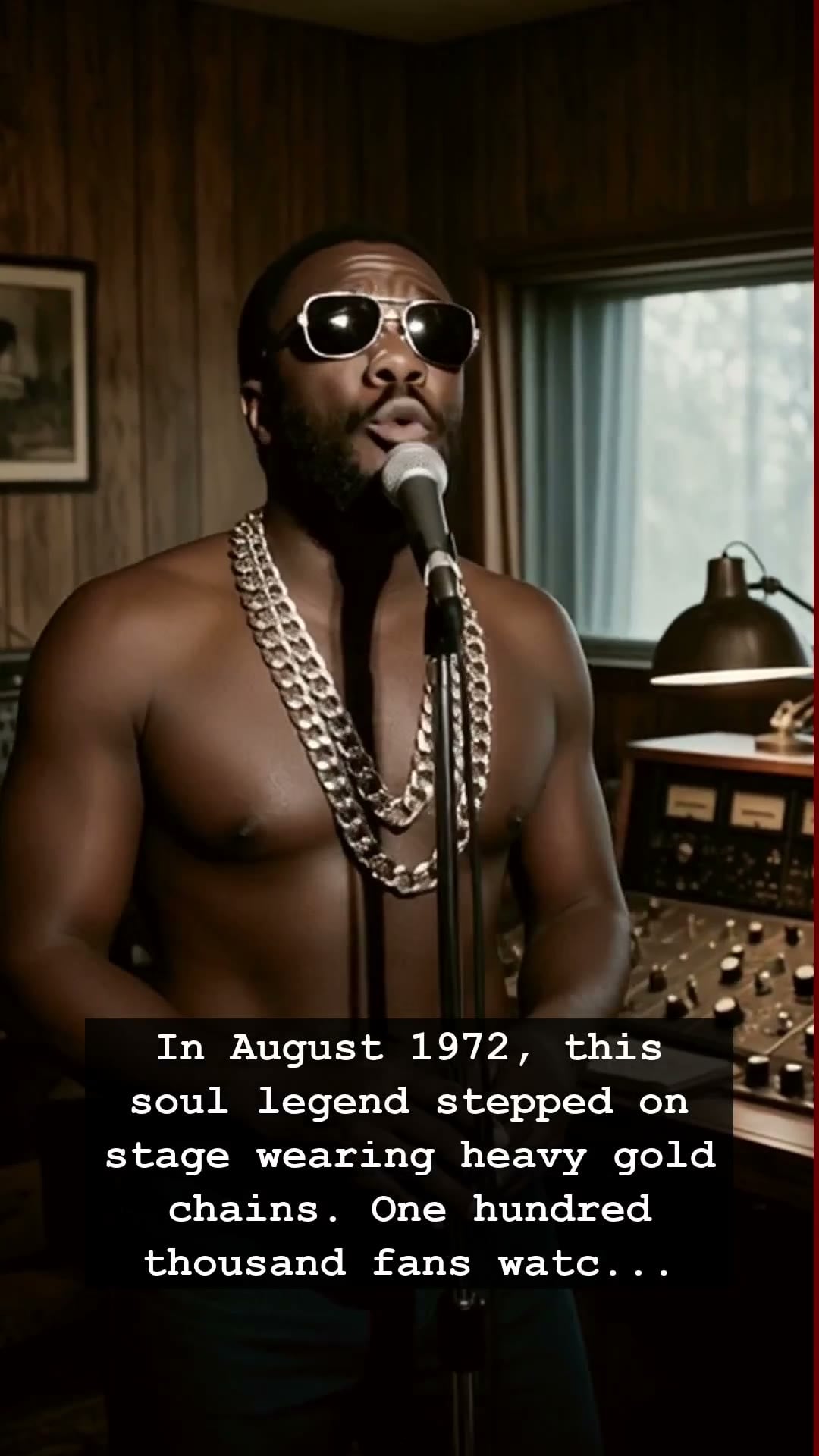
It was August 1972, and the Los Angeles heat was rising in a way that felt heavy with history. At the Los Angeles Memorial Coliseum, over one hundred thousand people gathered for what would become known as the Black Woodstock: the Wattsstax festival. Among the sea of faces, a singular figure emerged, draped in heavy, shimmering gold chains that caught the harsh California sun. This was not merely an accessory; it was a defiant statement of success, identity, and raw soul power. Isaac Hayes, the undisputed titan of Stax Records, had arrived, and the atmosphere in the arena shifted instantly from anticipation to pure, electric reverence.
Isaac Hayes was more than just a musician in the early seventies; he was a cultural phenomenon who redefined what it meant to be a soul icon. Before the glitz of Studio 54 or the polished production of later pop eras, Hayes brought a cinematic grandeur to R&B. His stage presence, often characterized by his trademark shaved head and those iconic gold chains, served as a bold counter-narrative to the societal constraints of the time. When he stepped onto that stage, he wasn’t just performing music; he was claiming a space for Black excellence that demanded the world take notice. Those chains were heavy, weighing nearly as much as the expectations placed upon his shoulders during the volatile landscape of post-sixties America.
The energy of that 1972 performance remains a touchstone for those who remember the era of the Jukebox and the rising influence of soul music on the American psyche. Isaac Hayes possessed a voice that could command a room, low and resonant, blending smooth narration with explosive orchestral arrangements. Behind the scenes, the legend of Isaac Hayes was often marked by the intense pressure of stardom and the complex dynamics of the Stax label. Yet, in that moment under the sweltering August sky, all the personal turmoil and industry conflicts faded away. There was only the rhythm, the gold, and a crowd united by a common pulse of soul and brotherhood.
Reflecting on that day provides a glimpse into a time when music felt like a revolution. For those who grew up during the transition from the golden age of Motown to the funk-infused grooves of the mid-seventies, the image of Isaac Hayes is etched in memory. It serves as a reminder of how artists of the period used their aesthetic as a weapon against invisibility. The chains were a testament to the weight of his journey from humble beginnings to becoming the man who composed the iconic Shaft theme, a track that would go on to define the decade’s sonic identity.
Today, the legacy of Isaac Hayes continues to influence generations, even as the world moves through different sonic trends. His ability to fuse deep, emotional storytelling with grand theatricality ensures he remains an essential pillar of American music history. Whenever you hear that unmistakable voice or recall the image of him at Wattsstax, remember that you are looking at a man who transformed his burdens into gold. Do you still feel the vibration of that performance, or does it sound like a beautiful ghost from a vanished age?