
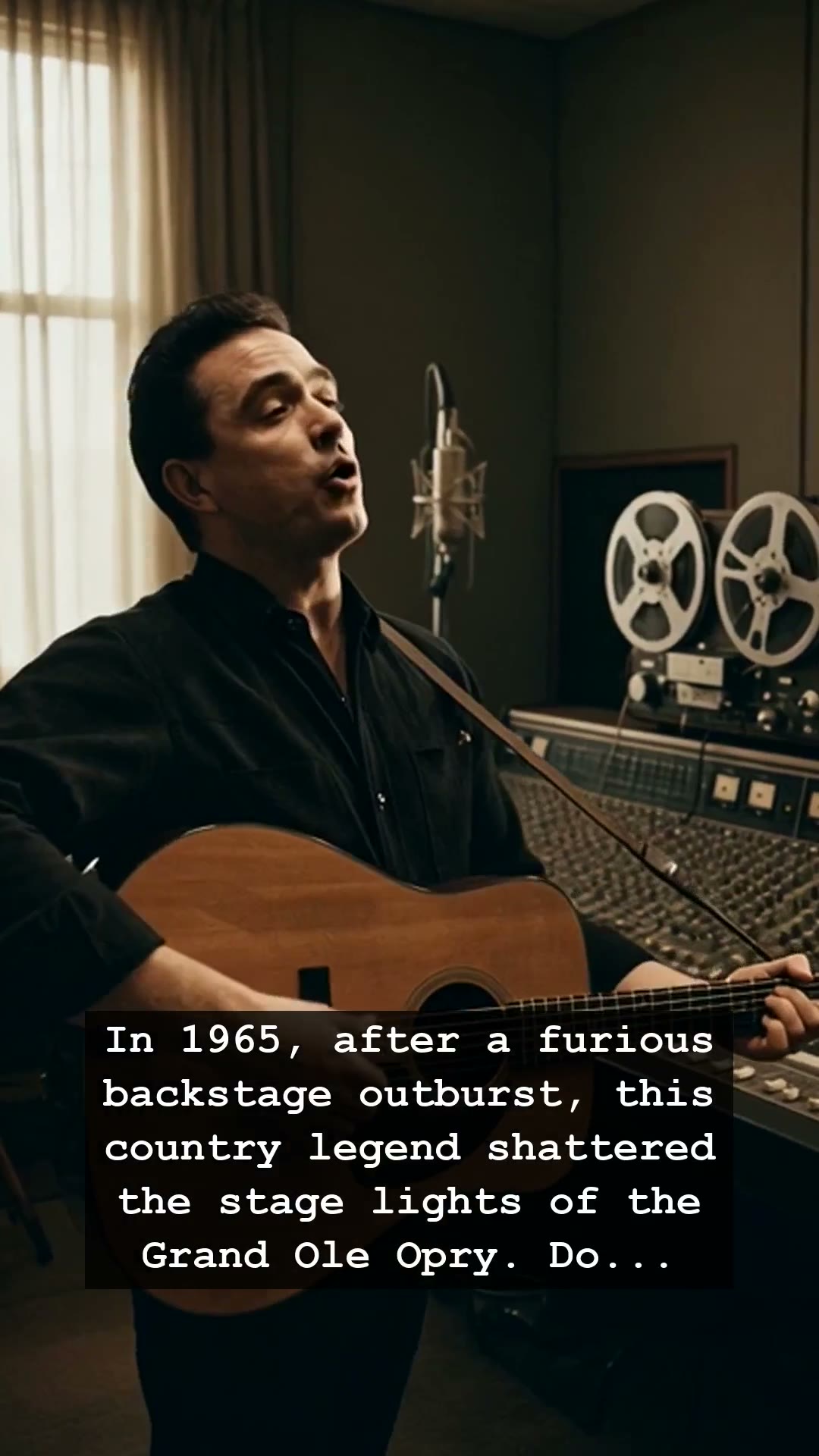
It was 1965, a year where the world felt like it was teetering on the edge of a cultural precipice. In Nashville, the Grand Ole Opry stood as the holy cathedral of country music, a place where tradition was guarded with a velvet rope and a stern gaze. Then came Johnny Cash. Known as the Man in Black, he was never one to play by the rules of polite society, and on that fateful night, his inner demons finally collided with the rigid expectations of the country music establishment in a display of raw, unfiltered fury.
Following a backstage outburst that echoed through the dressing rooms like a thunderclap, Johnny Cash stormed onto the stage with a volatility that left the audience breathless. With a swift, violent motion, he took his microphone stand and shattered the sacred stage lights of the hallowed Grand Ole Opry. The sound of glass exploding over the stage floor served as a jagged punctuation mark to his frustration. In an instant, the pristine atmosphere of Nashville’s most prestigious venue was transformed into a crime scene, sparking an immediate and historic ban that sent shockwaves through the industry.
To understand the gravity of this moment, one must look at the era. This was a time before the digital age, a period where the Jukebox was the heartbeat of every roadside diner and the Opry was the ultimate gatekeeper of fame. Johnny Cash was not just an artist; he was a mirror reflecting the struggles of the working class and the outcasts. His rebellion wasn’t just a tantrum; it was a symptom of the intense pressure and the dark, swirling clouds of addiction that he was battling while trying to navigate the expectations of a squeaky-clean industry that demanded perfection from its icons.
The ban that followed was meant to silence him, but it only solidified his status as a rebel hero. While the executives in suits recoiled, the people listening to their transistor radios felt a strange kinship with the man who dared to break the lights. Johnny Cash represented the vulnerability and the grit of the human experience. His act of destruction at the Grand Ole Opry became a legendary piece of music folklore, a testament to the chaotic, brilliant, and deeply flawed nature of the man who gave a voice to the voiceless, the imprisoned, and the forgotten.
Looking back, this incident serves as a poignant reminder of the price of authenticity. While the music industry has changed, moving from vinyl records to the vastness of the internet, the story of Johnny Cash remains a powerful touchstone. It tells us that true art often comes at a cost, and sometimes, the most memorable melodies are born from the shards of a broken past. As we look back at those flickering stage lights of 1965, we aren’t just remembering a scandal; we are honoring a legend who refused to dim his own light for anyone.