
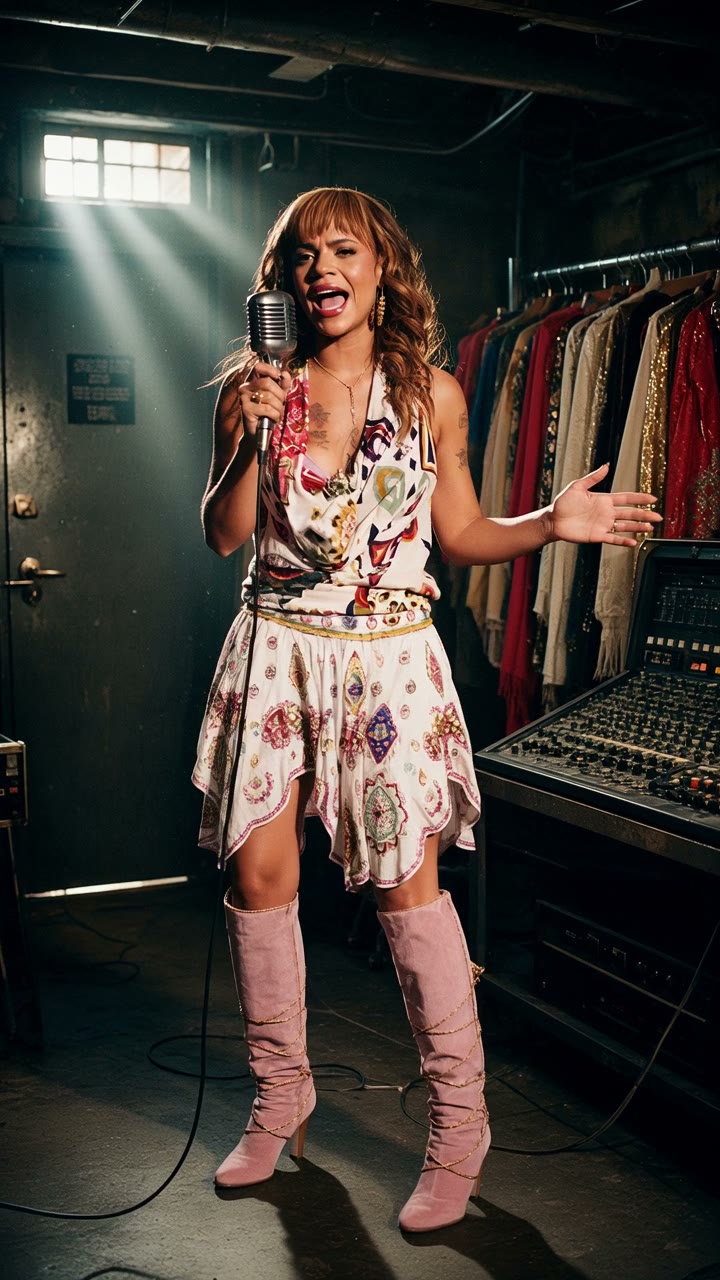
In the golden era of the mid-1990s, the airwaves were dominated by the neon pulse of MTV and the gritty, street-level storytelling of hip-hop. It was a time when the Jukebox culture had faded, replaced by the Walkman’s intimate obsession, and the music industry felt like a powder keg waiting for a single spark. For Faith Evans, the brilliant and soulful R&B starlet, that spark didn’t just singe her career; it threw her into the center of a lethal crossfire between the East and West Coasts. The year was 1996, and the industry was witnessing the escalation of a feud that would claim the lives of its brightest stars, leaving an innocent artist caught in the most vicious lyrical crosshairs in music history.
At the heart of this storm was an aggressive diss track that transformed the creative rivalry between Bad Boy Records and Death Row Records into a genuine nightmare. Faith Evans found herself publicly targeted in a way that defied the norms of artistic competition. As the wife of the legendary Notorious B.I.G., she was already a target by association, but when the music turned weaponized, she was unfairly cast as a pawn in a larger, darker game. The intensity of the rhetoric used against her remains a chilling reminder of how quickly the glamour of the studio can turn into the cold reality of a street war.
The drama played out under the constant glare of a media hungry for conflict. While the world watched the spectacle unfold on televised award shows and in magazines, Faith Evans maintained a level of grace that was rare in such a high-stakes environment. She was more than just a collateral victim of the East-West rivalry; she was a talented woman trying to protect her creative integrity while the very ground beneath her was shifting. The emotional toll of being dragged into the vitriol of these diss tracks is something that few pop icons of that generation ever had to endure on such a public scale.
Looking back, the impact of these events defined the trajectory of 90s culture. This was a time when hip-hop transitioned from a subculture into a dominant global force, yet it arrived with a heavy price tag. The tragedy of that era still resonates, serving as a cautionary tale about the dangers of unchecked ego and the blurring lines between art and reality. The scars left on the industry during those years changed how artists interacted, how labels operated, and how we, the fans, consumed the music that shaped our lives.
Today, the legacy of Faith Evans stands strong, far beyond the shadows cast by the violence of the mid-90s. She emerged from the chaos as a resilient figure, proving that talent and authenticity ultimately outlive the temporary frenzy of media-fueled drama. Her music remains a staple of soul and R&B, reminding us that even in the midst of the most brutal cultural wars, the true essence of the artist remains untouchable. It is a story of survival, of a voice that could not be silenced, and a reminder of a time when the world was watching, breathless, as history was written in the studio.