
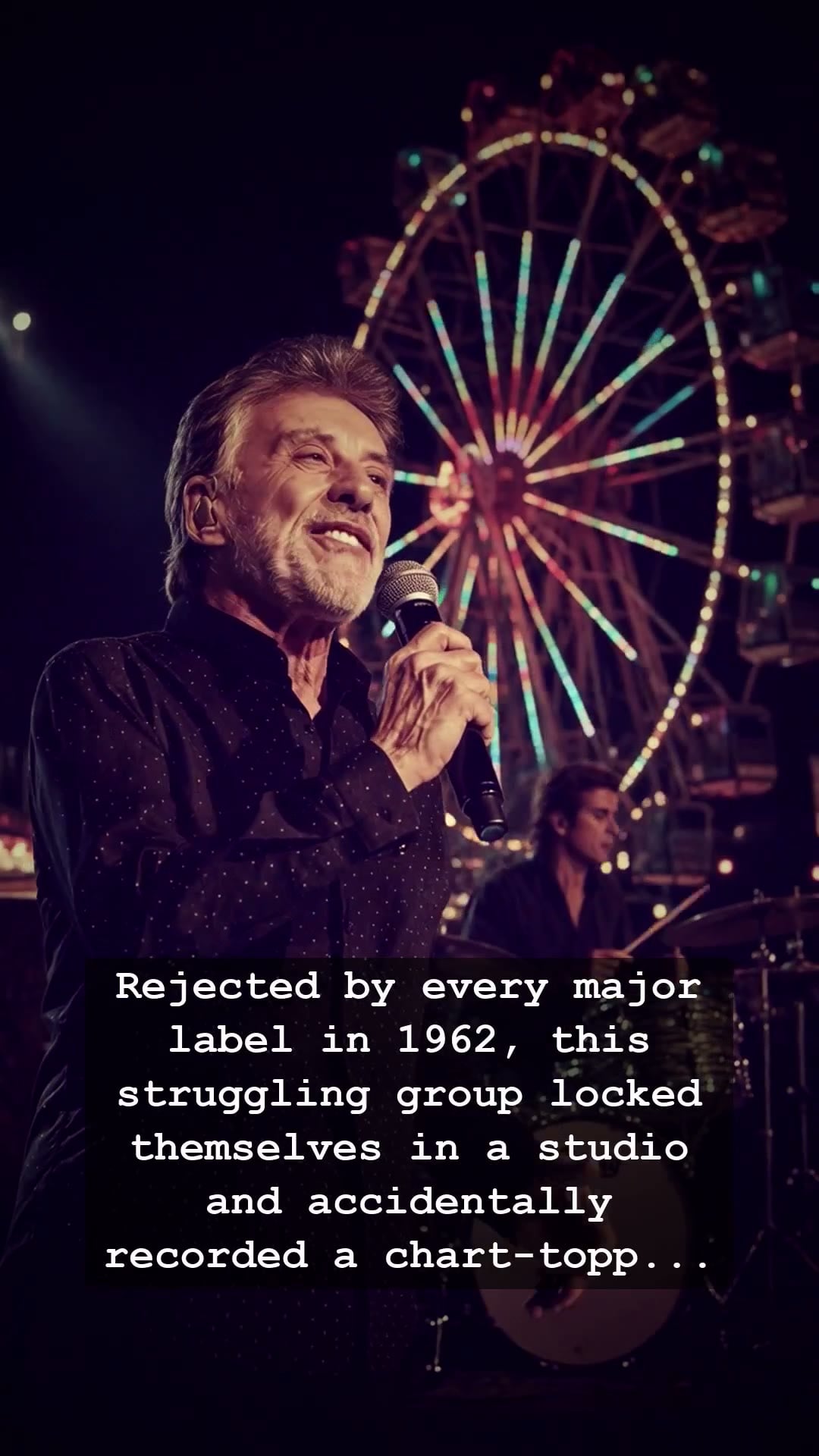
In 1962, the airwaves were cluttered with clean-cut pop, and a struggling vocal group from New Jersey was hitting a brick wall. Rejected by every major label in the industry, Frankie Valli and The Four Seasons were down to their final chances. The music business was a ruthless gatekeeper, and the group seemed destined to remain a footnote in the history of local lounges. Desperate and fueled by a singular, burning ambition, they locked themselves inside a New York recording studio, determined to force lightning to strike in a bottle. They didn’t know it then, but those few hours behind closed doors would shift the trajectory of American pop music forever.
The song they were chasing wasn’t supposed to be a revolution. As they experimented with the arrangement, Frankie Valli pushed his voice into an impossibly high register, testing the limits of what a lead singer in a doo-wop group could achieve. It was a raw, soaring falsetto that pierced through the studio atmosphere. What started as a struggle to find a commercial hook suddenly transformed into a defining sonic signature. That spontaneous, slightly accidental moment of vocal brilliance gave birth to Sherry, the track that would finally shatter the rejection cycle and catapult them to the top of the Billboard charts.
Looking back, the success of Frankie Valli and The Four Seasons represents the ultimate underdog story of the early sixties. Before the British Invasion took over the airwaves, they were the kings of the jukebox, providing the soundtrack for a generation of teenagers huddled around transistor radios. The grit required to persevere after repeated industry doors were slammed in their faces is the true heartbeat of their legend. They were not just a vocal group; they were survivors of the cutthroat New York music scene, proving that passion often triumphs over the skepticism of label executives who lacked the vision to hear a hit when it was staring them in the face.
The cultural impact of that era remains frozen in time, echoing through the halls of music history. Even today, the soaring falsetto of Frankie Valli carries a weight of nostalgia that transports listeners back to a more innocent, yet intensely competitive, musical landscape. It reminds us of a time when the sound of a voice hitting a high note could unite a country and define a summer. The Four Seasons were the bridge between the doo-wop pioneers and the polished pop machines that would dominate the coming decades, bridging the gap with undeniable charisma and raw talent.
While the industry often focuses on the glitter and the gold, it is these moments of desperation—the locked studio doors and the sheer refusal to quit—that make the story of Frankie Valli and The Four Seasons so enduring. Their journey serves as a poignant reminder that the most iconic hits are often born from the deepest frustrations. As we look back on the golden age of American music, the legacy of that falsetto remains etched in our collective memory, forever inviting us to turn up the volume and get lost in the sound of a dream finally coming true.