
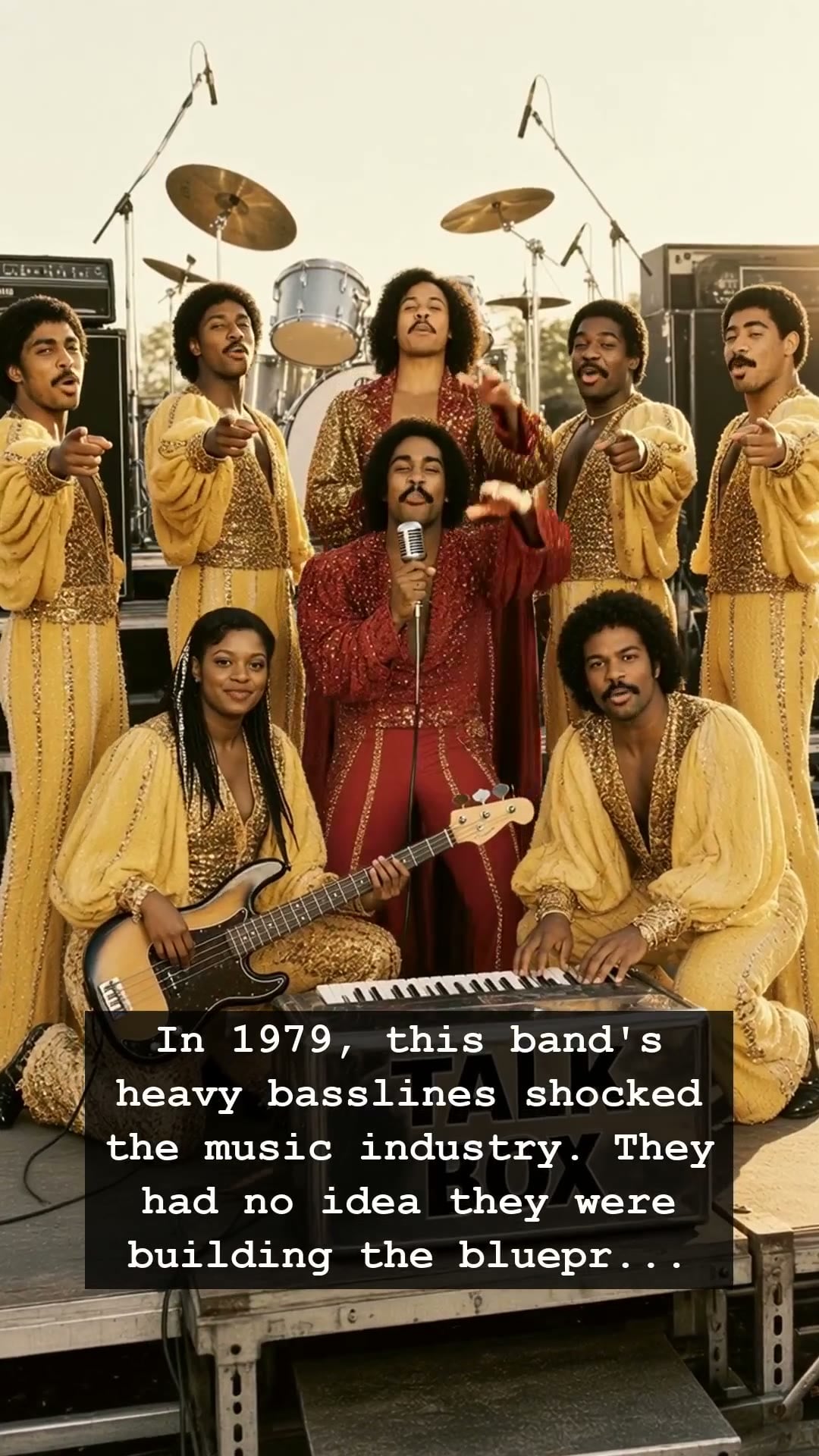
The year was 1979, a time when disco was clinging to its final, glitter-drenched gasps and the airwaves were still vibrating with the remnants of the funk revolution. Into this cultural crossroads stepped the Zapp band, a group of brothers from Dayton, Ohio, who carried more than just instruments; they carried a sonic future nobody was ready for. Their music was a dense, mechanical, and deeply soulful collision of high-tech synthesizers and gut-wrenching basslines. At the time, they were simply trying to survive the competitive landscape of the funk era, yet they had no idea that their rhythmic blueprints would eventually become the heartbeat of an entire West Coast hip-hop movement decades later.
Led by the visionary Roger Troutman, the Zapp band harnessed the power of the talk box—a device that transformed human vocals into robotic, singing synthesizer leads. While audiences at the time were mesmerized by the sheer novelty of the sound, they were witnessing a radical shift in American music. The heavy, syncopated bass grooves provided by Zapp acted as a foundation that hip-hop producers would later obsessively sample. This wasn’t just another funk track playing on a diner jukebox; it was the birth of the G-funk sound, a genre defined by that smooth, synthesized swagger that would define the West Coast aesthetic throughout the 1990s.
Behind the curtain of fame lay the intense, often grueling work of the Troutman brothers. Their precision in the studio was legendary, a stark contrast to the chaotic, free-form jam sessions common among their peers in the late 70s. For the Zapp band, every hit was a calculated architectural feat. The deep, resonant synth-bass lines didn’t just support the melody—they drove the pulse of the song with a mechanical, metallic precision that felt like the sound of the future. This unique blend of raw soul and cold, calculated electronics allowed Zapp to carve out an identity that transcended the standard R&B charts of the time.
Yet, the story of Zapp is not without the shadows that followed so many legends of that era. Despite their massive influence on the trajectory of modern rap, the group faced the industry pressures and internal tragedies that define the fragility of stardom. Their music served as the soundtrack for backyard parties and lowrider cruises, becoming the essential DNA for artists like Dr. Dre and Tupac Shakur. It is a strange irony that the sounds created in a modest Ohio studio by a family band became the definitive sonic marker of California urban life, bridging the gap between two very different musical worlds.
Today, when you hear those unmistakable talk box melodies drifting out of a passing car, you are hearing the ghost of the Zapp band. They were the bridge between the analog soul of the 70s and the digital grit of hip-hop culture. Their legacy remains etched into the history of American music, a reminder that the most revolutionary sounds often begin as simple experiments in a small room, waiting for the rest of the world to finally catch up. The next time you find yourself tapping your foot to that iconic, liquid-smooth bassline, remember that you are listening to the echoes of an era that changed the industry forever.