
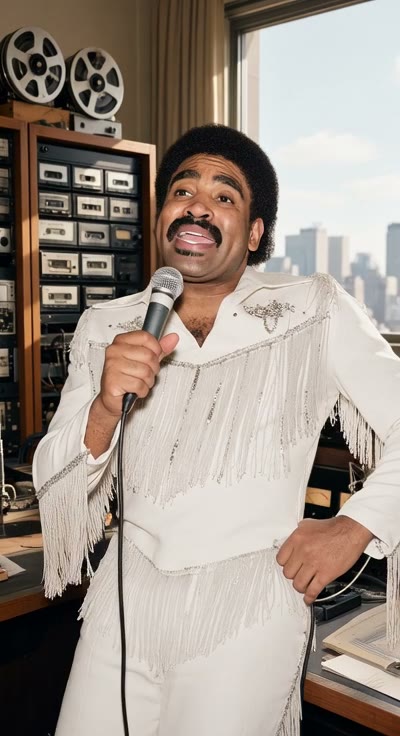
In 1981, the airwaves were dominated by a strange, metallic voice that sounded like it had been beamed down from a distant, neon-drenched future. Executives at the label were trembling, convinced that the project was a disaster waiting to happen. They thought the organic soul of a legendary Motown anthem was being buried under layers of artificial, cold machinery. But they were wrong. Roger Troutman, the visionary force behind the group Zapp, didn’t just cover a song; he performed a sonic alchemy that shattered expectations and turned the funk world on its axis. By taking the talk-box—a clunky, plastic-tubed device that allowed him to articulate melodies through a vibrating throat—Roger Troutman transformed the classic sound of the past into the undeniable rhythm of the future.
Roger Troutman was not just a musician; he was a mad scientist of sound. Coming from a background rooted in the grit and soul of the Midwest, he obsessed over the textures of music. While his contemporaries were sticking to traditional instrumentation, Troutman was hunched over his synthesizers, meticulously crafting a groove that hit harder than anything else on the radio. When he decided to overhaul that Motown staple, he wasn’t looking for a safe hit. He was looking to push the boundaries of what a human voice could be. The resulting track was an explosion of heavy synth-funk that demanded to be played at full volume, echoing through the streets and changing the trajectory of R&B forever.
To understand the impact of Roger Troutman, you have to remember the era. This was a time when the Jukebox was still the heart of every neighborhood tavern, and the rise of the Walkman meant that listeners were beginning to cultivate private, portable soundscapes. The funk scene was hungry for something that felt both soulful and revolutionary. When Roger Troutman unleashed his signature talk-box sound, it provided that missing link. It bridged the gap between the Motown era of the sixties and the high-tech production values that would define the eighties. It was a bold, risky move that many predicted would alienate purists, yet it ended up dominating the charts and defining a new musical generation.
Behind the success, however, lay the intense pressure of fame and the isolating nature of creative genius. The studio environment that Roger Troutman cultivated was one of singular focus and unwavering dedication, often pushing those around him to their absolute limits. This intense creative fire allowed him to craft sounds that felt supernatural, but it also demanded a heavy toll. Despite the glamour of the funk charts and the massive influence his work had on later genres like West Coast G-Funk, the man behind the machine remained a figure of deep, quiet intensity, always searching for the next innovation.
Decades later, the influence of Roger Troutman remains woven into the DNA of modern production. You can hear his shadow in every pitch-shifted vocal and every synthesizer hook that aims for that elusive, robotic soul. He took the analog beauty of the past and wired it into the pulse of the future, leaving a legacy that refuses to fade. As we look back at the era of synth-funk and the pioneering spirit that fueled it, we are reminded that true art often requires the courage to break what is comfortable. Do you still hear his ghost in the tracks of today?