
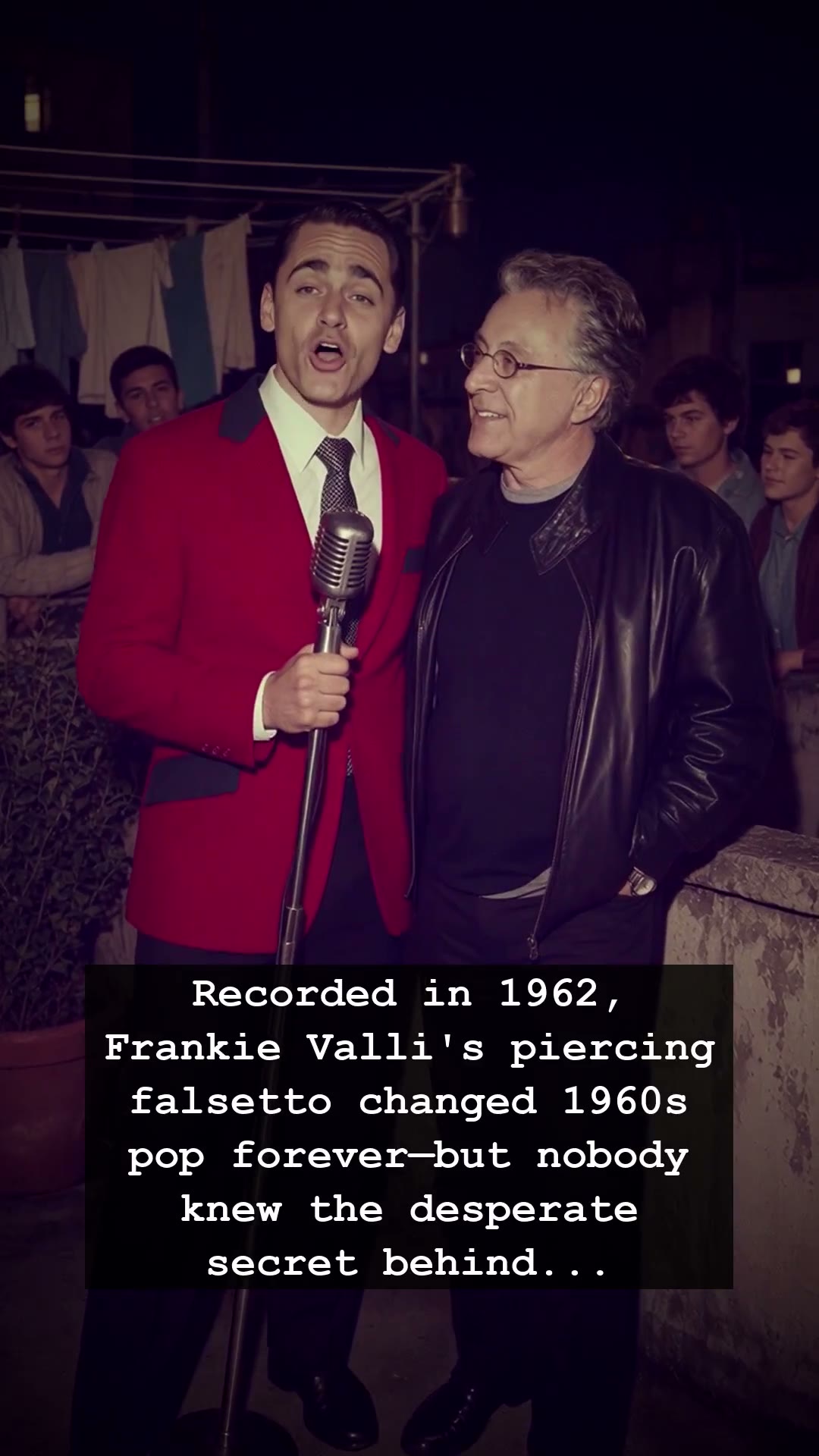
In 1962, the airwaves were crowded with the sounds of the jukebox, but one voice sliced through the static with the precision of a razor blade. It was a piercing, crystalline falsetto that defied the laws of anatomy, emanating from a man who seemed to carry the weight of the streets in his soul. Frankie Valli and The Four Seasons had arrived, and with hits like Sherry, they changed the trajectory of American pop forever. Yet, as the world danced to the beat of this new sensation, few listeners realized that the soaring notes that defined the decade were masking a reality far more desperate and complicated than the polished melodies suggested.
Frankie Valli was not a product of polished conservatories; he was a product of the rough-and-tumble streets of Newark, New Jersey. His journey to the top was paved with grit, poverty, and a relentless drive that bordered on the obsessive. When he hit that iconic falsetto, he wasn’t just singing; he was performing an act of sonic survival. For years, Frankie Valli labored in obscurity, playing dingy lounges where the cigarette smoke hung so thick you could carve it, honing a vocal range that was designed to cut through the din of drunken crowds and indifferent bar-goers. It was a technical necessity born from the sheer need to be heard above the noise.
Behind the success, the life of Frankie Valli was a stark contrast to the catchy, upbeat rhythms of his records. The music industry in the early 1960s was a shark tank, and the pressures of sudden fame, grueling tours, and the constant threat of artistic obsolescence created a pressure cooker environment. While his bandmates navigated the internal tensions of a group trying to maintain its identity, Frankie Valli carried the heavy burden of being the voice of an era. The studio became his sanctuary and his torture chamber, as he pushed his vocal cords to the brink of collapse to capture the perfection that the public craved.
There is an undeniable, haunting quality to the legacy of Frankie Valli that keeps his music relevant even today. When we listen to his tracks now, we are not just hearing a pop song from the golden age of American music; we are hearing the echo of a man fighting to transcend his surroundings. This wasn’t the manufactured pop of later decades, but a raw, emotional output that mirrored the changing social landscape of a country on the edge of massive cultural shifts. He captured the longing and the urgency that defined the lives of his generation, long before the cultural revolution of the late 60s took hold.
Even as the industry evolved toward the psychedelic rock and experimental sounds of the coming years, the influence of that falsetto remained a gold standard. Frankie Valli didn’t just sing songs; he told stories of love, loss, and survival that still resonate with anyone who has ever tried to find their voice in a noisy world. The next time you hear one of those classic tracks playing, take a moment to listen past the melody. You might just catch the whisper of the man behind the myth, a legend whose greatest secret was simply the courage to keep on singing.