
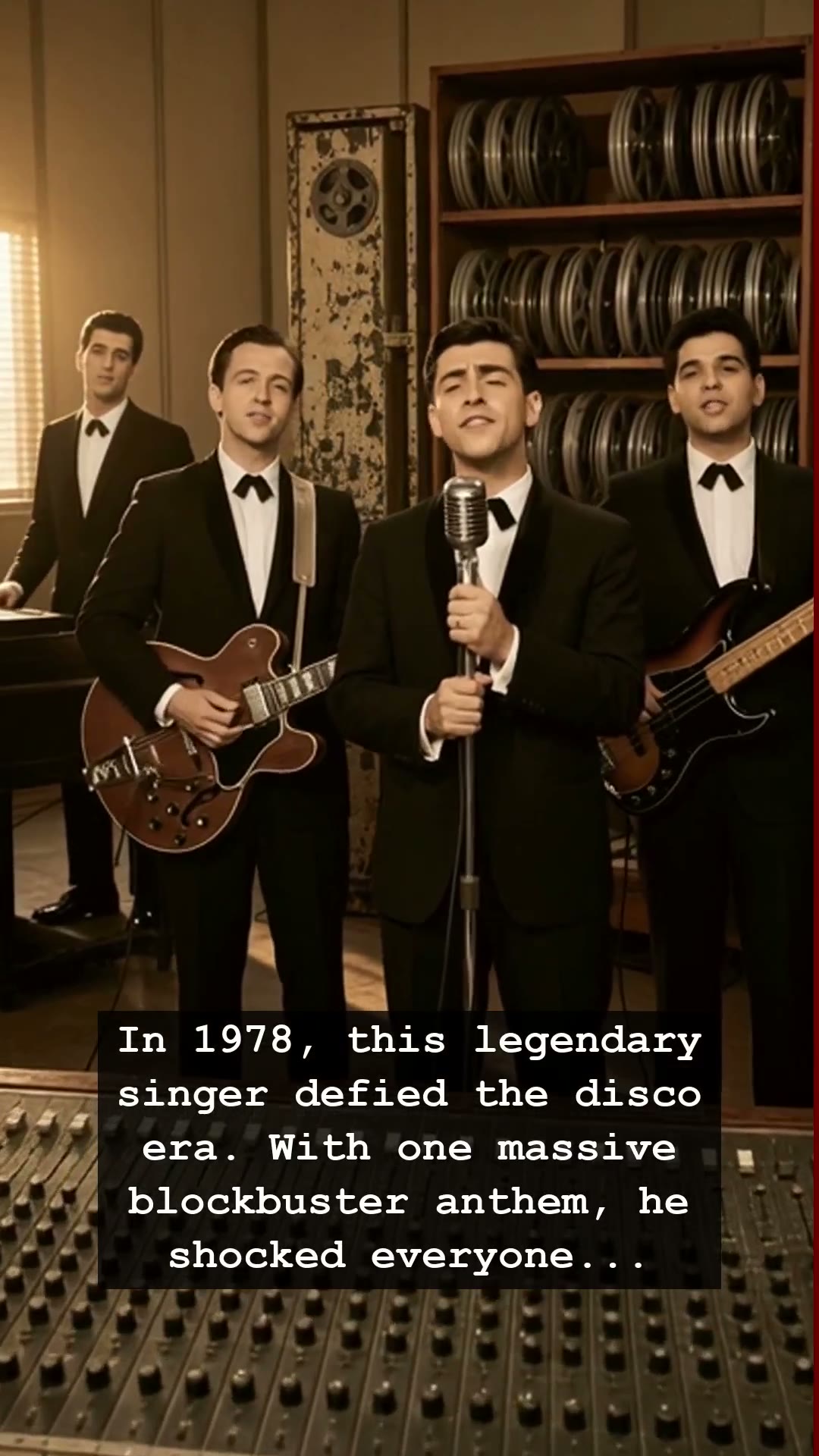
The year was 1978. Across the neon-drenched landscape of America, the rhythmic pulse of Disco had turned the world into a glittering, synthetic dance floor. From the exclusive velvet ropes of Studio 54 to the sprawling suburban discotheques, the Bee Gees and Donna Summer reigned supreme. Music executives had written off the old guard, convinced that the classic vocalists of the previous decades were relics of a bygone era. Yet, amidst this shimmering sea of mirror balls and polyester, one voice from the golden age of doo-wop dared to defy the status quo. Frankie Valli, the man with the unmistakable, glass-shattering falsetto, was about to pull off the impossible.
For years, Frankie Valli had been the face of The Four Seasons, a group synonymous with the melodic heart of the sixties. But by the late seventies, the industry viewed him as a nostalgic footnote. The pressures of a grueling career, coupled with severe hearing loss that nearly ended his professional life, had left him at a crossroads. He was a survivor of the radio-jingle era, struggling to find a foothold in a soundscape dominated by drum machines and relentless four-on-the-floor beats. The music industry was cold, unforgiving, and hungry for the new, leaving little room for the legends of the past.
Then came the unexpected phone call that would change everything. The producers of the hit movie Grease were hunting for a title track that captured the essence of high school nostalgia while still feeling relevant to the modern pop sensibility. It was a gamble. They approached Frankie Valli to lend his iconic vocal prowess to the project. When he walked into the studio, he wasn’t just recording a song; he was stepping into a massive cultural phenomenon. The resulting anthem, Grease, was a masterclass in tension and release. It wasn’t disco, and it wasn’t the doo-wop of the fifties—it was a sophisticated, soaring piece of pop-rock that somehow felt timeless.
When the track hit the airwaves, the response was nothing short of electric. It shattered the misconception that Frankie Valli had faded into the background. Within weeks, the song skyrocketed to the top of the Billboard charts, proving that the public still craved a powerful, human voice capable of genuine emotion. It was a shocking comeback that stunned the industry pundits and solidified his place in the pantheon of pop royalty. For a generation raised on the Walkman and the evolving MTV era, it was a reminder that true talent knows no expiration date.
Today, the legacy of that moment remains a testament to resilience in the face of changing tides. Frankie Valli showed us that even when the world shifts toward a new rhythm, an authentic performance can bridge the gap between decades. As we look back at the cinematic, drama-filled history of American music, the story of this triumphant return remains a favorite piece of lore. The next time you hear those opening chords, remember that it wasn’t just a hit song—it was the moment the past reached out and reclaimed the spotlight.