
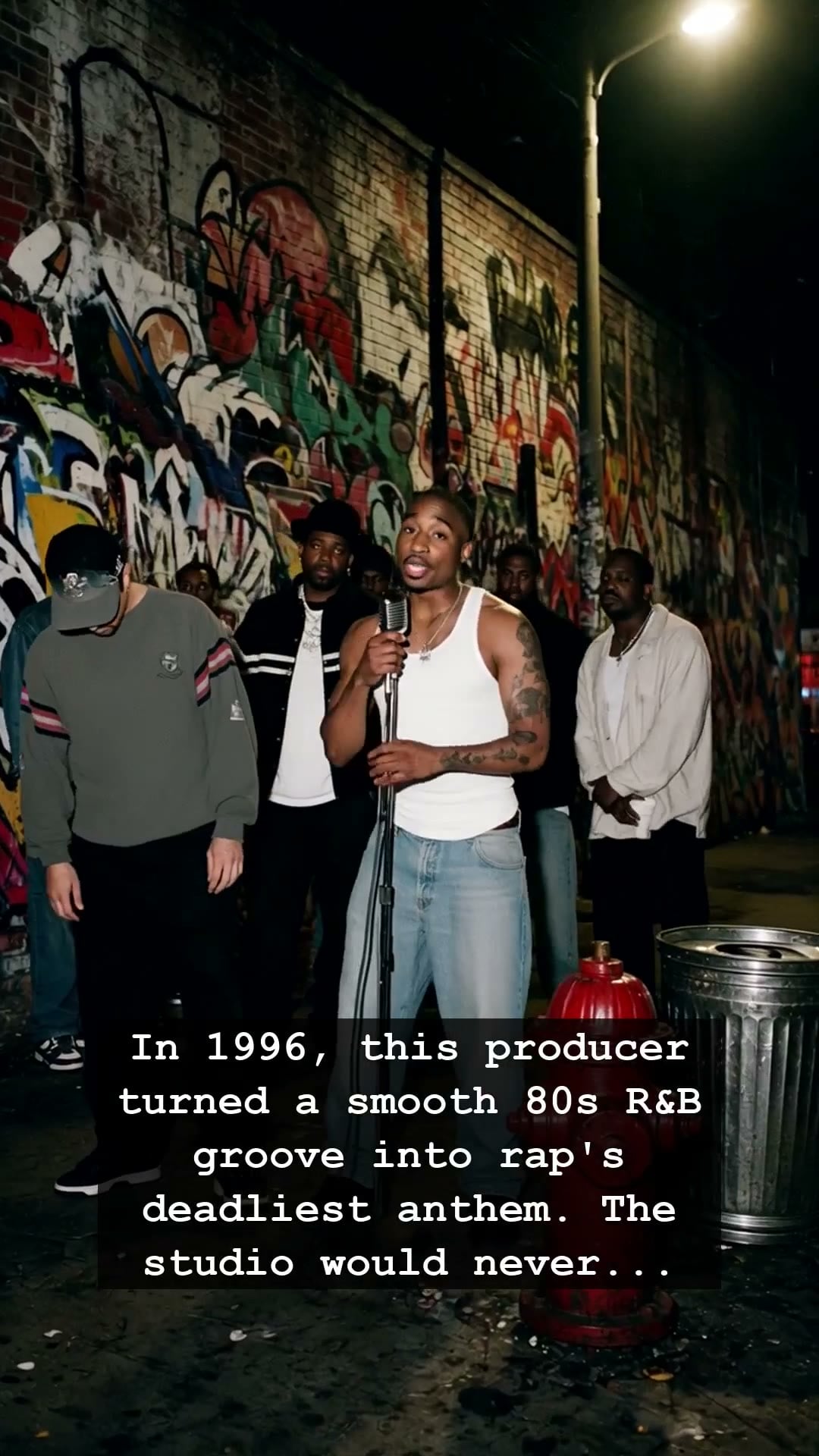
It was 1996, the year that the cultural landscape of America shifted on its axis. Inside the pressurized confines of the studio, a man named Johnny J was hunched over an MPC, meticulously sampling a smooth 80s R&B groove. He had no way of knowing that the melody he was crafting would become the sonic heartbeat of rap’s deadliest anthem. As Tupac Shakur stepped up to the microphone, the air in the room grew heavy with the kind of tension that felt less like music production and more like a pre-battle ritual. This wasn’t just another track; it was a powder keg waiting for a spark, born from the raw friction of the East Coast versus West Coast rivalry.
Johnny J was the silent architect behind the sound that defined the mid-90s, acting as the perfect musical mirror for the volatile genius of Tupac Shakur. While the world was busy obsessing over the rise of MTV and the dominance of synthesized pop, these two were stripping away the artifice to create something dangerous, authentic, and undeniably magnetic. The brilliance of their collaboration lay in how Johnny J could take a nostalgic, soulful foundation and mutate it into a hard-hitting, aggressive masterpiece. It was the sound of the streets meeting the soul of a poet, and it resonated with a generation feeling the cracks in the American dream.
Yet, the cost of that brilliance was high. In the era of the Jukebox and the burgeoning street tape trade, music carried heavy implications. When this specific beat finally hit the airwaves, it didn’t just top charts; it acted as a call to arms. The drama between Tupac Shakur and his rivals was already simmering, but the sonic violence provided by Johnny J escalated the stakes to an irreversible level. Studio sessions during this period were rarely just about the art; they were fortresses of ego, loyalty, and paranoia, where one wrong lyric or one aggressive bassline could turn a neighborhood into a war zone.
Looking back from our modern vantage point, it is clear that the tragedy of 1996 was partly fueled by the intensity of the soundscape. Johnny J understood that Tupac Shakur needed music that matched the velocity of his life—a life lived entirely in the fast lane, ignoring the cautionary signs. The beat was infectious, but it was also a soundtrack to a rapid descent into darkness. There was a haunting irony in using such smooth, soulful 80s-inspired rhythms to narrate a story that was becoming increasingly bleak and unforgiving.
Even decades later, that specific sonic aesthetic remains embedded in the cultural DNA of hip-hop. When you listen to the remnants of their work, you aren’t just hearing samples and drums; you are listening to a historical document of a lost era. Johnny J and Tupac Shakur captured a specific lightning in a bottle that the industry has spent years trying to replicate. The music remains a testament to a time when artists were willing to bleed for their craft, leaving behind a legacy that is as tragic as it is legendary. Sometimes, the most beautiful melodies are the ones that lead us straight into the storm.