
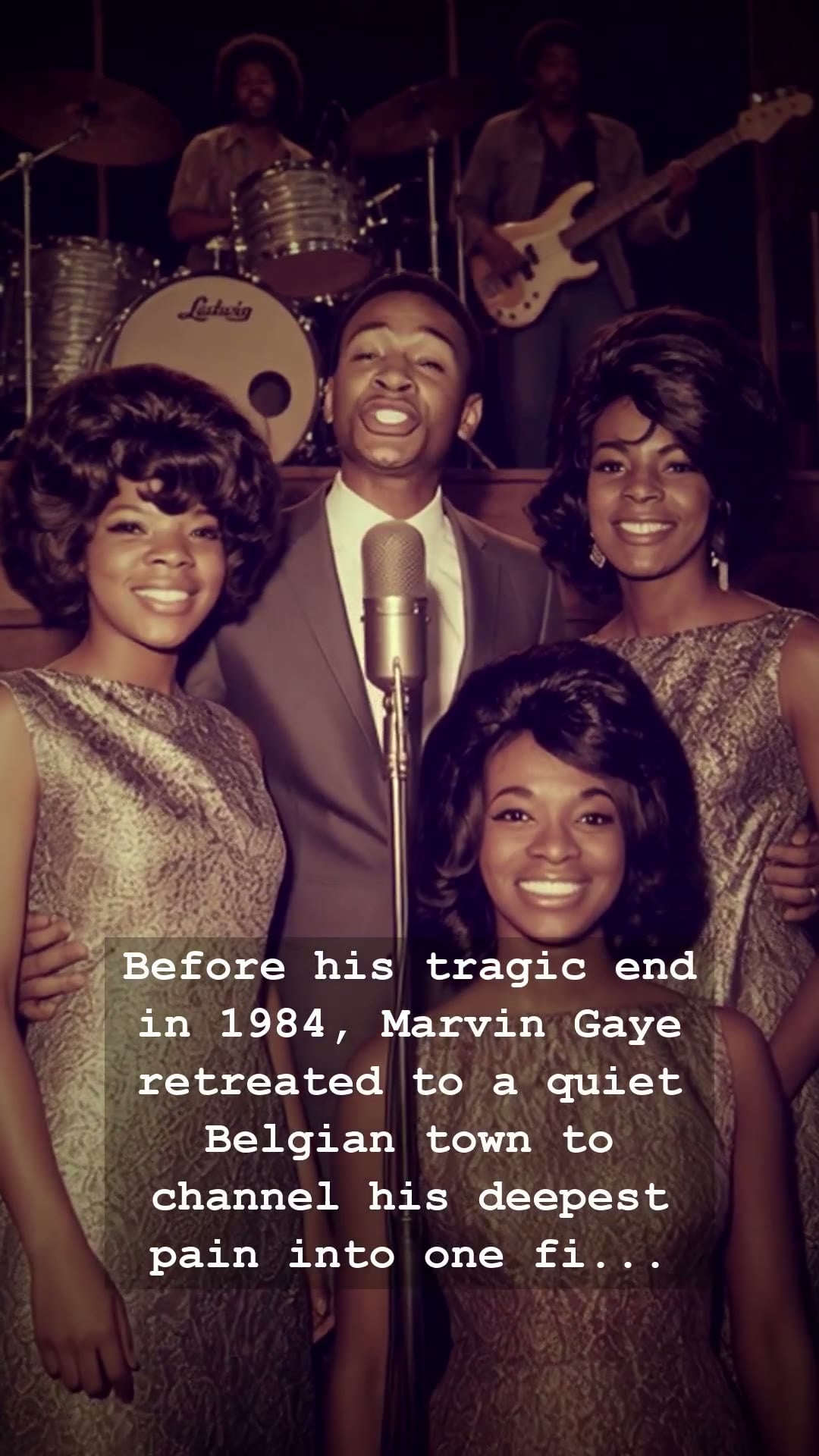
The year was 1981, and the Prince of Motown was unraveling. Marvin Gaye, the man who had soundtracked a generation’s love and longing, was trapped in a whirlwind of crippling tax debts, deep-seated depression, and a suffocating reliance on narcotics. He was a shell of the icon who once ruled the airwaves with smooth, velvet-drenched vocals. Seeking to escape the unforgiving spotlight of Los Angeles and the wreckage of his personal life, Marvin Gaye retreated to the quiet, gray landscape of Ostend, Belgium. It was here, far from the glitz of the American music industry, that the legend would undergo a transformative transformation, channeling his fractured spirit into what would become his final, bittersweet masterpiece, Midnight Love.
Life in Belgium was starkly different from the high-octane frenzy he was accustomed to. Locals recall a brooding, reclusive man walking along the cold North Sea, wearing a heavy overcoat, trying to find solace in the anonymity of a foreign land. He lived a disciplined life compared to the chaotic nights he had left behind. In this quiet isolation, Marvin Gaye began to shed the heavy layers of his past. The constant pressure of his artistic identity started to loosen, and he found a new rhythm in the solitude. He was not just healing; he was composing the soundtrack to his own redemption, fueled by a melancholy that only a man who has lost everything can truly understand.
In a humble, unassuming recording setup, the soul giant began crafting the groove that would eventually yield Sexual Healing. It was a rhythmic departure from his classic Motown roots, leaning into the emerging synth-pop sensibilities of the early eighties. While the world back home was obsessed with the flash of MTV and the relentless pulse of the disco era, Marvin Gaye was looking inward. He fused his raw, gospel-honed vocal power with modern textures, creating a sound that felt both timeless and startlingly fresh. This was not the smooth performer of the sixties; this was a man laid bare, singing to the ghosts he had carried across the ocean.
Despite the brilliance he captured in Belgium, the darkness remained an ever-present shadow. When he eventually returned to the United States, the triumph of his comeback was brief. The music industry had changed, and the internal demons that had followed him to Europe proved difficult to silence completely. His tragic death in 1984 at the hands of his father remains one of the most harrowing chapters in American musical history. It served as a grim reminder of how thin the line is between divine talent and the destructive weight of human suffering.
Today, we look back at the Belgian era not as a footnote, but as a testament to the resilience of an artist desperate for peace. Marvin Gaye remains a titan of soul, a voice that continues to vibrate with genuine human agony and hope. When you listen to those late-night sessions now, you are hearing a soul trying to make sense of a world that refused to let him rest. His legacy is etched in the grooves of every record he touched, reminding us that even in our darkest exile, the melody of the human heart never truly stops playing.