
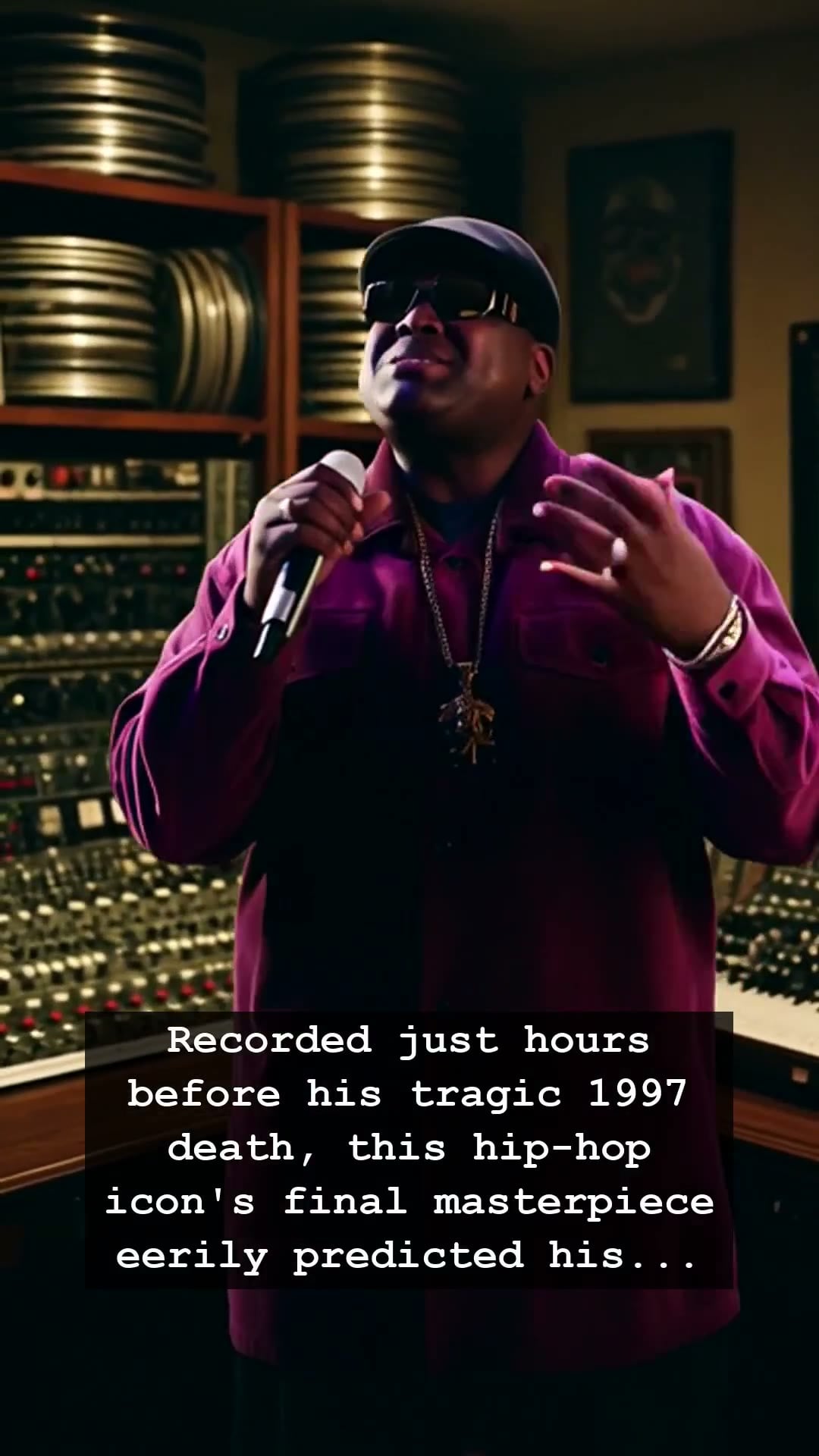
In the cold, dark hours of March 9, 1997, the world of hip-hop lost its king. Christopher Wallace, better known to the world as The Notorious B.I.G., was riding the crest of an unprecedented wave of fame. Yet, behind the glitz of the mid-nineties music scene, a storm was brewing. Just hours before his life was cut short in a hail of gunfire in Los Angeles, Biggie Smalls was putting the finishing touches on what would become his swan song. This was not merely a collection of tracks; it was a haunting, prophetic masterpiece that seemed to echo with the finality of a man who knew his time was running out.
The East Coast vs. West Coast rivalry had reached a fever pitch, consuming the industry and turning rap legends into targets of a deadly, high-stakes game. As the airwaves filled with the heavy basslines of the era, the atmosphere in the studio was thick with both creative genius and existential dread. The Notorious B.I.G. was a master of narrative, painting vivid portraits of Brooklyn life with a flow that felt as natural as breathing. But that night, the tone shifted. He was recording material for his double album, Life After Death, a title that would soon transcend its marketing purpose to become a chilling reality of his legacy.
In those final recording sessions, listeners later noted how The Notorious B.I.G. seemed to flirt with his own mortality. Lyrics that were once interpreted as standard braggadocio suddenly felt like a premonition. The haunting nature of his final lines still sends shivers down the spines of fans today, marking one of the most enigmatic moments in music history. It was a stark contrast to the neon-lit excess of the era, where the Walkman was the portable soundtrack to our lives and the influence of the streets collided violently with the reach of mainstream stardom.
Looking back from the vantage point of history, the death of The Notorious B.I.G. serves as a sobering reminder of the volatility that defined the nineties. We often romanticize the golden age of hip-hop for its raw authenticity, but we cannot ignore the dark shadow that followed its brightest stars. Biggie was a man who transcended his circumstances to become a global icon, yet he remained tethered to the harsh realities that ultimately claimed his life. His death marked a tragic pivot point for the industry, leaving a void that has arguably never been filled.
The Notorious B.I.G. lives on through the samples and the stories, a titan of rhythm and rhyme whose voice remains as potent as it was decades ago. Every time we spin his records, we are not just listening to music; we are witnessing a legacy that refused to fade away, despite the tragedy that silenced it. The final masterpiece he left behind remains a testament to his unmatched talent, a ghost story told through verse that serves as his eternal, chilling goodbye to a world that will never forget his name.