
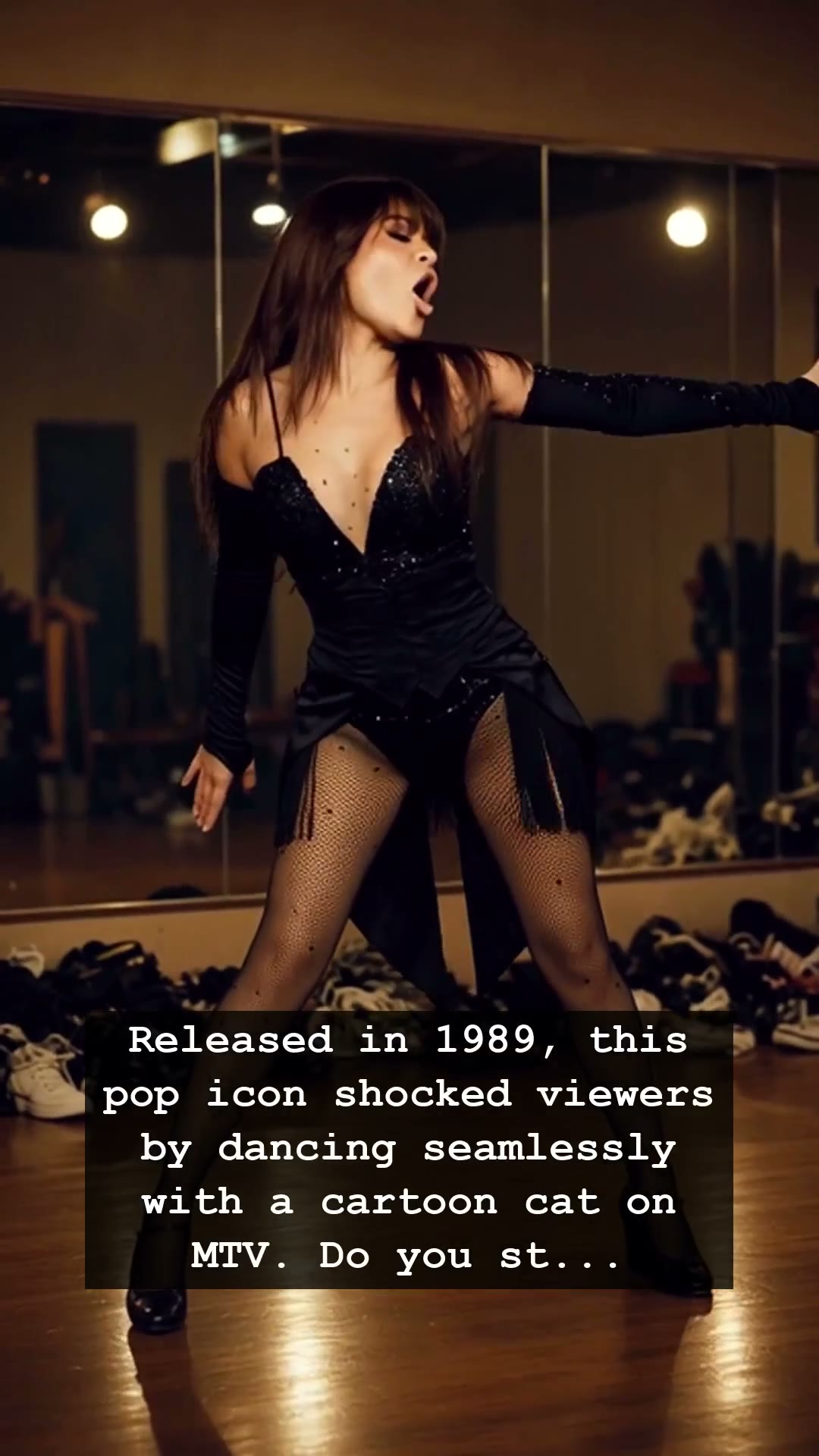
It was 1989, and the world was tuning into MTV, waiting for the next big visual spectacle. Suddenly, the screen flickered to life with a sight that seemed impossible: a live-action pop star moving in perfect rhythm with an ink-and-paint feline. Paula Abdul, a former Los Angeles Lakers cheerleader turned pop sensation, had just unleashed her music video for Opposites Attract. For a generation raised on Jukebox hits and grainy television, this wasn’t just a video; it was a technological assault on reality that left traditionalists trembling and fans absolutely mesmerized.
At the time, the lines between animation and live performance were strictly drawn. But Paula Abdul was never one for boundaries. As the song hit the airwaves, the sight of her dancing alongside MC Skat Kat—a cool, rhyming cartoon cat—became an overnight sensation. This was the era of the Walkman and high-concept music videos, where artists were beginning to realize that the visual component of a track was just as vital as the melody itself. Paula Abdul pushed that realization to the absolute limit, blending her background in professional choreography with a whimsical, high-tech imagination.
Yet, beneath the glossy sheen of this animated craze lay a grueling reality. Behind the scenes, the pressure on Paula Abdul to maintain her status as a pop icon was immense. Long before the digital polish we see today, the production of Opposites Attract required painstaking, frame-by-frame synchronization. Paula Abdul spent countless hours in the studio perfecting every step, ensuring that her movements matched the fluid motion of her animated partner. It was a testament to her work ethic, proving that her fame was not merely a product of marketing, but a result of raw talent and relentless perfectionism.
The cultural impact of that moment cannot be overstated. It was a collision of cultures: the gritty, soulful pop landscape of the late eighties meeting the colorful, rebellious spirit of animation. It gave kids and teenagers of that era a new reason to stare at their television sets, waiting for their favorite track to hit the countdown. Paula Abdul had successfully turned a simple catchy tune into a massive cultural phenomenon, cementing her place in the pantheon of MTV legends alongside other icons who defined the late twentieth century.
Today, when we look back at the footage, the charm remains intact. It is a nostalgic snapshot of a time when pop music felt bold, experimental, and inherently fun. The success of Paula Abdul and her feline dance partner wasn’t just about the music; it was about the audacity to dream up a world where a cartoon and a human could share the spotlight. As we reflect on the evolution of pop music history, Paula Abdul remains a shining star, a reminder of a time when every video was an event that promised to change the world forever. Do you remember where you were the first time you saw the cat dance?