
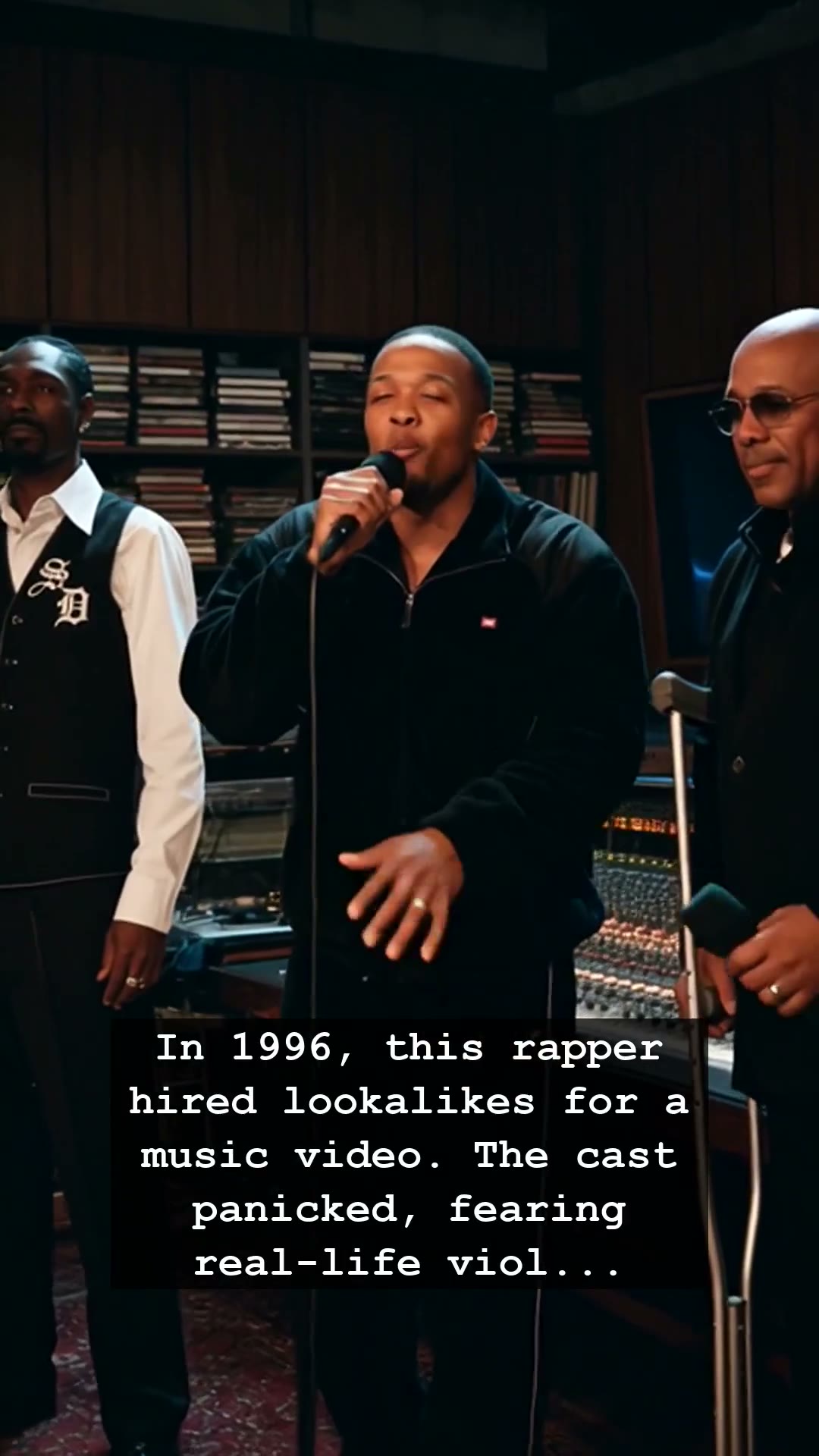
It was 1996, the year the air in the music industry felt thick with an impending storm. In the heart of the coastal rivalry that defined the decade, Tupac Shakur stood at the epicenter of a cultural earthquake. While the world was caught up in the neon glow of the MTV era and the rise of the Walkman, the reality for those living through the East Coast versus West Coast feud was far grittier. On the set of a music video that would become an iconic piece of hip-hop history, the line between performance and survival blurred, leaving the cast and crew in a state of sheer, unadulterated terror.
The production involved a clever, albeit nerve-wracking, decision to hire multiple lookalikes to stand in for the legendary rapper. As the cameras rolled, the tension on set was palpable. The extras, many of whom were just trying to earn a paycheck, found themselves paralyzed by fear. They weren’t just playing a part; they were stepping into the crosshairs of a very real, very violent turf war. Word had traveled fast that Tupac Shakur was a target, and those standing in his likeness felt the cold weight of possible retaliation from rival associates. Every sudden movement, every unfamiliar car pulling up to the curb, felt like a scene pulled from a suspense thriller, not a standard music video production.
Looking back, this moment encapsulates the dangerous mythos of the mid-nineties. Tupac Shakur was more than just a musician; he was a lightning rod for the frustrations and the aspirations of a generation. His lyrics captured the raw, unfiltered truth of the streets, but that authenticity came at a price that eventually became too steep to pay. The paranoia on that video set was a grim reflection of a society where the glamour of fame was constantly shadowed by the specter of tragedy. It was a time when the stakes were always life and death, and music was the primary weapon in a battle for cultural dominance.
Even today, decades after the dust has settled on the nineties, the legacy of Tupac Shakur remains as polarizing as it is profound. We remember him not just for the hits that flooded the airwaves, but for the haunting vulnerability he projected amidst the chaos. The lookalikes on that set weren’t just actors; they were witnesses to a transformative era in American music. They stood in for a man who lived at a speed that eventually outpaced him, leaving behind a vacuum that no other artist has quite managed to fill since.
As we look back through the lens of history, it is easy to romanticize the grit of the nineties, but stories like this remind us of the genuine danger that permeated the industry. Whether you were rocking a oversized jersey or catching the latest clips on late-night cable, Tupac Shakur was the soundtrack to a turbulent, unforgettable time. Do you remember where you were when you first heard the track that changed everything? Take a moment to revisit the music, and perhaps, uncover the human story hidden behind the headlines.