
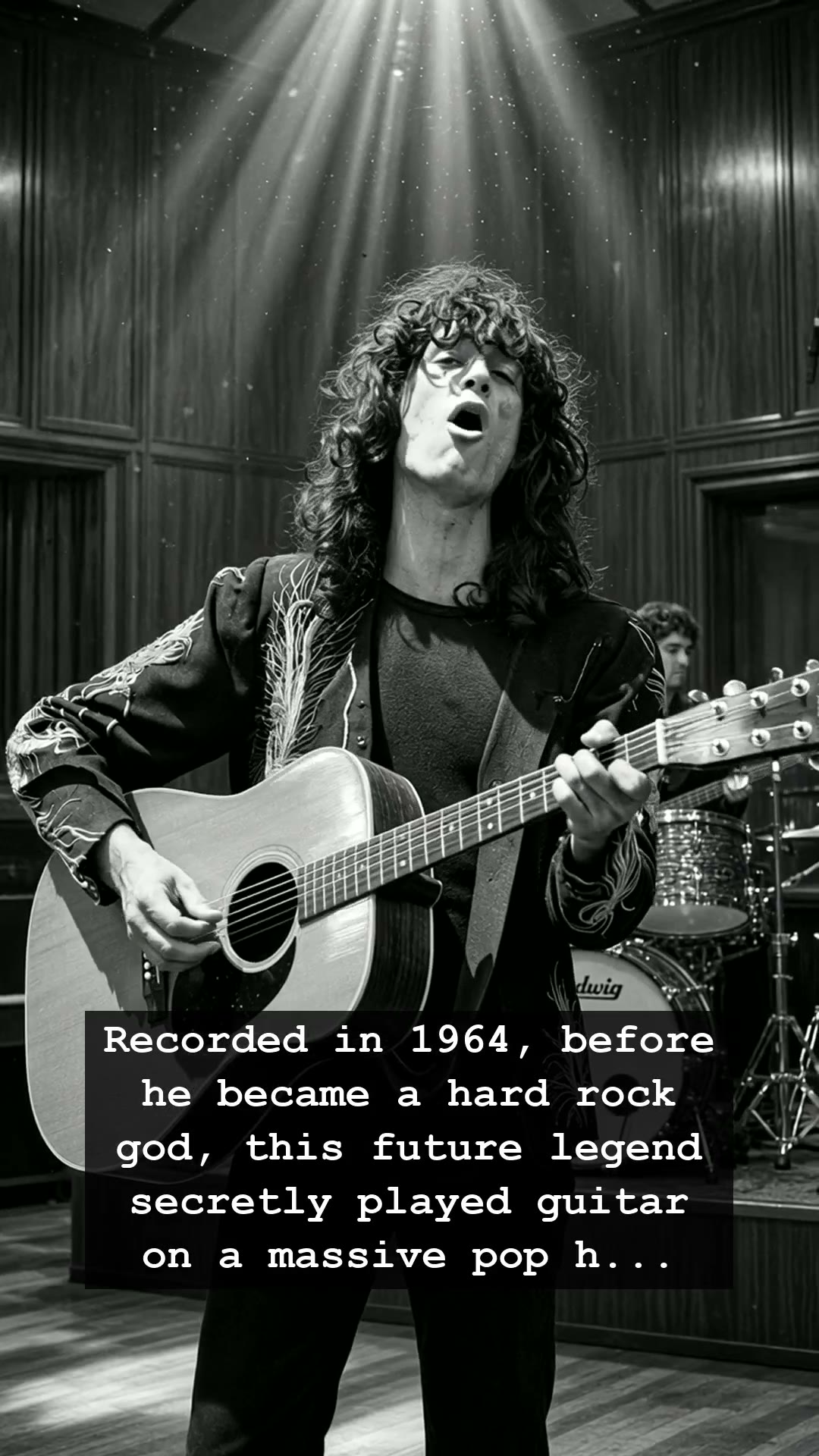
Before he was the dark wizard of the Les Paul, the man whose riffs would eventually bring the stadium-shaking thunder of Led Zeppelin to the world, Jimmy Page was just a kid in a suit, sitting in the humid, cramped corners of London studios. It was 1964, the dawn of the British Invasion, a time when the Jukebox was king and every young musician was desperate to be the next big thing. While the world was obsessed with the mop-tops of Liverpool, Jimmy Page was quietly cementing his reputation as the most reliable, brilliant, and hungry session guitarist in the city. He was a man hiding in plain sight, laying down the foundation for hits that defined a generation, long before he became a hard rock god.
Most fans know Jimmy Page for his blistering solos and the occult-tinged mysticism of his later career, but his early years were spent in the shadows of the session world. He was the ghost in the machine, an anonymous hand lending grit and precision to tracks that weren’t his own. The most fascinating piece of this puzzle is his secret involvement in the 1964 smash hit Downtown by Petula Clark. It is almost impossible to imagine the man who would later record Whole Lotta Love providing the rhythmic backbone for such a polished, orchestral pop classic, but that is exactly what happened. Jimmy Page brought a subtle, electric edge to the song that helped it climb the charts across the globe.
To understand why this matters, you have to picture the era. Recording in 1964 was a grueling, analog affair. There were no digital safety nets; if you messed up, the whole take was ruined. Jimmy Page was renowned for his professionalism, but he was also a sponge, absorbing every trick of the trade from studio engineers and veteran producers. He wasn’t just playing; he was learning how to craft the wall of sound that he would later perfect with Led Zeppelin. This session work was his apprenticeship in the dark arts of production, even if the music itself was miles away from the heavy blues he would eventually pioneer.
Looking back, these session recordings offer a rare glimpse into the transformation of a legend. It captures a moment of restless energy before the excess, the private planes, and the sold-out arenas of the seventies. It reminds us that every icon has a backstory rooted in the grind, a time when fame was a distant dream and the work itself was the only thing that mattered. There is something deeply poetic about the idea that the future architect of arena rock was once the secret weapon of the swinging sixties pop scene.
Today, when we listen to those old, crackling vinyl records, we are not just hearing a song; we are hearing the echo of history. Jimmy Page proved that greatness is often built on a foundation of humility and hard work. He mastered the rules of pop before he went on to break them all. Whether he was playing for a pop diva or commanding the stage at Madison Square Garden, the soul of his playing remained the same. It is a testament to the fact that talent is never truly hidden—it simply waits for its moment to shake the world.