
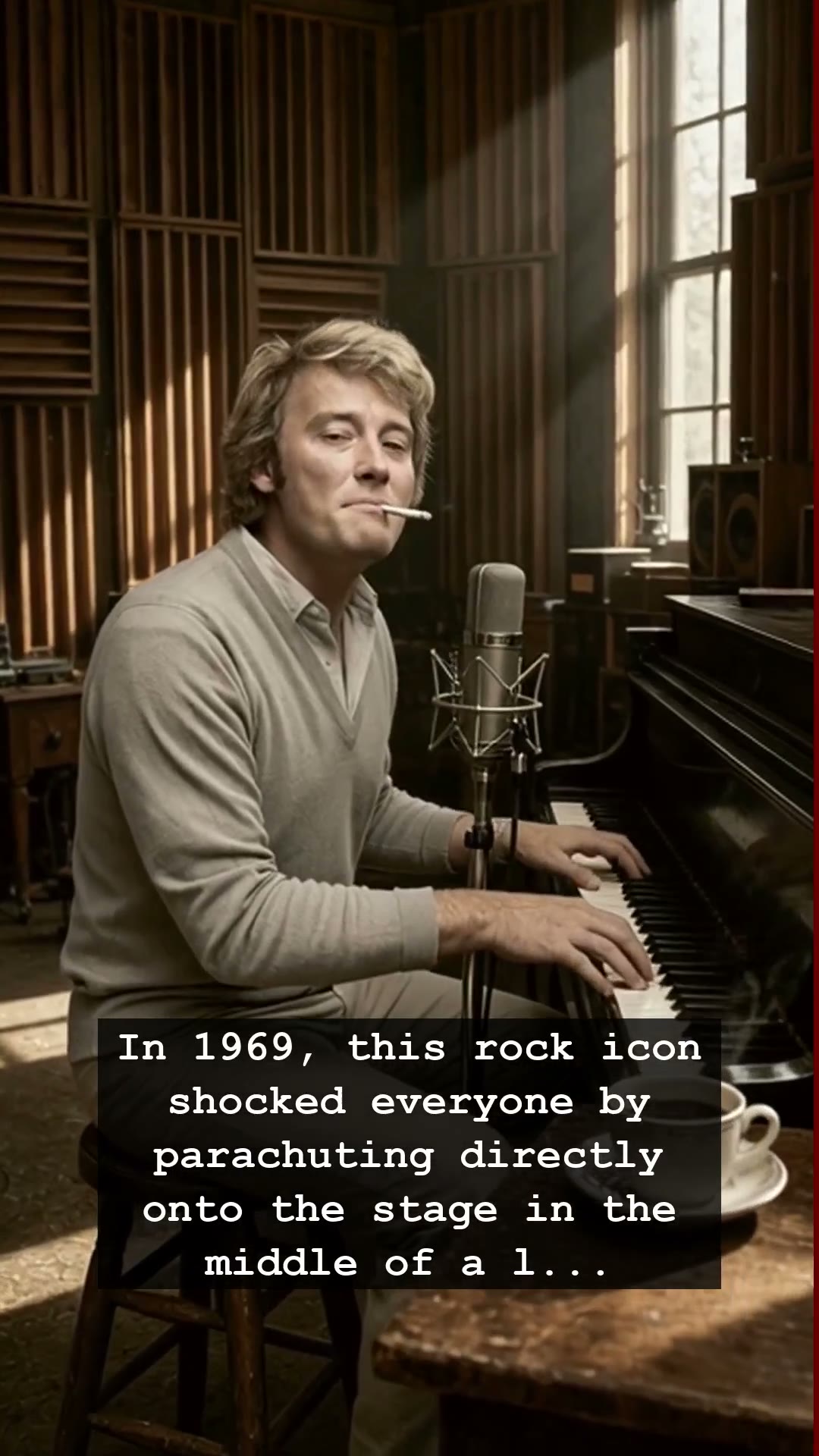
The year was 1969. While the rest of the world was fixated on the televised wonder of the moon landing, a different kind of spectacle was unfolding in a packed arena in France. Thousands of fans, clutching their tickets with white-knuckled anticipation, were suddenly silenced by the drone of a plane circling overhead. Before the smoke had even cleared from the stage, a figure plummeted through the open air, a parachute billowing like a giant ghost behind him. Johnny Hallyday, the man who would become the undisputed titan of French rock and roll, had literally dropped from the heavens to start his concert. It was a moment of pure, unadulterated adrenaline that defined the rock star mystique of that golden era.
To understand the magnitude of this stunt, one must understand the cultural landscape Johnny Hallyday inhabited. Often referred to as the French Elvis, Hallyday did more than just import the sounds of American rock, blues, and country to the continent; he lived the life with an intensity that burned white-hot. By 1969, the arena rock scene was finding its footing, and artists were no longer content with simply playing songs. They were competing for the title of the most daring performer alive. While American acts were carving their names into history at festivals like Woodstock, Johnny Hallyday was pushing the physical limits of what a concert could be, turning the stage into a theater of high-stakes danger.
This wasn’t just a gimmick; it was a desperate, beautiful grab for glory that resonated with a generation tired of the status quo. The air was thick with the scent of cheap cigarettes, gasoline, and the undeniable electricity of youth. For the fans who witnessed it, the image of Johnny Hallyday descending through the rafters remains a permanent scar on their collective memory. It was the epitome of the rock and roll lifestyle—a heady mixture of ego, talent, and a total disregard for personal safety that defined the spirit of the late sixties. It served as a reminder that to be a star in those days, you didn’t just need a hit record; you needed to be a legend in the making.
Looking back, the stunt feels like a relic from a wilder, less filtered time. We live in an era of sanitized performances and digital perfection, but Johnny Hallyday represented something raw and tactile. His life, much like that descent, was marked by constant turbulence—the chaotic romances, the legendary substance struggles, and the relentless pressure of a spotlight that never dimmed. He captured the restlessness of the decade, acting as a bridge between the humble beginnings of early rock and the grandiosity of the stadium-filling icons that followed.
Johnny Hallyday may have left the stage for the final time, but the echoes of his sky-high entrance continue to haunt the halls of music history. It reminds us that there was a time when rock was truly dangerous, when the line between a show and a survival test was blurred beyond recognition. As we look back at the grainy footage of that day, we aren’t just seeing a stuntman in a sequined suit; we are witnessing a man who understood that if you are going to live, you might as well fall from the clouds to do it. Do you remember where you were when the icons of rock truly owned the night?