
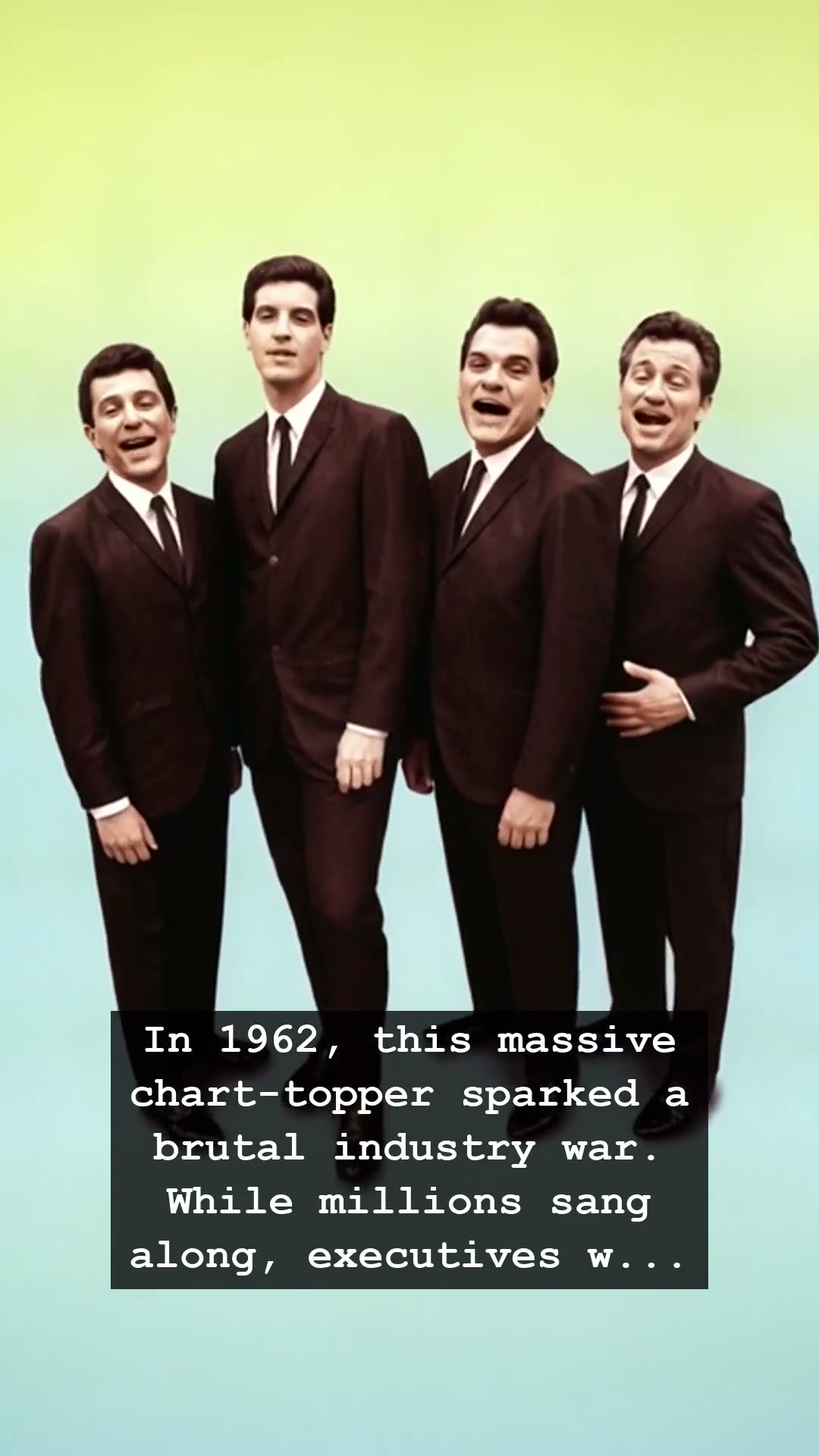
It was 1962, a year when the crackle of a jukebox in a dimly lit diner could define a generation. Across America, millions of teenagers were twisting their lives away to the infectious, high-pitched falsetto of Sherry. The Four Seasons had arrived, storming the charts and changing the landscape of pop music forever. Yet, while the world was enchanted by the polished harmonies of Frankie Valli and his bandmates, a cold, calculated war was being waged in the shadows of the music industry. Behind the glossy record sleeves and the soaring sales, the members of The Four Seasons were being systematically stripped of their hard-earned royalties by the very executives who claimed to be their champions.
The industry back then was a different beast, a world of handshakes that carried the weight of death warrants and contracts that functioned as gilded cages. The Four Seasons were working-class guys from New Jersey, hungry for the spotlight and perhaps a bit too trusting of the suits behind the glass. As Sherry climbed the Billboard charts, becoming a quintessential anthem of the era, the artists were blissfully unaware that their creative spark was being monetized into a financial black hole. While their records spun on turntables in every household across the nation, their bank accounts remained stagnant, drained by predatory accounting practices and hidden clauses that would make a modern lawyer blush.
This wasn’t just a simple case of a bad deal; it was a total betrayal of artistic trust. The drama that unfolded behind the closed doors of their recording studios was the stuff of noir cinema. The Four Seasons were pouring their souls into their craft, enduring endless touring schedules and the relentless pressure of fame, all while their internal financial structure was being cannibalized. The conflict peaked when the realization hit that the success of their chart-topping hits was effectively paying for everyone’s mansion except their own. It was a classic tale of the industry chewing up raw talent and spitting out the bones, a narrative that remains a haunting reminder of the predatory nature of 1960s pop culture.
Despite the bitterness, the legacy of The Four Seasons endured because their sound was untainted by the greed surrounding them. When you listen to the crisp, rhythmic snap of their percussion and the iconic, soaring vocals of Frankie Valli today, you hear the raw energy of a group that refused to let their spirit be broken by boardroom vultures. Their music defined the pre-Beatles American dream—a time of pompadours, diners, and the innocent promise of rock and roll. It captures a specific, golden sliver of time where the sound was sweet, even if the reality was deeply sour.
Today, we look back at the rise of The Four Seasons not just for their legendary catalog, but as a cautionary tale for every dreamer. Their struggle reminds us that behind every iconic melody lies a human story, often fraught with hidden debts and secret betrayals. So the next time you hear Sherry crackling through the speakers, take a moment to listen past the melody. You are hearing the sound of history, a beautiful song born from a brutal, uncompromising battle for survival. Does the song sound the same to you now that you know the price they paid for our nostalgia?