
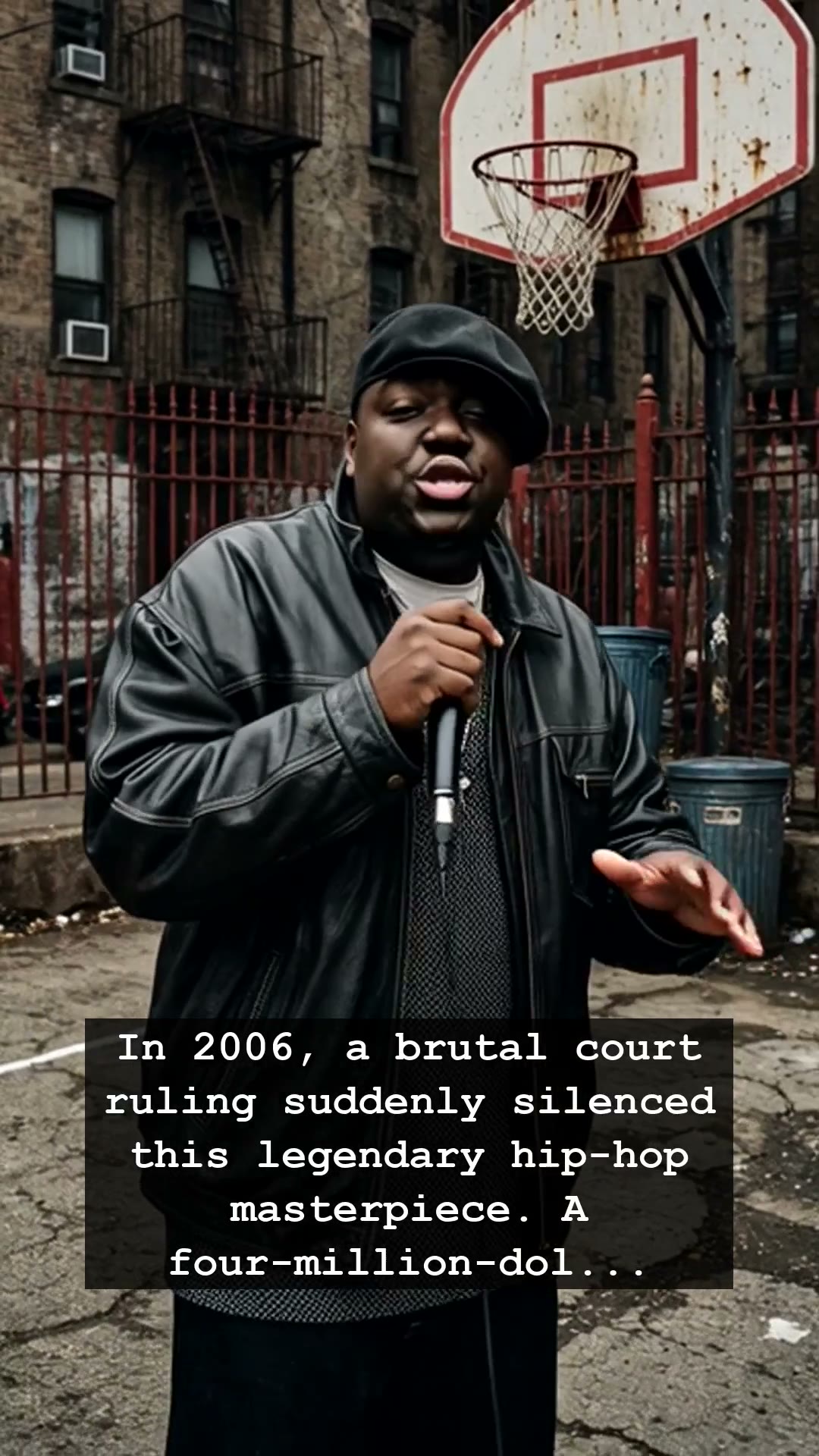
It is a rare moment in music history when a courtroom gavel hits harder than a bass drum, but that is exactly what happened in the wake of the hip-hop golden era. For many of us who remember the crackle of a freshly unwrapped cassette tape or the glow of the early MTV era, The Notorious B.I.G. was more than just a rapper; he was a titan of sound. Yet, even legends are not immune to the cold, calculated reach of the law. In 2006, a staggering four-million-dollar court ruling sent shockwaves through the industry, effectively silencing one of the most beloved tracks in his catalog. It was a somber reminder that behind the velvet rope of fame and the allure of platinum records, a legal shadow had been waiting to fall.
The conflict centered on the complex machinery of music production, specifically the art of sampling. While the culture of the nineties thrived on layering classic funk and soul riffs, this particular case proved that even the greatest creative flourishes could turn into a financial nightmare. When the court ruled against the use of an unauthorized sample, the track—which had defined an era for thousands of listeners—suddenly became a ghost. For those who grew up in the shadow of the East Coast vs. West Coast rivalry, watching a piece of The Notorious B.I.G. legacy vanish from airwaves and digital storefronts felt like losing a piece of our own collective history.
To understand the magnitude of this loss, one must remember the atmospheric tension of the time. The Notorious B.I.G. possessed a lyrical flow that felt like a cinematic masterpiece, painting gritty scenes of Brooklyn life with such precision that you could almost smell the asphalt and hear the distant sirens. His music was the soundtrack to late-night drives and the centerpiece of countless basement parties. When that $4 million judgment came down, it wasn’t just about the money; it was an act of erasure. The music that had once been the heartbeat of an entire generation was being silenced by the very bureaucracy that often tries to commodify art.
Looking back, this scandal remains a haunting chapter in the lore of hip-hop. It highlights the stark transition from the wild, unregulated days of early sampling to an era where legal clearance became the gatekeeper of sound. Fans still debate the morality of the ruling, wondering what other gems remain buried in legal purgatory. It serves as a grim artifact of the industry, proving that even a king like The Notorious B.I.G. was bound by the laws of a world he fought so hard to rise above.
Today, we are left to wonder what might have been if that masterpiece had remained untouched. The silence surrounding that track is louder than any verse, a constant reminder of the fragile bridge between artistic expression and institutional control. Even decades later, when we hear the familiar rhythm of his other hits, we think of the one that slipped through the cracks. As we look back on the golden age of hip-hop, we invite you to keep the spirit of his music alive, even when the systems of the world try to turn the volume down on the legends we hold so dear.