
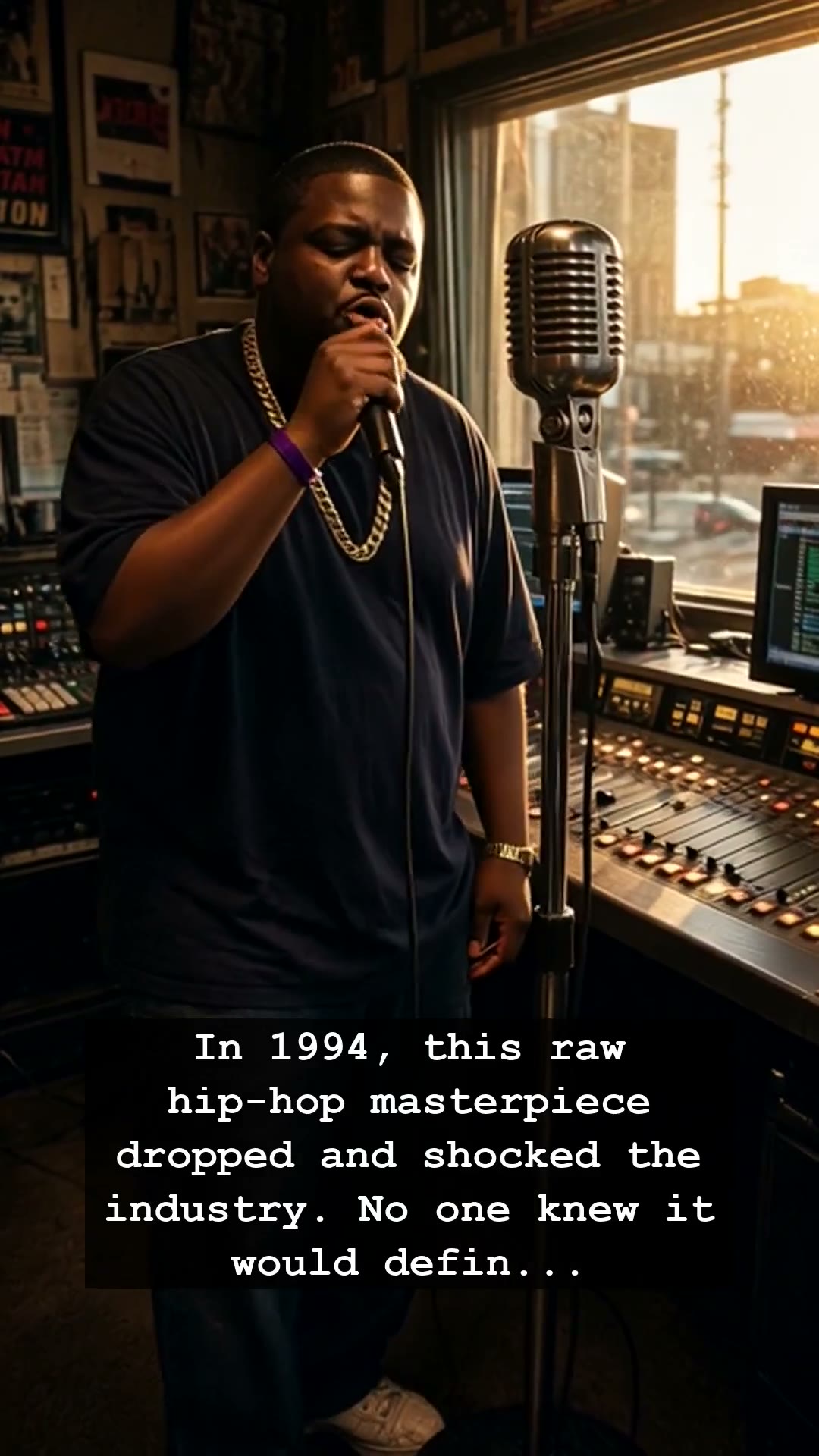
It was 1994, a year when the airwaves were caught in a tectonic shift. While the world was obsessed with the synth-pop echoes of the eighties and the emerging grunge movement, something raw and menacing was brewing in the heart of Brooklyn. When The Notorious B.I.G. dropped his debut masterpiece, Ready to Die, the industry didn’t just notice—it shuddered. It was more than an album; it was a gritty, cinematic confession that turned the streets into a stage and transformed a young Christopher Wallace into a king of the East Coast.
Before the fame, Biggie Smalls was a product of the asphalt jungle, living a life defined by the desperate scramble for survival. The weight of his reality is etched into every track on that record. Unlike the polished, upbeat sounds of earlier decades, this music carried the heavy, suffocating pressure of a life lived on the razor’s edge. When you listen to the storytelling on Ready to Die, you are not just hearing rhymes; you are hearing the heartbeat of an era where hip-hop began to confront the dark, complex morality of American inner-city life.
Behind the velvet-smooth flows and the thunderous beats lay a profound sense of foreboding. The Notorious B.I.G. possessed a rare, chilling honesty that made listeners feel as though they were riding in the passenger seat of his life. He spoke of the allure of easy money and the inevitable, crushing cost of power. During an era where MTV was starting to define the visual identity of music, Biggie brought a stark, unvarnished truth that cut through the glitz. He wasn’t just another rapper; he was a street poet who turned his traumatic brushes with death into a legacy that would eventually loom over the entire culture.
Yet, the brilliance of the album is inseparable from the drama that would eventually consume the man. The rivalry that blossomed between the East and West Coasts turned the music industry into a powder keg. For fans of the golden age, The Notorious B.I.G. remains a frozen moment of what could have been. He was the anchor of an era that shifted the needle from the carefree disco halls of Studio 54 to the intense, localized narratives of the urban sprawl. He understood the power of his own legend, even as he predicted his own tragic end with haunting precision.
Decades later, the resonance of his work has not dimmed. We still look back at 1994 as the year the map of American music was redrawn. Whether you remember walking the streets with a bulky Walkman or discovering these tracks years later, the impact is undeniable. The Notorious B.I.G. left behind a body of work that challenged us to look at the shadows of fame and the brutal beauty of survival. Even now, when the first notes hit the air, we are reminded that some voices are simply too loud, too vital, and too legendary to ever truly fade away.