
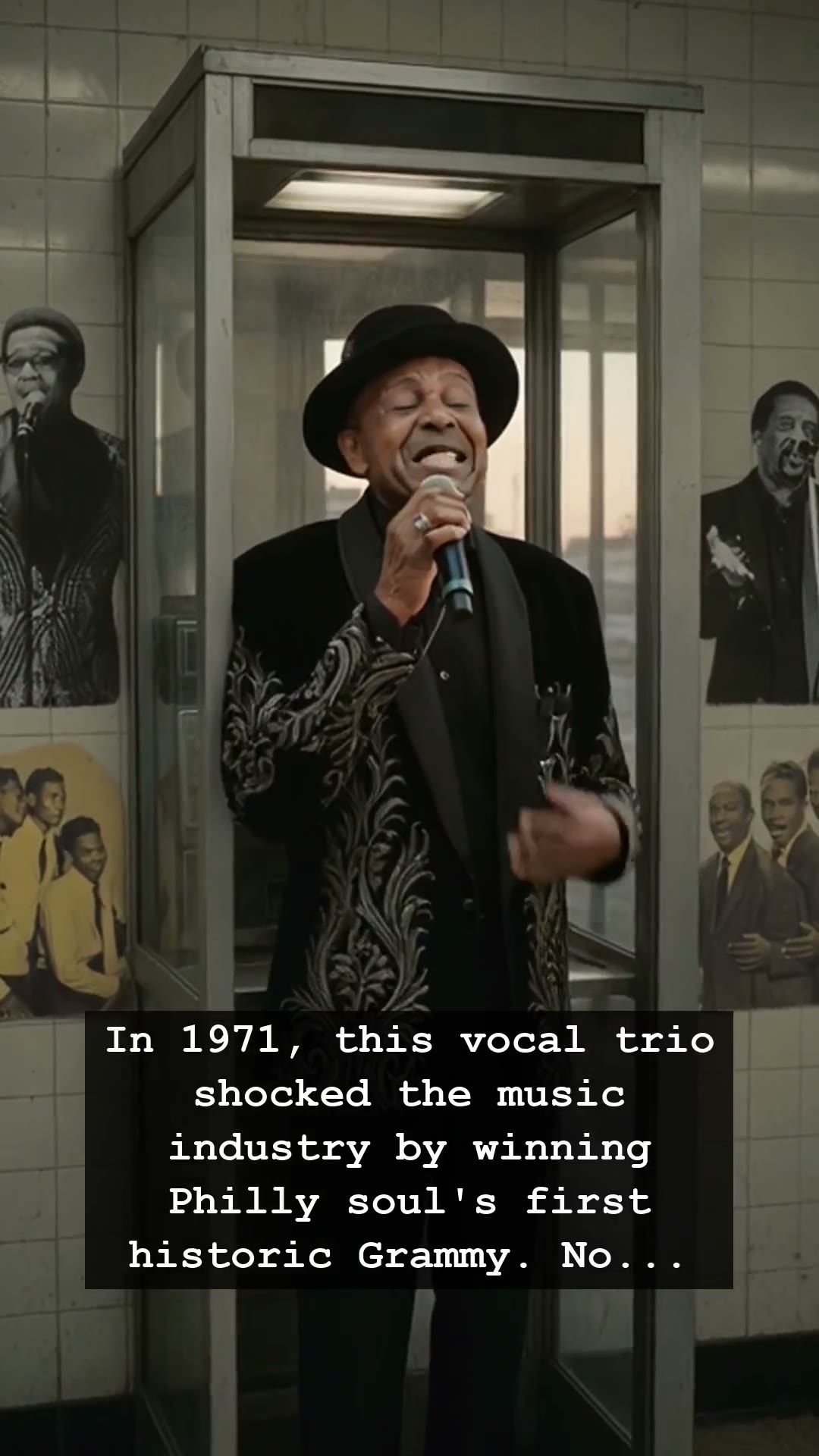
In 1971, the music industry was a playground for the aggressive and the amplified. Executives in high-rise offices dismissed anything that felt too soft, too orchestral, or too vulnerable. They mocked the lush arrangements coming out of Philadelphia, convinced that the gritty, raw sounds of the era were the only path to commercial victory. Yet, in a move that shocked the establishment and redefined the soul genre, a vocal trio stepped onto the Grammy stage to claim a historic win. The Delfonics had arrived, turning the whisper of their sweet, melancholic harmonies into a roar that the world could no longer ignore.
To understand the magnitude of this moment, you have to transport yourself back to the early seventies. While the airwaves were crowded with the heavy distortion of psychedelic rock and the dawn of stadium anthems, The Delfonics were busy crafting a delicate masterpiece of Philly soul. Led by the unmistakable, airy falsetto of William Hart, the group brought a cinematic depth to R&B that felt like a love letter written in velvet. Their songs were not just tracks on a record player; they were emotional landscapes, filled with sweeping strings and arrangements that made the listener feel as though they were dancing alone under a dim streetlamp in the middle of a city night.
Behind the scenes, however, the path to the Grammy podium was anything but smooth. The music business was a ruthless machine, often prioritizing trends over the raw, authentic artistry that The Delfonics provided. They were frequently told that their sound was too sophisticated for the mainstream, a critique that ignored the profound connection they were building with a generation looking for intimacy in a chaotic decade. When they finally stood before their peers to accept their award, it wasn’t just a win for the trio; it was a vindication for the soul movement itself, proving that vulnerability could be just as powerful as aggression.
The impact of The Delfonics during this era cannot be overstated. Their music became a staple of the juke box culture that defined the social fabric of American neighborhoods. Whether playing in a dimly lit neighborhood club or spinning on a classic turntable in a cramped living room, their tracks had a way of freezing time. They captured the essence of heartbreak and longing with such precision that, decades later, their influence is still felt in the DNA of contemporary R&B. They were the architects of a sound that prioritized elegance, even when the world around them was demanding something harder.
Today, listening to their hits brings back the warmth of a bygone era, long before the digital age sanitized our musical experiences. It reminds us of a time when soul music wasn’t just a category, but a lifeline. The Delfonics remain a testament to the fact that when you stay true to your vision, the skeptics eventually fall silent. If you listen closely to those strings and that ethereal vocal blend, you might just find yourself transported back to the golden age of soul, where every note had a heartbeat and every melody told a story worth remembering.