
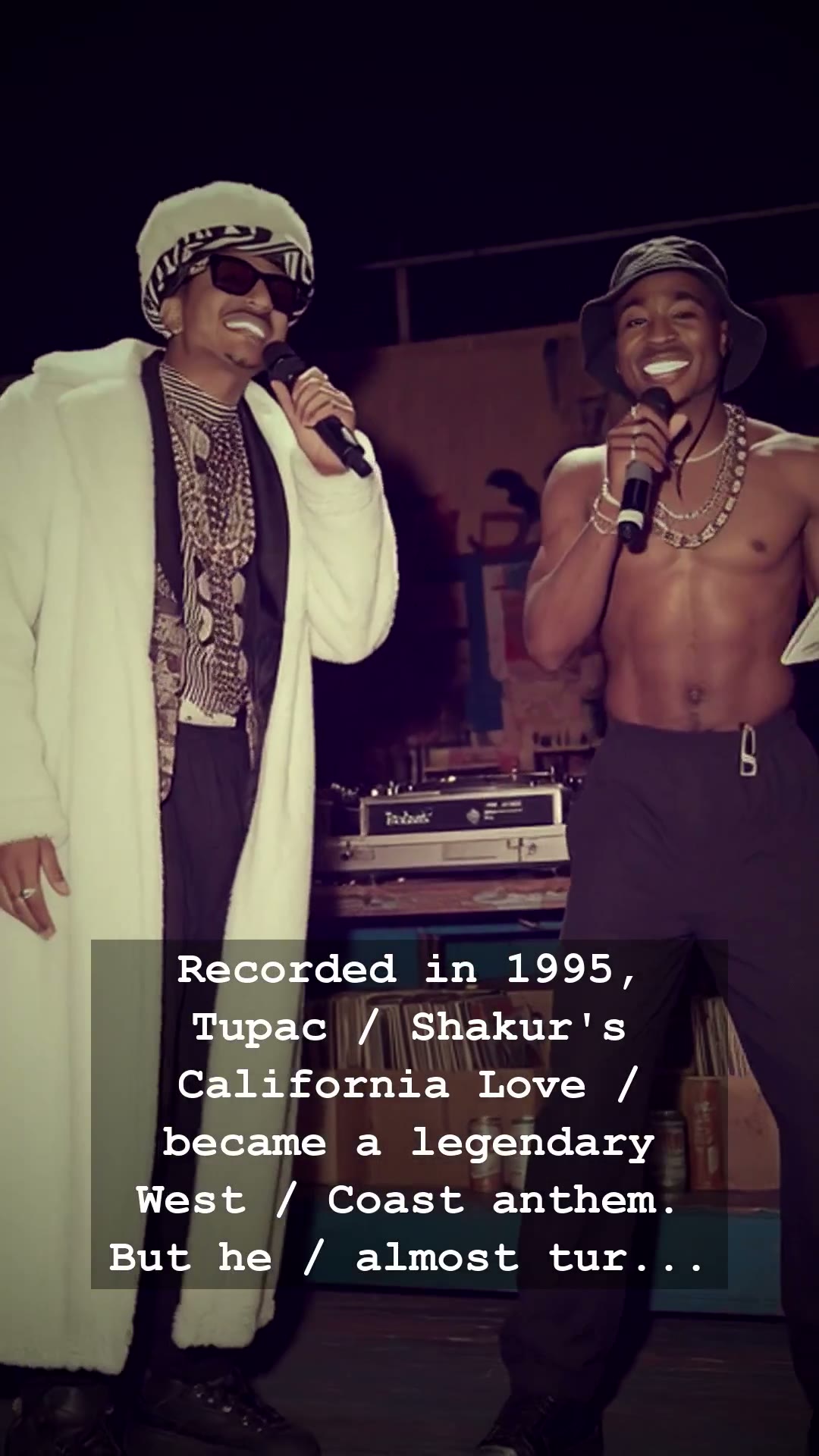
The year was 1995, a time when the air in Los Angeles was thick with both the smog of industry and the electric tension of a simmering cultural war. Tupac Shakur, the most polarizing and magnetic figure in hip-hop, had just walked out of prison. He was a man reborn, marked by the scars of incarceration and a burning desire to reclaim his throne. While the streets were divided between the ideologies of the East and West, Tupac Shakur was about to bridge the gap with a sound that would define an entire generation. But the legendary track California Love, a song that would become the ultimate West Coast anthem, almost never existed at all.
When Dr. Dre first presented the beat, the atmosphere in the studio was tense. Tupac Shakur had a reputation for being notoriously particular; he possessed an ear for the sonic landscape that reflected his own tumultuous reality. As the story goes, Tupac listened to the track, hesitated, and nearly walked away from the session. He was searching for something that captured the raw, sunny, yet dangerous essence of his home state. He needed a sound that could roar over the bass-heavy speakers of a lowrider cruising down Sunset Boulevard. He wasn’t just looking for a hit; he was looking for a manifesto for the West.
Once the hook kicked in, the skepticism vanished. The studio, typically a place of clinical focus, transformed into a party. You could almost feel the phantom spirit of the era in the air—the golden age of MTV, the rise of gangsta rap, and the unspoken weight of the looming coastal rivalry. Tupac Shakur brought a frantic, charismatic energy to the booth, delivering bars that felt like a direct transmission from the soul of California. It was the perfect synergy: Dr. Dre’s masterful, horn-drenched production met Tupac’s poetic grit. They had no idea that they were crafting a permanent piece of musical history.
Looking back, California Love serves as more than just a radio anthem; it is a time capsule of 1995. It captures the moment when the West Coast finally declared its independence from the shadow of New York. The song resonates today not just because of the beat, but because of the vulnerability Tupac Shakur displayed amidst the bravado. He navigated the pressure of his new reality with a ferocity that few artists have ever matched. It was a brief, sun-drenched moment of glory before the darkness of his later years fully set in.
Decades later, the echo of that track still commands attention in every corner of the globe. Whether heard through the tinny speakers of a Walkman or thumping from a modern sound system, the impact remains unchanged. Tupac Shakur remains a permanent fixture of our collective consciousness, a poet who fought his demons with a microphone. As we remember that legendary studio session, we are reminded that sometimes the greatest art is born from a single, moment-defining hesitation. Even now, whenever that iconic piano riff hits, we are all transported back to the golden sun of the California dream.