
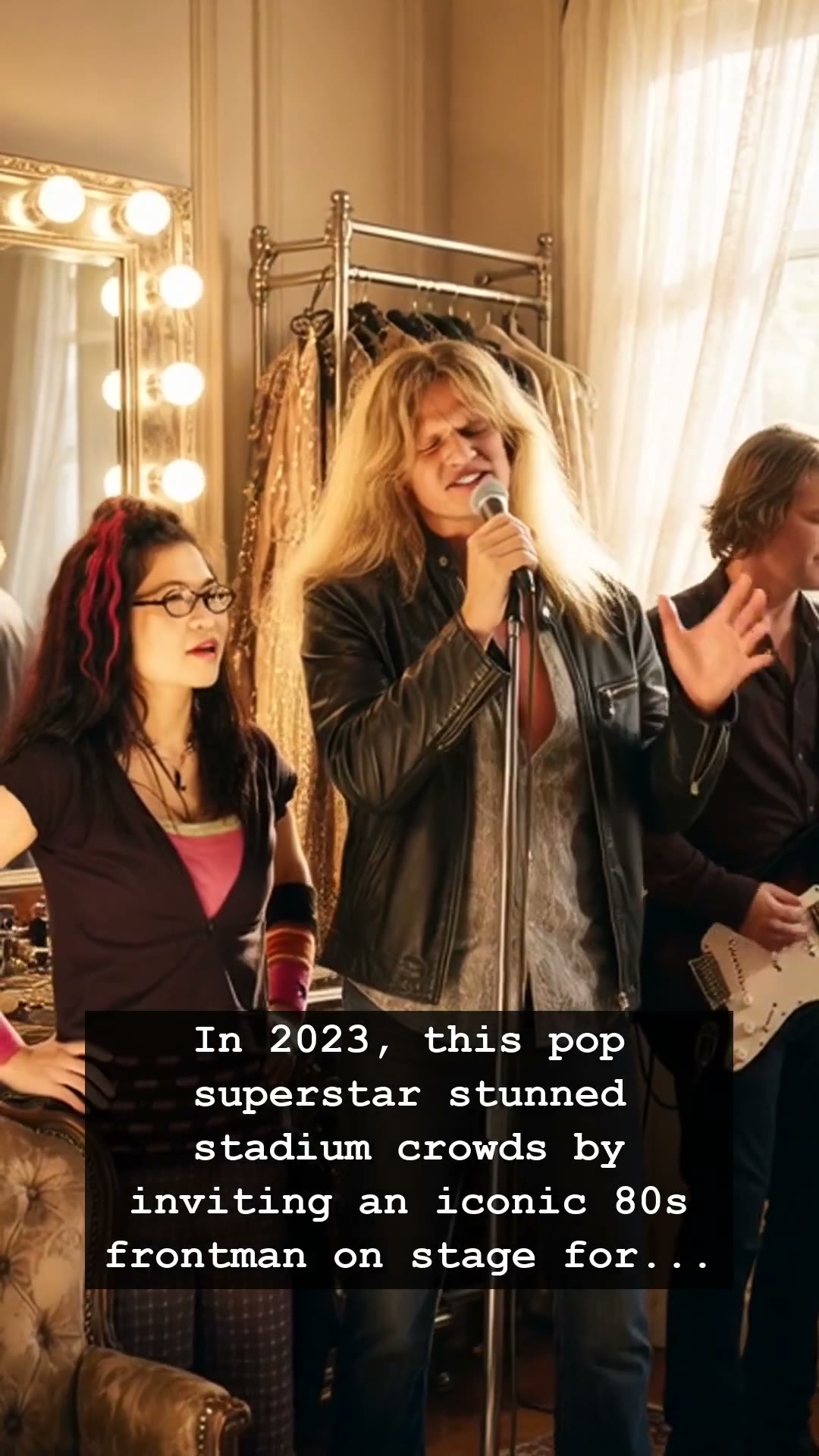
The atmosphere inside the New Jersey stadium was already thick with the electric buzz of a modern pop spectacle. Tens of thousands of fans, illuminated by the glow of their phones, were prepared for a night of chart-topping anthems from the era of streaming giants. But then, the stage lights shifted, the tempo distorted, and a relic from the age of hair metal stepped into the glare. In a move that bridged the chasm between eras, Taylor Swift invited heavy metal icon Sebastian Bach to share the stage. It was a collision of worlds that felt both surreal and deeply significant, marking a rare moment where the glitz of contemporary stardom bowed respectfully to the gritty, leather-clad spirit of 1980s hard rock.
For those of us who cut our teeth on the raw, unpolished energy of the Skid Row era, seeing Sebastian Bach emerge felt like a ghost from a glorious, forgotten past. During the mid-80s, the world was dominated by the towering personas of frontmen like Bach, who commanded stadiums with sheer vocal power and a rebellious, devil-may-care attitude. Back then, it was all about the hair, the hooks, and the excess. Music was a visceral experience tied to MTV rotations and the scratchy, analog warmth of cassettes played on a Walkman. When Taylor Swift reached out to a figure who once defined the peak of the glam metal movement, she wasn’t just performing a duet; she was acknowledging the foundational DNA of the rock culture that preceded her own massive influence.
The juxtaposition was startling. Taylor Swift, the master of the modern narrative song, standing beside the man who once gave voice to the angst and fury of heavy metal ballads. The chemistry was undeniably genuine, a testament to the fact that great music transcends the boundaries of genre and time. It reminded the crowd—both the teenagers who grew up with social media and the aging rockers who still have their original vinyl records—that the passion for a high-octane performance remains the same, regardless of the decade. The crowd’s reaction was a sonic tidal wave, a rare instance where the barrier between pop idol and rock legend dissolved completely under the weight of shared musical appreciation.
This crossover serves as a poignant reminder of the enduring legacy of 80s rock. In an industry that often feels like it is constantly chasing the next ephemeral trend, these moments of historical connection anchor us. We are often told that the golden age of rock ended with the transition from the arena-filling pyrotechnics of the 80s to the introspective grunge of the 90s, yet Taylor Swift proved that the old guard still holds a magnetic pull. Bringing Sebastian Bach into the fold was a respectful nod to a time when rock and roll was the undisputed king of the cultural zeitgeist.
Ultimately, whether you are a devoted Swiftie or a die-hard fan of the Skid Row days, the sight of Taylor Swift and Sebastian Bach sharing a microphone is one for the history books. It bridges a generational gap, showing us that the soul of live music never truly changes, only the faces on the stage do. As the echoes of that night faded, we were left with a powerful image of unity across musical eras. It was a stark, beautiful reminder that rock and roll never really dies; it just waits for the right moment to find a new audience, leaving us all feeling a little more connected to the legends of our youth.