
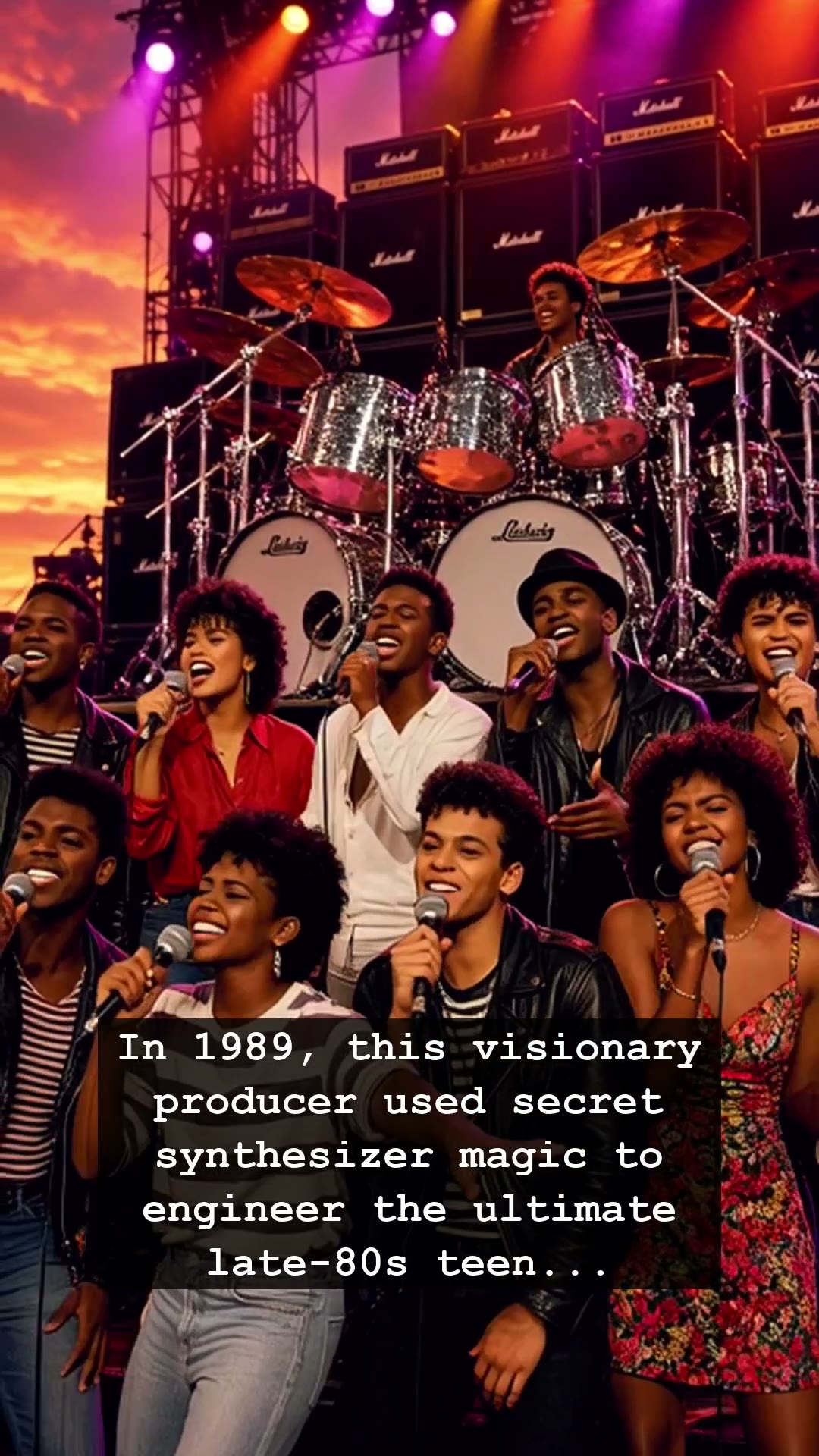
Close your eyes for just a moment and imagine the ambient glow of a neon mall arcade, the satisfying clunk of a cassette snapping into a portable Walkman, and the irresistible scent of hairspray hanging heavy in the air. The late nineteen-eighties were a whirlwind of explosive color and undeniable sonic energy, an era where pop culture felt larger than life. Right at the beating heart of this cultural revolution stood New Kids on the Block, a phenomenon that completely redefined what it meant to be a teenage heartthrob. But behind the matching bomber jackets, synchronized choreography, and deafening screams of thousands of adoring fans lay a meticulously calculated laboratory experiment in sound engineering. In nineteen-eighty-nine, behind closed studio doors, a visionary mastermind producer set out to engineer the ultimate bubblegum pop masterpiece, forever altering the trajectory of modern music history.
Before New Kids on the Block became global superstars filling massive stadiums, they were just five ordinary teenagers from Boston struggling to find their footing in a cynical industry. Enter Maurice Starr, the ambitious producer and songwriter who essentially invented the blueprint for the modern boy band. While critics often dismissed manufactured pop as lightweight fluff, Starr understood the raw alchemy required to capture teenage angst and package it into pure euphoria. He spent countless sleepless nights locked away in a high-tech recording studio, surrounded by blinking synthesizers, heavy drum machines, and tangled miles of audio cables. He was searching for a specific sonic texture, something sharp, glossy, and impossibly catchy that would cut right through the noise of the standard radio waves.
On that fateful recording session, utilizing cutting-edge synthesizer technology that was state-of-the-art for the era, Starr engineered an infectious, high-energy hook. He layered punchy electronic beats with harmonious vocal stacking, building a lush wall of sound that felt both futuristic and warmly inviting. This secret synthesizer magic became the clandestine engine driving the runaway success of New Kids on the Block. When that track finally dropped onto the airwaves, it didn’t just climb the Billboard charts; it completely colonized the cultural landscape. It echoed from bedroom boomboxes, blasted through school gym speakers, and became the unstoppable soundtrack of a generation growing up on the cusp of a new digital age.
Yet, the glittering world of late-eighties teen pop came with a heavy, exhausting price tag. The relentless touring schedule, overwhelming media scrutiny, and suffocating pressure to remain perpetually youthful eventually took a severe emotional toll on the members of New Kids on the Block. Behind the gleaming smiles and flawless choreography were exhausted young men navigating the dizzying, often isolating realities of sudden, blinding fame. The screaming crowds drowned out their personal struggles, creating a surreal bubble that few artists ever truly survive intact. It was a classic cautionary tale of the music industry machine, where the very product created to bring joy often threatened to consume its creators from the inside out.
Decades have drifted past since those dizzying days of peak beatmania, yet the legacy of New Kids on the Block and the brilliant production techniques of the nineteen-eighties continue to echo strongly through modern pop. Whenever we hear those shimmering synthesizer arpeggios, a sudden wave of nostalgic warmth washes over us, instantly transporting us back to a simpler, more innocent time in our lives. It is a powerful reminder of how music acts as a timeless time machine, preserving our youth in amber. Do you still remember the exact moment you first heard your favorite track, and does it still manage to transport you right back to your teenage bedroom?