
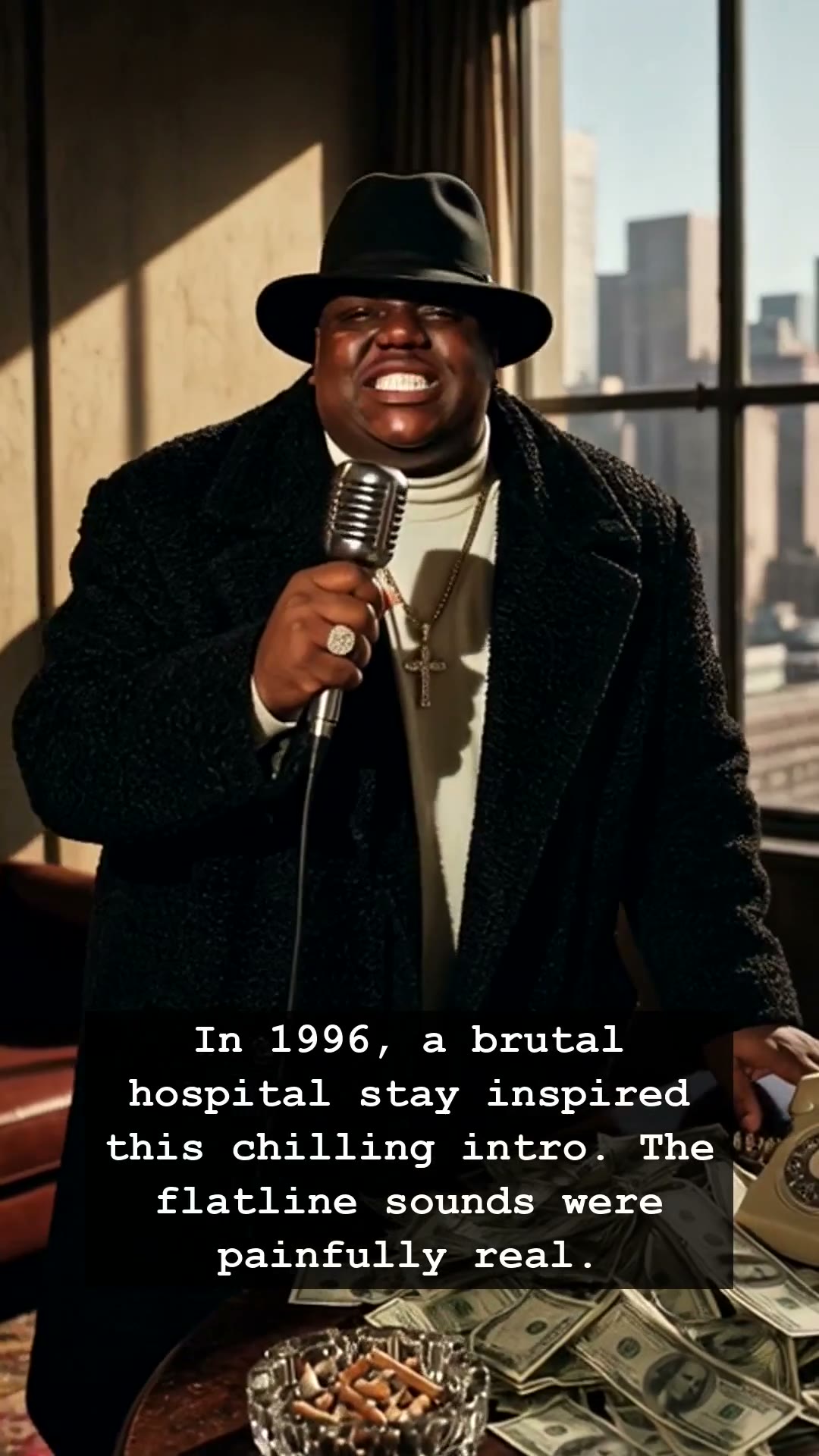
It is one of the most unsettling sounds in hip-hop history, a noise that freezes the blood of even the most casual listener. Before the bass drops on the legendary album Life After Death, there is a haunting, rhythmic beep—the unmistakable sound of a hospital heart monitor flatlining. For years, fans speculated about its origins, wondering if it was just another theatrical flourish from a man who mastered the art of storytelling. But the truth is far grittier. For The Notorious B.I.G., that sound was not a studio effect; it was the echo of his own brush with mortality, a haunting souvenir from a year that nearly claimed his life long before he became a martyr of the genre.
In September 1996, the world of music was shifting. While the East Coast and West Coast feud dominated the headlines of every tabloid, Christopher Wallace, better known as The Notorious B.I.G., was dealing with a different kind of darkness. A devastating car crash left the rapper confined to a hospital bed for months, his leg shattered and his mobility stripped away. As he lay there, trapped in a sterile room while the world outside continued to spin, the beep of the medical monitor became the soundtrack to his isolation. He wasn’t just a global superstar during those months; he was a patient staring down the barrel of permanent disability, forced to reconcile his meteoric rise with the fragility of his own body.
When he finally returned to the studio to record his sophomore masterpiece, The Notorious B.I.G. decided to bleed his trauma into the music. He chose to immortalize that physical suffering by weaving those medical flatlines directly into the album’s opening track. It was a bold, chilling move that transformed personal tragedy into high art. By anchoring the album with the sound of a failing heart, The Notorious B.I.G. prepared his audience for a journey through the shadows, effectively blurring the lines between his public persona and his private, agonizing recovery.
Listening to that intro today carries a weight that feels heavier than it did in the late nineties. It serves as a reminder that the golden age of hip-hop was not just about the glitz of music videos or the prestige of the charts. It was a time when the stakes were life and death. The Notorious B.I.G. lived in a world where danger was constant, yet he managed to find a way to translate his most vulnerable, silent moments into a sonic legacy that defined an entire era of American culture.
Decades later, the echo of that hospital monitor still resonates, serving as a ghostly testament to a man who lived large but suffered in silence. The Notorious B.I.G. left us with more than just rhymes; he left us with pieces of his own soul, preserved in the grooves of his records. As the echoes of that heart monitor fade into the beat, we are reminded that true legends never really leave us—they simply continue to tell their stories, one haunting, heartbeat-filled track at a time.