
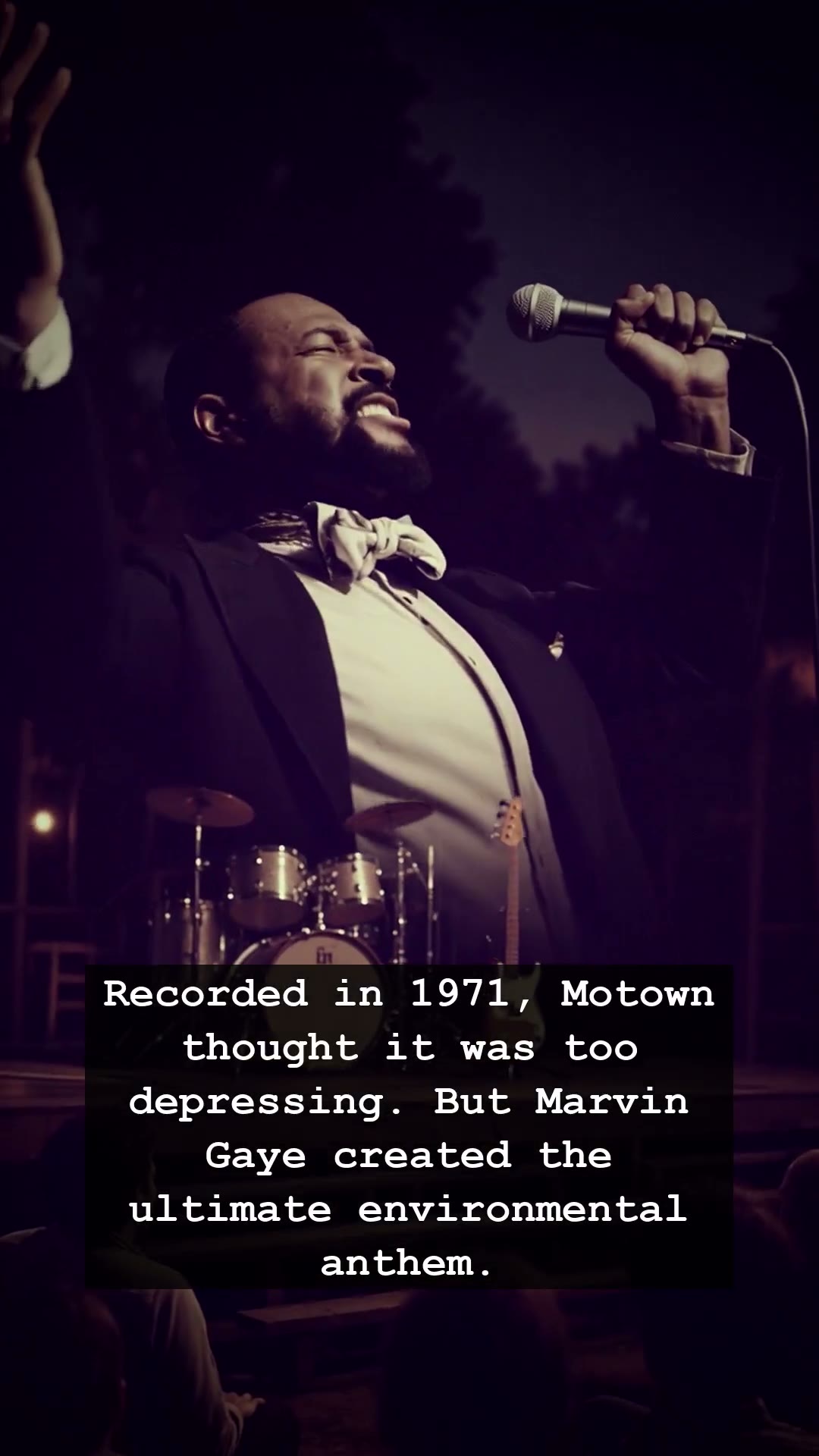
In 1971, the hallowed halls of Motown Records were echoing with the polished, upbeat sounds that defined an era. Yet, one man was about to shatter that carefully curated glass ceiling. Marvin Gaye, the Prince of Soul, sat in the studio attempting to capture the fractured spirit of a nation torn apart by war and systemic unrest. When he finally presented his new project to label boss Berry Gordy, the reaction was swift and brutal. Gordy famously declared the album pure poison, refusing to release a collection of songs that he believed would destroy Marvin Gaye’s career. The label wanted danceable hits and polished love songs, but Marvin Gaye had something much darker and more profound to say.
At the time, the airwaves were dominated by the Jukebox standards of the day, but the streets were filled with the raw, unfiltered reality of the Vietnam War and urban decay. Marvin Gaye felt the weight of this climate in his bones. He had recently retreated from the spotlight, disillusioned by the sudden death of his singing partner Tammi Terrell and the stifling pressure of being a corporate pop star. When he walked into the studio, he wasn’t looking for a chart-topper; he was looking for the truth. He wanted to hold a mirror up to America, creating what would eventually become the landmark album What’s Going On.
This wasn’t just a collection of music; it was a desperate, soulful plea for humanity. Marvin Gaye infused his tracks with the echoes of protest and a haunting, ethereal production style that felt decades ahead of its time. He layered his own vocals to create a chorus of ghosts, a sonic representation of a divided society trying to find its way home. Even as the record executives panicked, calling the work too depressing and too political, Marvin Gaye stood his ground with the unwavering conviction of an artist who knew he was capturing a turning point in history.
When the title track was finally forced through the system, it became an immediate, undeniable anthem. It was a rhythmic, environmental wake-up call that resonated from the inner cities to the soldiers fighting in distant jungles. By speaking his truth, Marvin Gaye didn’t destroy his career; he transcended it. He became the voice for the voiceless during a time when television networks were showing the first uncensored footage of war on the evening news. The album forced the music industry to grow up, proving that soul music could be as politically potent as it was emotionally devastating.
Decades later, the haunting melody of Marvin Gaye still feels like a conversation with a friend who knows too much. In our modern age of constant noise, his 1971 masterpiece remains a testament to the power of artistic defiance. He turned poison into gold, and in the process, changed the landscape of popular music forever. Perhaps it is time to put on that vintage record, sit back, and listen to the man who dared to ask the questions nobody else wanted to answer.