
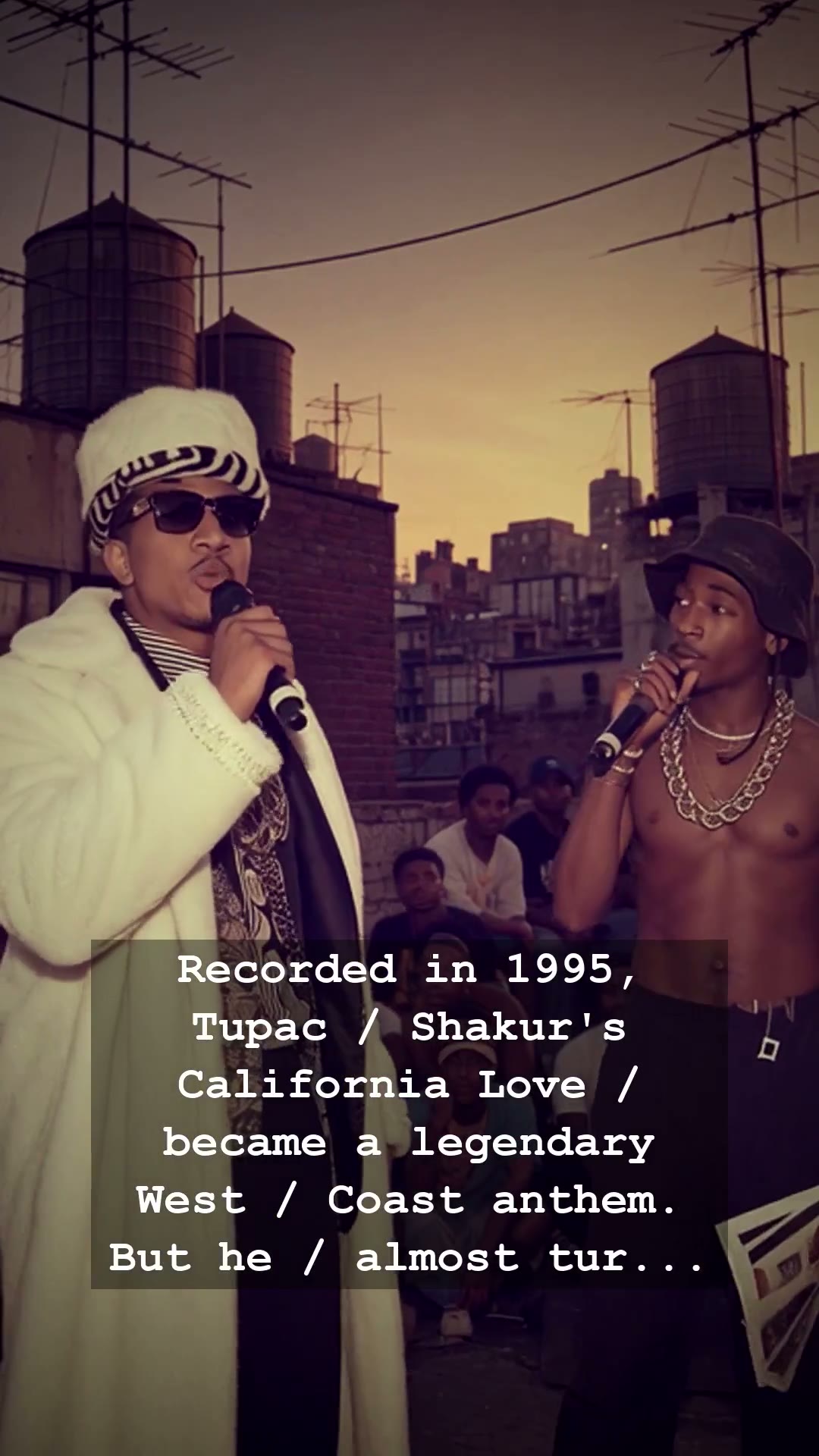
The year was 1995, and the air in Los Angeles crackled with an uncharacteristic tension. Tupac Shakur had just walked out of the prison gates, a man transformed by incarceration and fueled by a burning, restless energy. The music industry was a battleground, caught in the escalating crossfire of the East Coast versus West Coast rivalry. In the high-stakes, smoke-filled rooms of the recording studio, Dr. Dre sat at the console, offering up a beat that sounded like the sun-drenched future of G-funk. It was the instrumental for California Love, a track that would eventually define a generation. But in that fragile, decisive moment, the legendary Tupac Shakur actually hesitated, nearly walking away from the song that would seal his status as a permanent icon of hip-hop history.
Imagine the scene: the clatter of analog tape machines, the scent of expensive cigars, and the heavy atmosphere of a studio that felt like the center of the universe. Tupac Shakur stood at the crossroads of his own narrative. Having spent time behind bars, he was wary of the commercial machine, skeptical of the polished production that Dr. Dre was pushing. He wanted grit; he wanted to capture the pain of the streets rather than the glitter of the radio waves. Yet, the infectious, brass-heavy hook proved impossible to ignore. It was the sound of a rebirth, a sonic declaration that he was back and ready to claim his throne as the undisputed king of the West Coast scene.
When Tupac Shakur finally leaned into the microphone, the transformation was instantaneous. The hesitation vanished, replaced by an aggressive, charismatic flow that demanded absolute attention. California Love was not just a song; it was a cultural shift. It played in every lowrider rolling down Sunset Boulevard and blasted from every Walkman on the street. In an era before streaming, when MTV dictated the pulse of pop culture, the music video for the track—a Mad Max-inspired desert spectacle—became a permanent fixture in our collective memories. It captured the raw, cinematic ambition of the mid-90s, blending high-budget theater with the authentic, rough-around-the-edges spirit of Death Row Records.
Decades later, the resonance of that recording session remains untouched by time. We listen to California Love and we are instantly transported back to a golden age of hip-hop, where artists were larger than life and the stakes felt like matters of survival. Tupac Shakur had a way of making the personal feel monumental, turning his internal conflicts into anthems for the masses. His brief uncertainty in that studio reminds us that even legends are human, and that history is often made by the narrowest of margins.
As the synth lines still echo through modern clubs, we reflect on the man behind the myth. Tupac Shakur was a poet trapped in a pressure cooker of his own making, yet he gave us a soundtrack that defined the California dream for a decade. Whether you remember the first time you heard it on the radio or you are discovering the brilliance of 1995 hip-hop today, one thing remains clear: California Love wasn’t just a hit; it was a heartbeat that refused to stop.