
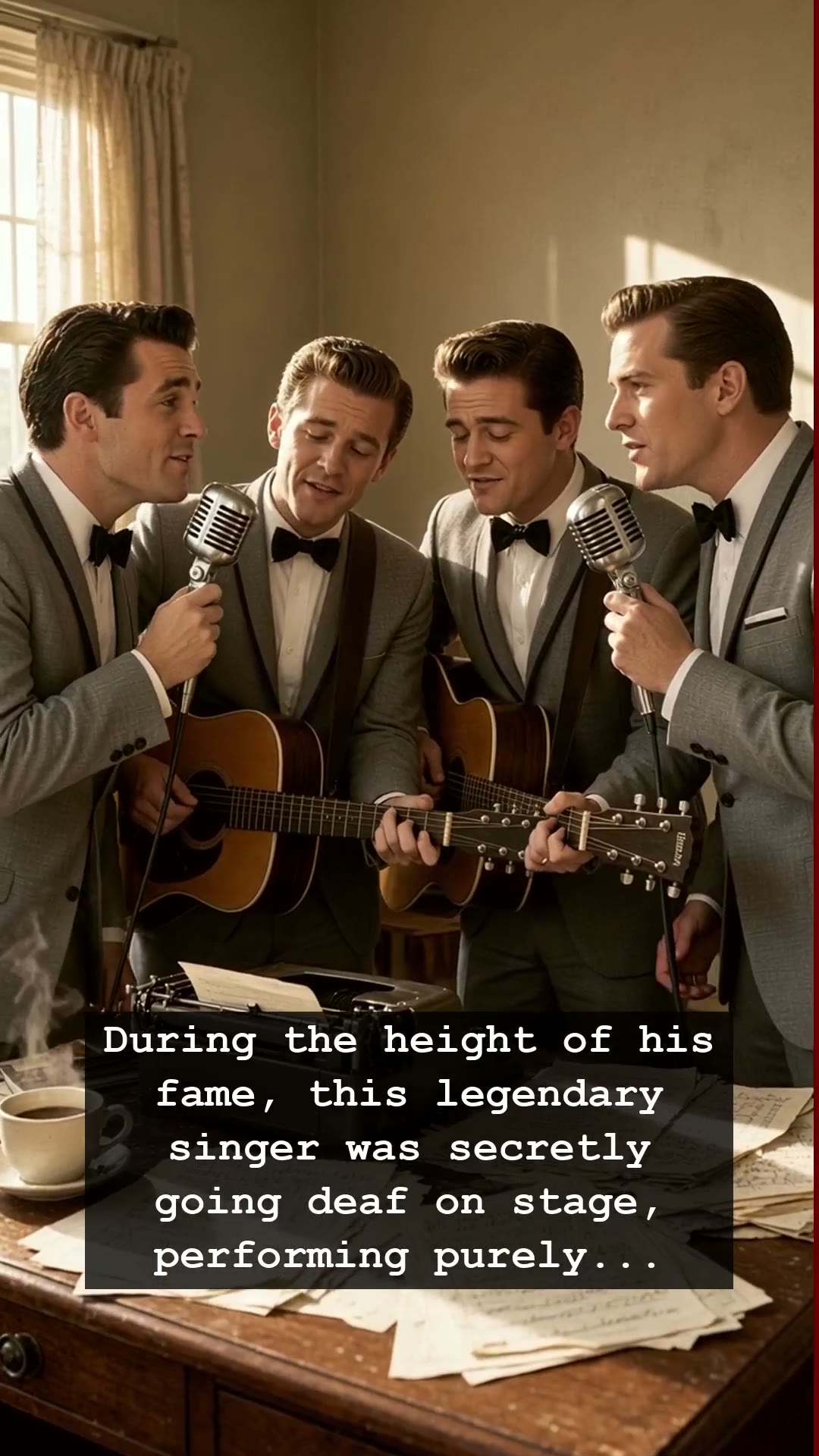
In the golden age of the 1970s, as the neon lights of Studio 54 shimmered and the world danced to the beat of the disco craze, one voice stood above the rest. To millions of listeners across the globe, Frankie Valli was the untouchable icon, the falsetto king who defined the sound of an American generation. Yet, while the crowds cheered and the radio waves pulsated with his hits, Frankie Valli was fighting a silent, terrifying battle that could have ended his career at its zenith. Beneath the glamorous surface of television appearances and sold-out arena tours, the legendary frontman was slowly losing his hearing to a debilitating condition known as otosclerosis.
Imagine standing before thousands of screaming fans, the arena lights blinding you, while the world you knew began to descend into total, suffocating silence. For Frankie Valli, this was not a nightmare; it was his reality. As the disease progressed, the legendary singer found himself unable to hear the band behind him or the harmonies he had perfected over decades. He was effectively performing in a vacuum, relying on sheer muscle memory and the visceral sensation of stage vibrations beneath his feet to maintain his tempo. He had to learn to read the lips of his fellow band members just to navigate the simplest song transitions, turning every live performance into a high-stakes performance art piece fueled by desperation and raw talent.
This secret struggle remained hidden from the public for years, allowing Frankie Valli to maintain his pristine image as a flawless vocalist. It is a haunting testament to the brutal pressure of the industry during that era, where the slightest sign of weakness could lead to the cancellation of tours or the loss of a lucrative recording contract. To keep the magic alive, he endured agonizing surgeries and the constant fear that his next note might be his last. Most fans listening to their Walkmans on the way to work had no idea that the man singing their favorite tracks was navigating his own private darkness.
Looking back, the emotional depth in Frankie Valli’s later performances takes on a profoundly different meaning. What audiences interpreted as pure passion was, in reality, a man pouring his soul into the music because he was unsure if he would ever hear the melody clearly again. This period of his life reflects the hidden toll of fame that often went unspoken in the 1970s, a time when stars were expected to be superhuman, masking their trauma with sequined suits and bravado. It adds a layer of raw, human fragility to the iconic soundtrack of our lives.
Today, the legacy of Frankie Valli continues to resonate because it is grounded in such profound resilience. He reminds us that even when the world goes quiet, the rhythm of a true performer never fades. When you listen to those classic records now, listen a little closer; you might just hear the echoes of a man who refused to let silence silence his heart. His story is a poignant reminder that behind every legendary hit is a human being, and sometimes, the most beautiful music is the kind that survives the greatest struggles.