
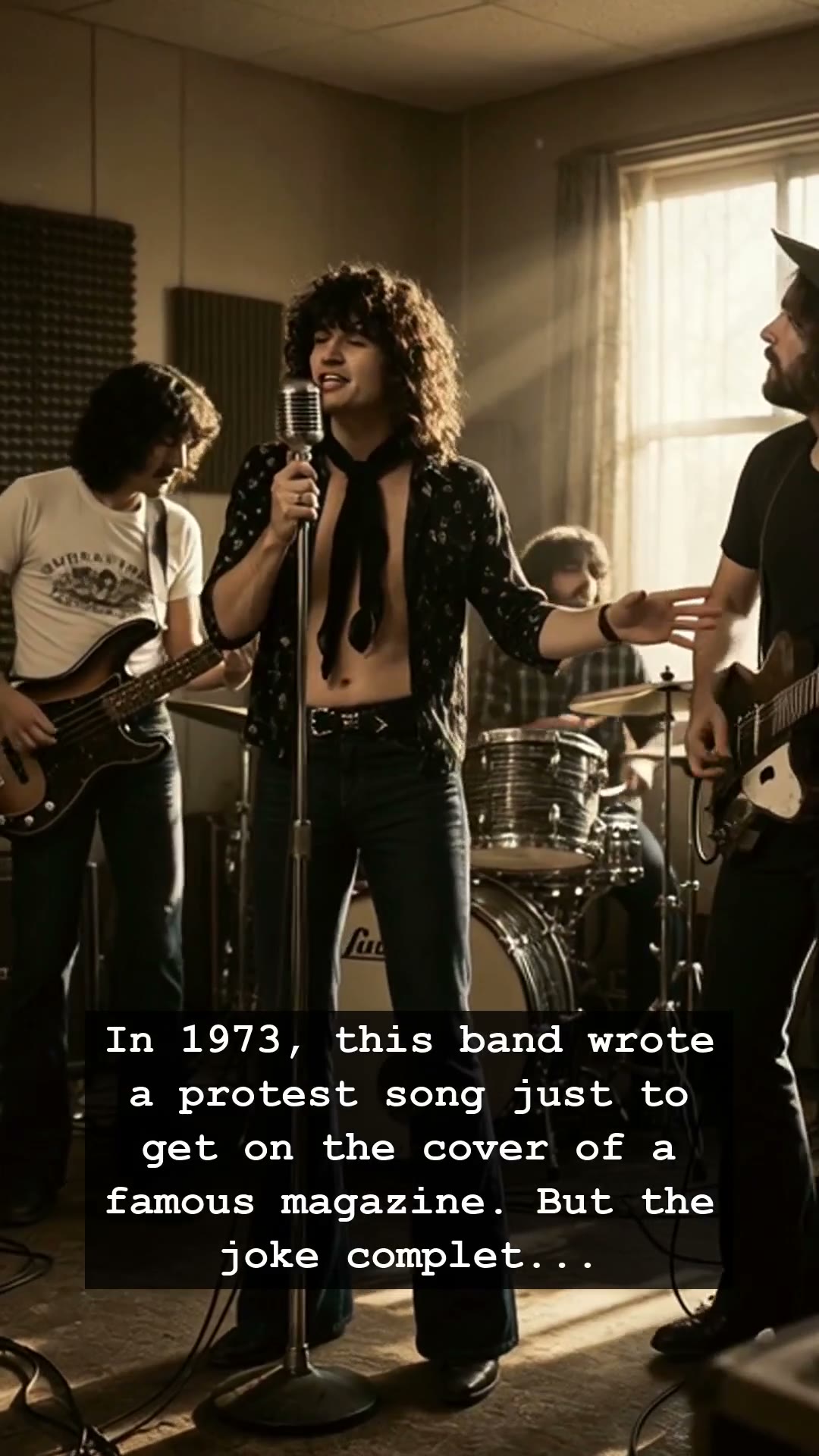
In the golden era of the early 1970s, before the sleek digital age took over our airwaves, music was a raw, unfiltered beast. It was a time of vinyl crackles, jukebox anthems, and the undisputed king of music journalism: Rolling Stone magazine. If you were a band trying to make it big, that glossy cover was the ultimate holy grail, a badge of honor that separated the one-hit wonders from the true legends. Yet, in 1973, one eccentric group decided to stop playing by the rules and instead launched a bold, cheeky, and ultimately life-changing protest. Dr. Hook and the Medicine Show, known for their wild antics and unpolished charm, were tired of being overlooked by the magazine’s gatekeepers.
The result of their frustration was The Cover of the Rolling Stone, a track that felt more like a mischievous dare than a radio hit. The band, fronted by the magnetic Ray Sawyer with his signature eye patch, wasn’t looking for profound social commentary. They were looking for revenge—or at least, a hilarious jab at the industry’s vanity. The lyrics were dripping with sarcastic wit, explicitly begging for the fame and fortune that came with being plastered on the front page of the iconic publication. They turned their professional desperation into a catchy, sing-along anthem that resonated with every struggling musician in the country.
But here is where the story takes a delicious turn into irony. Dr. Hook and the Medicine Show intended the song to be a satirical wink, never dreaming it would actually climb the Billboard charts. As the 1973 airwaves became saturated with their cynical plea, the song exploded into a massive national hit. Suddenly, the joke was no longer just a joke; it was a phenomenon. Radio stations played it on repeat, and the public fell in love with the band’s audacity. The pressure on Rolling Stone became impossible to ignore, forcing the editors to confront the very protest song mocking their own exclusivity.
In a move that sealed their place in rock history, the magazine finally caved. They placed Dr. Hook and the Medicine Show on the cover—but not with a traditional photograph. Instead, they opted for a caricature, a final jab that perfectly captured the spirit of the era’s complicated relationship between media and fame. It was a moment of peak cultural drama, a collision of ego, music, and the power of the press that defined the 1970s landscape. For a band that had been desperate for validation, they had finally arrived, but on terms entirely of their own making.
Looking back, this story serves as a nostalgic reminder of a time when music felt dangerous, spontaneous, and brilliantly human. The legacy of Dr. Hook and the Medicine Show remains a testament to the fact that sometimes, the best way to change the game is to simply mock the players. Whether you were spinning their record on a dusty turntable or catching their eccentric performances on early television, their journey from outcasts to cover stars remains one of the most charming chapters in American rock history. It was a time when a song could truly change the world, or at least, the front cover of it.