
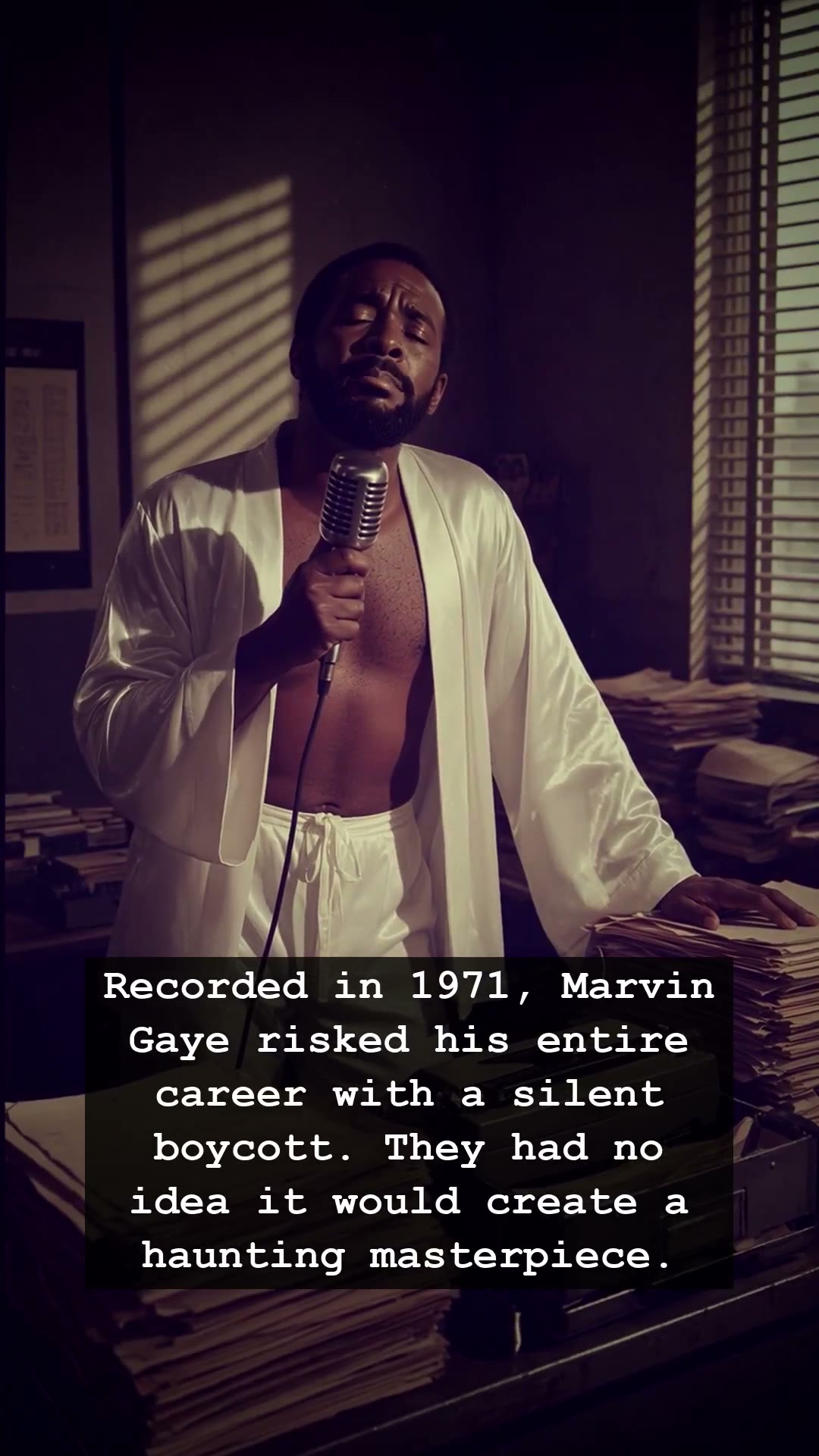
In the golden halls of Motown during the early 1970s, the hit machine was built on polished choreography, catchy hooks, and the absolute compliance of its stars. But deep within the smoke-filled recording studios, a quiet fire was consuming Marvin Gaye. The man who had defined the smooth, romantic image of soul music had reached a breaking point. In 1971, he launched a chilling silent boycott, flatly refusing to sing another note for the label that had made him a household name. He was tired of being a puppet of the system, and this act of defiance would prove to be the most dangerous gamble of his storied career.
At the time, the world outside those pristine studio walls was burning. The Vietnam War was tearing families apart, the streets of Detroit were volatile, and the dream of the sixties had withered under the weight of political corruption. While his peers were busy churning out upbeat dance anthems for the radio, Marvin Gaye was haunted by the reality of his brother’s letters from the front lines. He couldn’t reconcile the superficial joy of his music with the despair he felt in his heart. This wasn’t just a creative block; it was a profound spiritual crisis that threatened to end his tenure as a Motown icon forever.
Berry Gordy, the architect of the Motown empire, famously despised the demo Marvin Gaye brought to him. He called it the worst thing he had ever heard, convinced that a politically charged album about poverty, police brutality, and environmental decay would be commercial suicide. He wanted the Marvin Gaye of the jukeboxes and ballroom dance floors, not a social prophet. Yet, Marvin Gaye stood his ground with a stubbornness that changed music history. He ignored the executives, the advisors, and the fear of irrelevance to follow a vision that felt more like a prayer than a pop record.
The resulting masterpiece, What’s Going On, remains a haunting testament to human empathy. By stepping away from the constraints of the traditional Motown sound, Marvin Gaye created a lush, symphonic landscape that felt like it was drifting through the haze of a memory. It captured the disillusionment of an entire generation struggling to find peace in a fractured country. When it was finally released, it didn’t just top the charts; it redefined the artist’s role in society. The album became a mirror for the nation, proving that soul music could be both deeply personal and globally significant.
Decades later, the echoes of this struggle still resonate through our modern culture. We look back at this pivotal moment as the bridge between the innocent optimism of the mid-century and the raw, cynical edge of later decades. Marvin Gaye taught us that sometimes, the most powerful sound you can make is the one that forces the world to stop and listen to its own conscience. As we spin these vinyl records today, we are still haunted by the beauty of his rebellion and the timeless courage it took to stand alone. The man who refused to sing ultimately gave us the song that we will never stop hearing.